
Resume
5 min read
The Leadership Advantage: How Directors & VPs Use AI to Accelerate Offers
Published Date:
|
Last Modified:
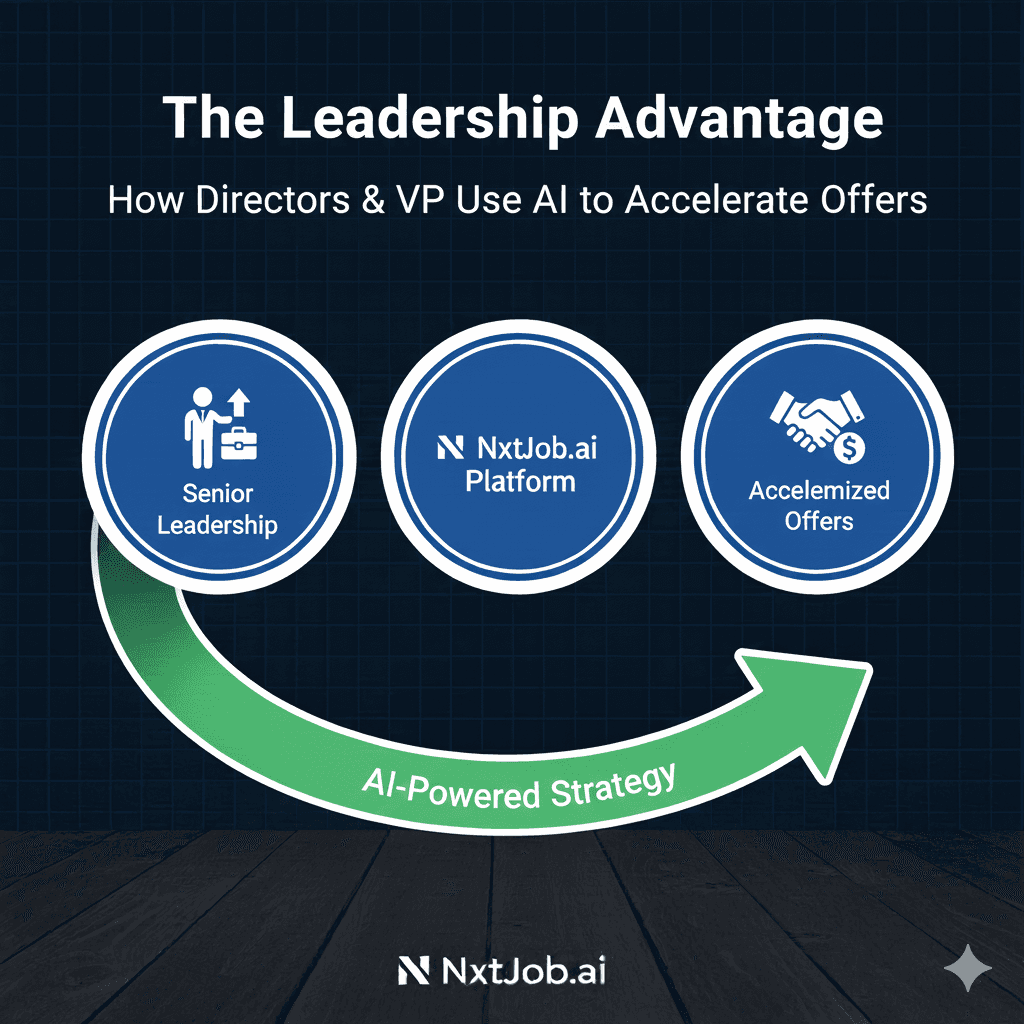
Leadership roles at the top—Director, VP, GM, and beyond—don’t really slow down anymore. If anything, they feel faster than they used to. Markets move quicker. Planning cycles rarely survive first contact with reality. Hiring windows open, then close again before most people even realize they were open. Promotions and lateral moves often go to the people who acted early, sometimes before the situation felt fully formed.
That’s probably why so many senior leaders I speak to are leaning into AI lately. Not because it’s exciting. And not because it’s fashionable. Mostly because it buys time. Or more accurately, it buys speed. And in a competitive leadership job search, speed matters more than most people like to admit.
What’s interesting is where that adoption is actually happening. Among all the AI tools floating around, one category has quietly become important for high-earning leaders: ATS resume builders.
This isn’t the clunky resume software most of us remember from years ago. The new generation feels different. Less like a template engine, more like a quiet second set of eyes. They edit. They analyze. They point out gaps you didn’t realize were gaps. For Directors and VPs, that often means spending less time stuck in revisions and more time actually talking to people.
Why AI Is Hard to Ignore at the Senior Level
Leadership at this level comes with a strange combination of pressure and assumption.
You’re expected to show impact, not effort.
You’re usually competing with people who look just as impressive on paper.
And recruiters tend to assume you already understand how hiring works.
That last assumption is where things start to break down.
Even very experienced leaders often underestimate how automated the hiring process has become. Long before a human forms an opinion, resumes are scanned, scored, ranked, and filtered by systems looking for very specific signals.
So your resume isn’t really being read at first. It’s being interpreted.
Using AI in this context isn’t about gaming anything. It’s closer to understanding the rules that are already in place.
How AI Becomes a Multiplier, Not a Replacement
One pattern I see often is that senior leaders describe their work in broad, narrative terms. That’s natural. At that level, impact is complex and rarely clean.
“Led digital transformation across multiple markets.”
“Improved execution across cross-functional teams.”
A human understands what that means. An ATS doesn’t.
AI-powered resume tools help translate those statements into something more concrete and machine-readable.
“Led a 14-market digital transformation, increasing operational efficiency by 22%.”
“Improved cross-functional OKR alignment, reducing execution delays by 30%.”
It’s not about inflating results. It’s about being specific enough to survive the first filter. And that first filter is often where strong leaders quietly disappear.
Speed Beats Volume at This Level
Senior roles usually aren’t won by sending out dozens of applications. Most leaders already know that, even if they don’t always follow it. What actually matters is fit.
Modern AI tools can analyze job descriptions, industry language, leadership expectations, even compensation ranges, and then adjust a resume accordingly. Not in a generic way. More like how a consultant would tailor a board deck for a specific audience.
The result tends to be fewer applications, but better ones. And noticeably faster responses.
Visibility Is Part of the Role Now
At the executive level, applying is only one piece of the equation. Signaling matters too.
More leaders are using AI to refine how they show up publicly. That might mean sharpening LinkedIn posts, pressure-testing leadership stories, or figuring out which themes actually resonate with recruiters.
Over time, that visibility compounds. Many senior roles are never posted publicly. They emerge from conversations that start because someone already recognizes your name, or at least your perspective.
Catching Issues Before Recruiters Do
One of the more underrated benefits of ATS-focused tools is feedback. Immediate feedback. Sometimes uncomfortable feedback.
These systems score resumes the same way corporate ATS platforms do. They look at leadership competencies, keyword alignment, seniority cues, structure, even formatting details that can break parsing altogether.
Traditionally, leaders only discovered these issues after multiple rejections, or by paying for expensive external reviews. AI surfaces them earlier, when fixing them still feels doable.
AI Doesn’t Replace Experience. It Helps It Land.
Most Directors and VPs already have what they need to succeed in bigger roles. The gap usually isn’t capability. It’s translation.
This mirrors what’s happening inside companies. Leaders already rely on dashboards, OKRs, and automation to get clearer signals and move faster. Using AI for your career is essentially the same idea, just applied personally.
How Leaders Are Actually Using These Tools
A VP moving from manufacturing into tech uses AI to reframe legacy language into SaaS-relevant leadership terms.
A Director aiming for a VP role restructures achievements to reflect scale and ownership, not just execution.
A GM with decades of experience trims verbosity, cleans up formatting, and finally gets past ATS filters that were quietly blocking them.
A seasoned operator repositions themselves as a growth-focused leader through AI-assisted branding and content.
None of this replaces judgment. It just accelerates it.
Not a Shortcut. A Multiplier.
Leaders aren’t adopting AI because they lack skill. They’re doing it because waiting has become expensive.
Where job searches once involved guessing, rewriting, and hoping for feedback, AI now offers clarity and speed. In a market that rewards momentum, that difference adds up.
Final Thought
Leadership hiring has already changed. Quietly, but decisively.
AI isn’t something that’s coming. It’s already influencing who gets seen and who doesn’t. Leaders who adapt earlier tend to benefit sooner, not because they’re better, but because they move faster.
Your experience is still the foundation.
How you communicate it—especially to systems before people—is what determines how far it travels.
That’s where tools like an ATS resume builder create a real, and sometimes unfair, advantage. They make leadership value clearer, more measurable, and much harder to overlook.

As a co-founder and CEO of NxtJob.ai, I help mid and senior level professionals land 3-5 job offers within 3 months with a substantial salary hike. I am an Internationally Certified Career Coach, Resume Writing Expert, Job Interview and LinkedIn Strategist, and a Motivational Speaker.
Richik Sinha Roy
CEO, NxtJob
Recent articles

Resume
5 min read
ATS Resume Format: How to Create a Resume That Gets Past Applicant Tracking Systems
Learn how to create an ATS-friendly resume that passes through applicant tracking systems and increases your chances of landing an interview.
Resume
5 min read
ATS Resume Format: How to Create a Resume That Gets Past Applicant Tracking Systems
Learn how to create an ATS-friendly resume that passes through applicant tracking systems and increases your chances of landing an interview.
Resume
5 min read
ATS Resume Format: How to Create a Resume That Gets Past Applicant Tracking Systems
Learn how to create an ATS-friendly resume that passes through applicant tracking systems and increases your chances of landing an interview.
Resume
5 min read
ATS Resume Format: How to Create a Resume That Gets Past Applicant Tracking Systems
Learn how to create an ATS-friendly resume that passes through applicant tracking systems and increases your chances of landing an interview.
Resume
5 min read
ATS Resume Format: How to Create a Resume That Gets Past Applicant Tracking Systems
Learn how to create an ATS-friendly resume that passes through applicant tracking systems and increases your chances of landing an interview.
Resume
5 min read
ATS Resume Format: How to Create a Resume That Gets Past Applicant Tracking Systems
Learn how to create an ATS-friendly resume that passes through applicant tracking systems and increases your chances of landing an interview.
Everything you need to know
Here you can find solutions to all your queries.
Resume
5 min read
The Leadership Advantage: How Directors & VPs Use AI to Accelerate Offers
Published Date:
|
Last Modified:
Leadership roles at the top—Director, VP, GM, and beyond—don’t really slow down anymore. If anything, they feel faster than they used to. Markets move quicker. Planning cycles rarely survive first contact with reality. Hiring windows open, then close again before most people even realize they were open. Promotions and lateral moves often go to the people who acted early, sometimes before the situation felt fully formed.
That’s probably why so many senior leaders I speak to are leaning into AI lately. Not because it’s exciting. And not because it’s fashionable. Mostly because it buys time. Or more accurately, it buys speed. And in a competitive leadership job search, speed matters more than most people like to admit.
What’s interesting is where that adoption is actually happening. Among all the AI tools floating around, one category has quietly become important for high-earning leaders: ATS resume builders.
This isn’t the clunky resume software most of us remember from years ago. The new generation feels different. Less like a template engine, more like a quiet second set of eyes. They edit. They analyze. They point out gaps you didn’t realize were gaps. For Directors and VPs, that often means spending less time stuck in revisions and more time actually talking to people.
Why AI Is Hard to Ignore at the Senior Level
Leadership at this level comes with a strange combination of pressure and assumption.
You’re expected to show impact, not effort.
You’re usually competing with people who look just as impressive on paper.
And recruiters tend to assume you already understand how hiring works.
That last assumption is where things start to break down.
Even very experienced leaders often underestimate how automated the hiring process has become. Long before a human forms an opinion, resumes are scanned, scored, ranked, and filtered by systems looking for very specific signals.
So your resume isn’t really being read at first. It’s being interpreted.
Using AI in this context isn’t about gaming anything. It’s closer to understanding the rules that are already in place.
How AI Becomes a Multiplier, Not a Replacement
One pattern I see often is that senior leaders describe their work in broad, narrative terms. That’s natural. At that level, impact is complex and rarely clean.
“Led digital transformation across multiple markets.”
“Improved execution across cross-functional teams.”
A human understands what that means. An ATS doesn’t.
AI-powered resume tools help translate those statements into something more concrete and machine-readable.
“Led a 14-market digital transformation, increasing operational efficiency by 22%.”
“Improved cross-functional OKR alignment, reducing execution delays by 30%.”
It’s not about inflating results. It’s about being specific enough to survive the first filter. And that first filter is often where strong leaders quietly disappear.
Speed Beats Volume at This Level
Senior roles usually aren’t won by sending out dozens of applications. Most leaders already know that, even if they don’t always follow it. What actually matters is fit.
Modern AI tools can analyze job descriptions, industry language, leadership expectations, even compensation ranges, and then adjust a resume accordingly. Not in a generic way. More like how a consultant would tailor a board deck for a specific audience.
The result tends to be fewer applications, but better ones. And noticeably faster responses.
Visibility Is Part of the Role Now
At the executive level, applying is only one piece of the equation. Signaling matters too.
More leaders are using AI to refine how they show up publicly. That might mean sharpening LinkedIn posts, pressure-testing leadership stories, or figuring out which themes actually resonate with recruiters.
Over time, that visibility compounds. Many senior roles are never posted publicly. They emerge from conversations that start because someone already recognizes your name, or at least your perspective.
Catching Issues Before Recruiters Do
One of the more underrated benefits of ATS-focused tools is feedback. Immediate feedback. Sometimes uncomfortable feedback.
These systems score resumes the same way corporate ATS platforms do. They look at leadership competencies, keyword alignment, seniority cues, structure, even formatting details that can break parsing altogether.
Traditionally, leaders only discovered these issues after multiple rejections, or by paying for expensive external reviews. AI surfaces them earlier, when fixing them still feels doable.
AI Doesn’t Replace Experience. It Helps It Land.
Most Directors and VPs already have what they need to succeed in bigger roles. The gap usually isn’t capability. It’s translation.
This mirrors what’s happening inside companies. Leaders already rely on dashboards, OKRs, and automation to get clearer signals and move faster. Using AI for your career is essentially the same idea, just applied personally.
How Leaders Are Actually Using These Tools
A VP moving from manufacturing into tech uses AI to reframe legacy language into SaaS-relevant leadership terms.
A Director aiming for a VP role restructures achievements to reflect scale and ownership, not just execution.
A GM with decades of experience trims verbosity, cleans up formatting, and finally gets past ATS filters that were quietly blocking them.
A seasoned operator repositions themselves as a growth-focused leader through AI-assisted branding and content.
None of this replaces judgment. It just accelerates it.
Not a Shortcut. A Multiplier.
Leaders aren’t adopting AI because they lack skill. They’re doing it because waiting has become expensive.
Where job searches once involved guessing, rewriting, and hoping for feedback, AI now offers clarity and speed. In a market that rewards momentum, that difference adds up.
Final Thought
Leadership hiring has already changed. Quietly, but decisively.
AI isn’t something that’s coming. It’s already influencing who gets seen and who doesn’t. Leaders who adapt earlier tend to benefit sooner, not because they’re better, but because they move faster.
Your experience is still the foundation.
How you communicate it—especially to systems before people—is what determines how far it travels.
That’s where tools like an ATS resume builder create a real, and sometimes unfair, advantage. They make leadership value clearer, more measurable, and much harder to overlook.

Negotiation
Counter Offer Negotiation: A Strategic Guide for Senior Leaders
A guide for senior professionals on why most counter offers fail and how to use market research to decide your next move.
Interview
How to Create a 30 60 90 Plan for Senior Professionals
A 30-60-90 Day Plan for Senior Professionals that shows you can lead, get the team on the same page, and get results from day one.
As a co-founder and CEO of NxtJob.ai, I help mid and senior level professionals land 3-5 job offers within 3 months with a substantial salary hike. I am an Internationally Certified Career Coach, Resume Writing Expert, Job Interview and LinkedIn Strategist, and a Motivational Speaker.
Richik Sinha Roy
CEO, NxtJob
Everything you need to know
Here you can find solutions to all your queries.
Resume
5 min read
Published Date:
|
Last Modified:
The Leadership Advantage: How Directors & VPs Use AI to Accelerate Offers
Leadership roles at the top—Director, VP, GM, and beyond—don’t really slow down anymore. If anything, they feel faster than they used to. Markets move quicker. Planning cycles rarely survive first contact with reality. Hiring windows open, then close again before most people even realize they were open. Promotions and lateral moves often go to the people who acted early, sometimes before the situation felt fully formed.
That’s probably why so many senior leaders I speak to are leaning into AI lately. Not because it’s exciting. And not because it’s fashionable. Mostly because it buys time. Or more accurately, it buys speed. And in a competitive leadership job search, speed matters more than most people like to admit.
What’s interesting is where that adoption is actually happening. Among all the AI tools floating around, one category has quietly become important for high-earning leaders: ATS resume builders.
This isn’t the clunky resume software most of us remember from years ago. The new generation feels different. Less like a template engine, more like a quiet second set of eyes. They edit. They analyze. They point out gaps you didn’t realize were gaps. For Directors and VPs, that often means spending less time stuck in revisions and more time actually talking to people.
Why AI Is Hard to Ignore at the Senior Level
Leadership at this level comes with a strange combination of pressure and assumption.
You’re expected to show impact, not effort.
You’re usually competing with people who look just as impressive on paper.
And recruiters tend to assume you already understand how hiring works.
That last assumption is where things start to break down.
Even very experienced leaders often underestimate how automated the hiring process has become. Long before a human forms an opinion, resumes are scanned, scored, ranked, and filtered by systems looking for very specific signals.
So your resume isn’t really being read at first. It’s being interpreted.
Using AI in this context isn’t about gaming anything. It’s closer to understanding the rules that are already in place.
How AI Becomes a Multiplier, Not a Replacement
One pattern I see often is that senior leaders describe their work in broad, narrative terms. That’s natural. At that level, impact is complex and rarely clean.
“Led digital transformation across multiple markets.”
“Improved execution across cross-functional teams.”
A human understands what that means. An ATS doesn’t.
AI-powered resume tools help translate those statements into something more concrete and machine-readable.
“Led a 14-market digital transformation, increasing operational efficiency by 22%.”
“Improved cross-functional OKR alignment, reducing execution delays by 30%.”
It’s not about inflating results. It’s about being specific enough to survive the first filter. And that first filter is often where strong leaders quietly disappear.
Speed Beats Volume at This Level
Senior roles usually aren’t won by sending out dozens of applications. Most leaders already know that, even if they don’t always follow it. What actually matters is fit.
Modern AI tools can analyze job descriptions, industry language, leadership expectations, even compensation ranges, and then adjust a resume accordingly. Not in a generic way. More like how a consultant would tailor a board deck for a specific audience.
The result tends to be fewer applications, but better ones. And noticeably faster responses.
Visibility Is Part of the Role Now
At the executive level, applying is only one piece of the equation. Signaling matters too.
More leaders are using AI to refine how they show up publicly. That might mean sharpening LinkedIn posts, pressure-testing leadership stories, or figuring out which themes actually resonate with recruiters.
Over time, that visibility compounds. Many senior roles are never posted publicly. They emerge from conversations that start because someone already recognizes your name, or at least your perspective.
Catching Issues Before Recruiters Do
One of the more underrated benefits of ATS-focused tools is feedback. Immediate feedback. Sometimes uncomfortable feedback.
These systems score resumes the same way corporate ATS platforms do. They look at leadership competencies, keyword alignment, seniority cues, structure, even formatting details that can break parsing altogether.
Traditionally, leaders only discovered these issues after multiple rejections, or by paying for expensive external reviews. AI surfaces them earlier, when fixing them still feels doable.
AI Doesn’t Replace Experience. It Helps It Land.
Most Directors and VPs already have what they need to succeed in bigger roles. The gap usually isn’t capability. It’s translation.
This mirrors what’s happening inside companies. Leaders already rely on dashboards, OKRs, and automation to get clearer signals and move faster. Using AI for your career is essentially the same idea, just applied personally.
How Leaders Are Actually Using These Tools
A VP moving from manufacturing into tech uses AI to reframe legacy language into SaaS-relevant leadership terms.
A Director aiming for a VP role restructures achievements to reflect scale and ownership, not just execution.
A GM with decades of experience trims verbosity, cleans up formatting, and finally gets past ATS filters that were quietly blocking them.
A seasoned operator repositions themselves as a growth-focused leader through AI-assisted branding and content.
None of this replaces judgment. It just accelerates it.
Not a Shortcut. A Multiplier.
Leaders aren’t adopting AI because they lack skill. They’re doing it because waiting has become expensive.
Where job searches once involved guessing, rewriting, and hoping for feedback, AI now offers clarity and speed. In a market that rewards momentum, that difference adds up.
Final Thought
Leadership hiring has already changed. Quietly, but decisively.
AI isn’t something that’s coming. It’s already influencing who gets seen and who doesn’t. Leaders who adapt earlier tend to benefit sooner, not because they’re better, but because they move faster.
Your experience is still the foundation.
How you communicate it—especially to systems before people—is what determines how far it travels.
That’s where tools like an ATS resume builder create a real, and sometimes unfair, advantage. They make leadership value clearer, more measurable, and much harder to overlook.
Negotiation
Counter Offer Negotiation: A Strategic Guide for Senior Leaders
A guide for senior professionals on why most counter offers fail and how to use market research to decide your next move.
Interview
How to Create a 30 60 90 Plan for Senior Professionals
A 30-60-90 Day Plan for Senior Professionals that shows you can lead, get the team on the same page, and get results from day one.
As a co-founder and CEO of NxtJob.ai, I help mid and senior level professionals land 3-5 job offers within 3 months with a substantial salary hike. I am an Internationally Certified Career Coach, Resume Writing Expert, Job Interview and LinkedIn Strategist, and a Motivational Speaker.
Richik Sinha Roy
CEO, NxtJob
Recent articles
Resume
5 min read
Expected CTC: How to Answer Salary Expectations As a Senior Professional Copy
Learn how to answer the expected CTC question. Avoid early anchoring, handling HR pushback, and getting a fair salary offer.
Resume
5 min read
Expected CTC: How to Answer Salary Expectations As a Senior Professional
Learn how to answer the expected CTC question. Avoid early anchoring, handling HR pushback, and getting a fair salary offer.
Resume
5 min read
Beyond the 30% Cap: The Senior Salary Hike Percentage Guide for India
Discover the salary hike percentage professionals can expect in India and learn how to negotiate stronger compensation during a job switch.
Resume
5 min read
Expected CTC: How to Answer Salary Expectations As a Senior Professional Copy
Learn how to answer the expected CTC question. Avoid early anchoring, handling HR pushback, and getting a fair salary offer.
Resume
5 min read
Expected CTC: How to Answer Salary Expectations As a Senior Professional
Learn how to answer the expected CTC question. Avoid early anchoring, handling HR pushback, and getting a fair salary offer.
Everything you need to know
Here you can find solutions to all your queries.
Join the Revolution
Your AI career copilot to land you top jobs in under 90 days.
Join the Revolution
Your AI career copilot to land you top jobs in under 90 days.
Join the Revolution
Your AI career copilot to land you top jobs in under 90 days.