

Interview
10 min read
How to Create a 30 60 90 Plan for Senior Professionals
Published Date:
|
Last Modified:
A senior 30-60-90 plan is a tool for showing how you lead. It is not just a list of tasks. Use this plan to align with your team, find where you can help, and prove your value with real results.
Most 30-60-90 day plans are built for execution roles. They focus on learning, building, and delivering in sequence.
That model breaks at leadership roles where success depends less on task completion and more on alignment speed, decision clarity, and organizational trust.
This is why senior leaders need a different structure for their first 90 days, one that reflects how leadership actually works.
The shift becomes clearer when you understand why standard 30-60-90 day frameworks fail at senior-level roles.
Summary of the 30 60 90 Day Plan for Leaders
Phase | Goal | What You Do | The Result |
Days 1 to 30 | Learn and Sync | Meet the team and learn how the company works. | You know who makes decisions and what the goals are. |
Days 31 to 60 | Solve Problems | Find small wins and fix things that slow the team down. | People trust you and work moves faster. |
Days 61 to 90 | Show Results | Finish a big project and set a plan for the future. | The team sees you as a leader and knows your plan. |
5 Questions to Answer Before You Write 30 60 90 Day Plan
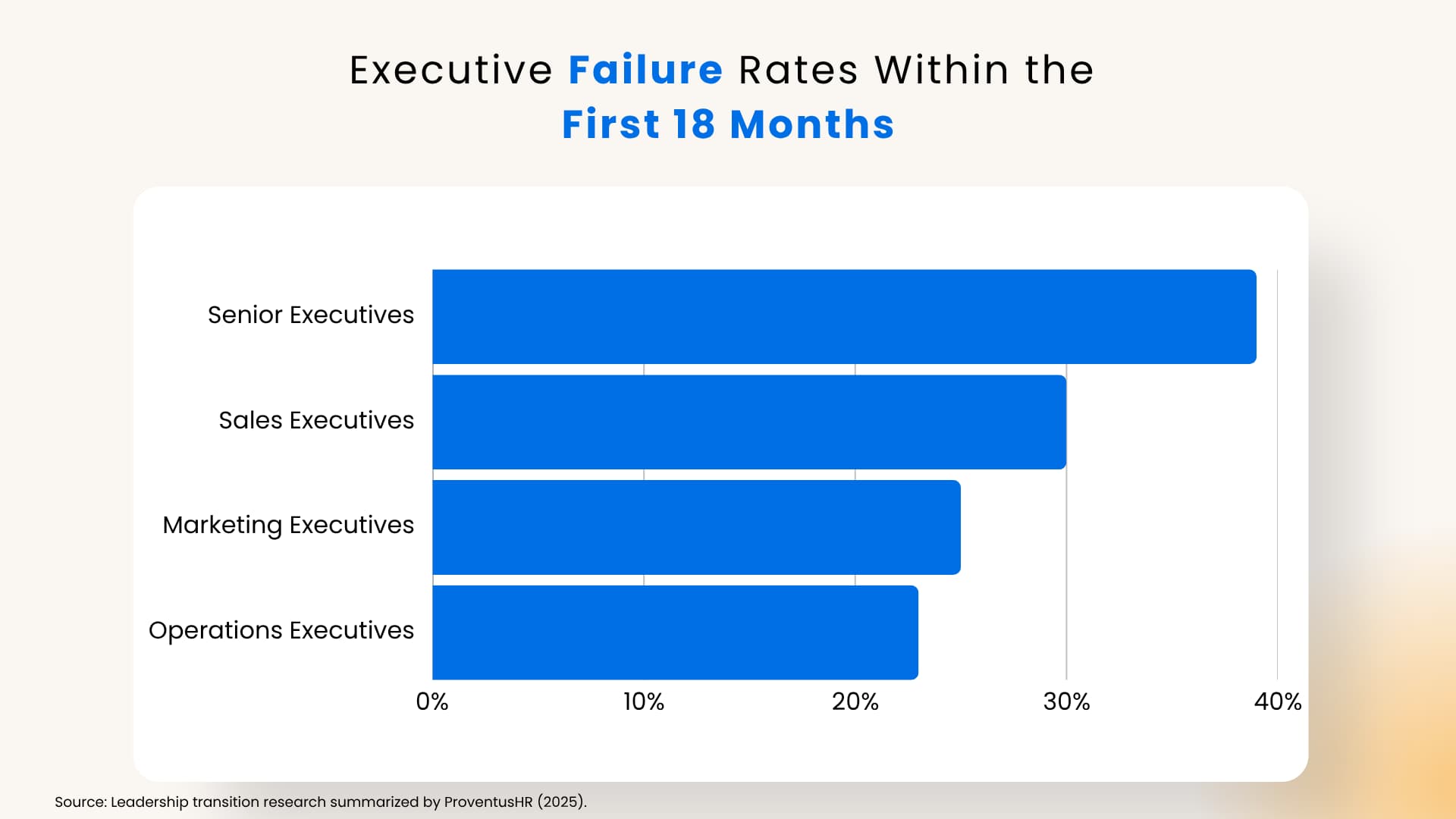
Before building a 30-60-90 day plan, senior professionals need to gather context.
The quality of a plan often depends less on the actions inside it and more on the questions that shape it.
The first question is simple: Why does this role exist?
Some leadership positions are created to drive growth, while others are meant to improve operations, rebuild teams, solve execution problems, or lead change initiatives.
Understanding the business reason behind the hire helps define priorities.
The next question is: How will success be measured?
Success may be defined through revenue growth, operational efficiency, customer outcomes, team performance, or strategic execution.
Senior leaders who understand these expectations early can focus their efforts more effectively.
Another important question is: Who influences decisions?
Organizational charts rarely reflect how decisions actually happen.
Identifying key stakeholders, decision-makers, and influential teams provides a clearer picture of the business.
Leaders should also ask: Where does problems already exist?
Delayed decisions, unclear ownership, communication gaps, and conflicting priorities often reveal opportunities for early impact.
Finally, every leader should ask: What assumptions am I making?
A 30-60-90 day plan is built with limited information. The strongest plans remain flexible and evolve as new information becomes available.
Strong plans begin with understanding. Asking the right questions before taking action helps senior professionals build plans that reflect the realities of the organization rather than assumptions.
How to Write a 30 60 90 Plan in 5 Steps
Writing a 30 60 90 plan is about focus. Use these five steps to show how you lead and get results.
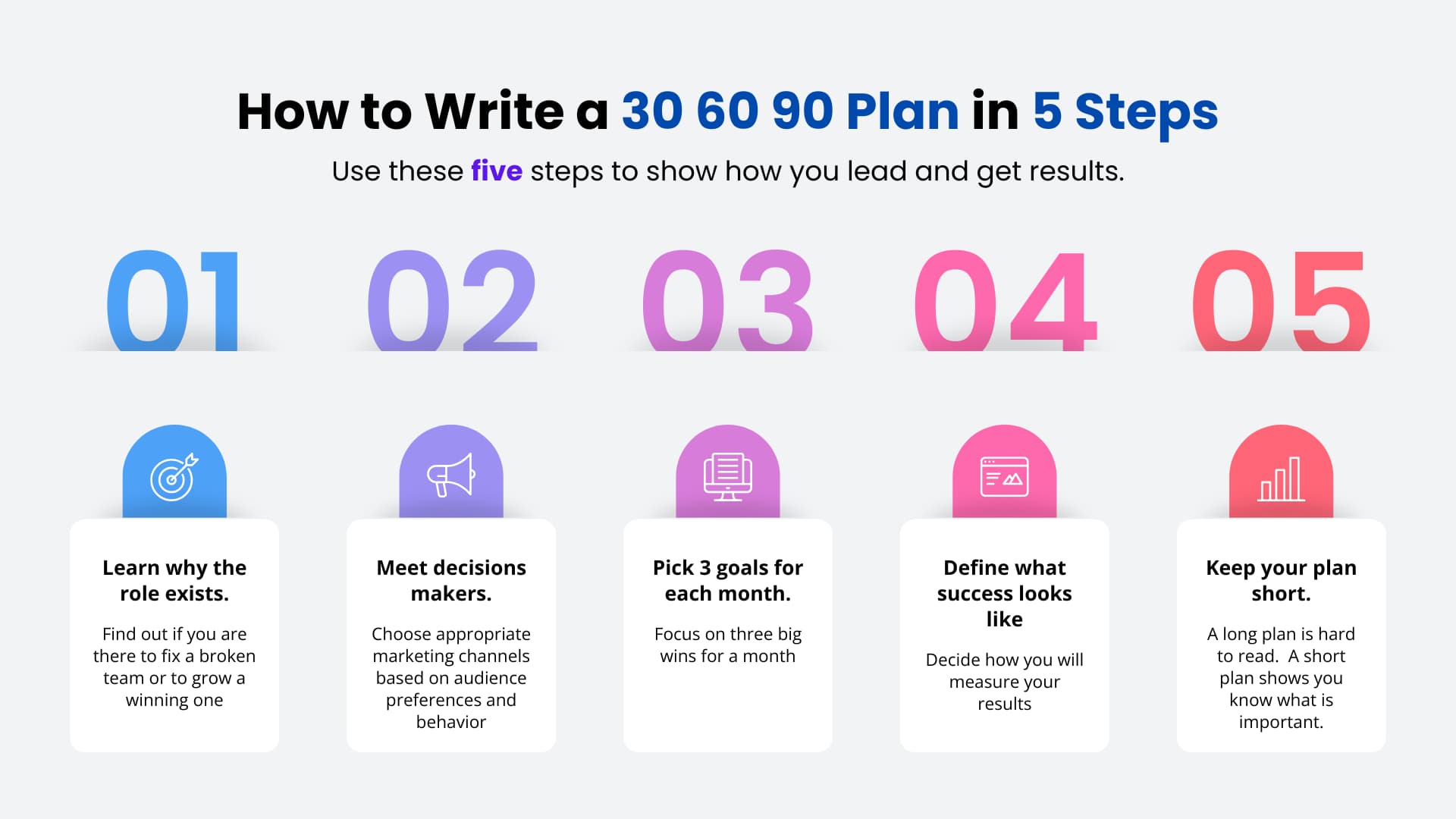
Learn why the role exists.
Talk to the CEO or the board. Find out if you are there to fix a broken team or to grow a winning one. Knowing the goal helps you set the right path.
Meet the people who make decisions.
Identify the key leaders you need to work with. Find out what they expect from you in the first few months. Winning their trust early is key.
Pick three goals for each month.
Do not try to fix ten things at once. Focus on three big wins for a month. This keeps your plan clear and easy to follow.
Define what success looks like.
Decide how you will measure your results. It could be a new process or a revenue goal. Be clear about what you will finish by day 90.
Keep your plan short.
A long plan is hard to read. A short plan shows you know what is important. Use one or two pages to show your ideas.
The 3 Phases of Your First 90 Days
Senior leadership transitions are not about learning first and delivering later. They follow a cycle of alignment, leverage, and proof, where clarity and trust matter more than execution speed.
Most traditional 30-60-90 day plans follow a linear model: learn, build, deliver. That works in stable roles with defined outputs.
In senior leadership roles across modern organizations, that model breaks because:
the role definition is often incomplete at the start
stakeholders have different expectations
success criteria evolves in real time
A more accurate model is a transition framework, not a task timeline.
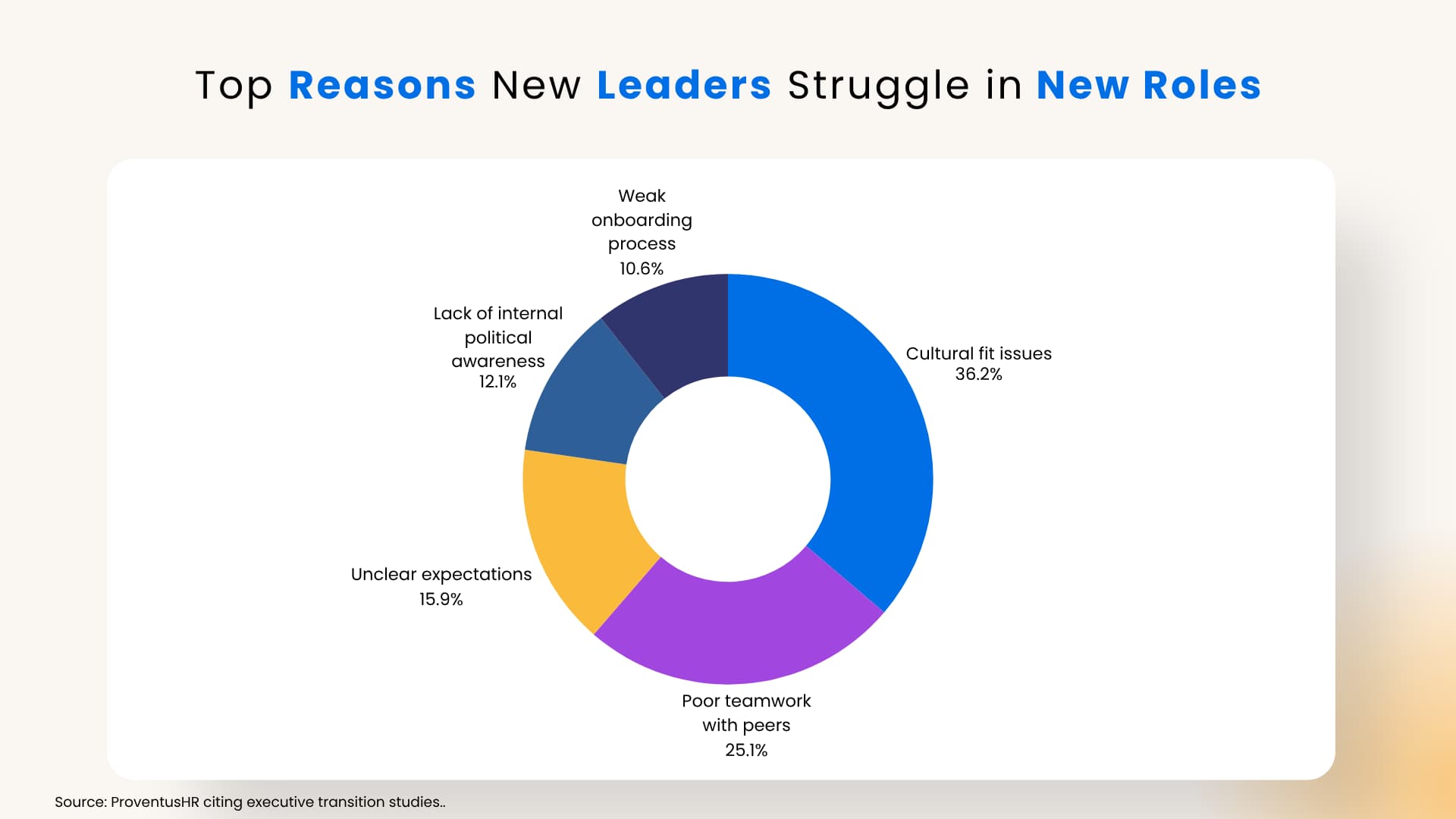
Phase 1: Days 1 to 30 to Learn and Sync
This phase is not passive observation. It is a structured understanding.
Senior professionals focus on:
mapping decision makers and real influencers
understanding business priorities beyond formal documents
identifying where expectations conflict
The goal is not to act quickly. It is to reduce uncertainty.
A common mistake is trying to prove value too early. In reality, premature action often weakens credibility because it signals an incomplete understanding of context.
Phase 2: Days 31 to 60 to Help the Team
Once context is clear, the focus shifts to controlled impact.
This is where senior professionals begin to:
Identify problems in execution
spot gaps between strategy and delivery
test small improvements without overcommitting
This phase is about earning influence, not claiming authority.
The risk here is overcorrection. Acting too aggressively without full alignment can create resistance instead of progress.
Phase 3: Days 61 to 90 for Proof
This phase is about stabilizing perception.
By this stage, expectations are no longer about exploration. They are about visible direction.
Senior professionals focus on:
demonstrating focused outcomes
removing repeat system problems
shaping a clear narrative of ownership
The key shift is simple: from understanding systems → to improving systems in visible ways.
Once this transition model is clear, the next step is understanding what actually happens in the first 30 days when most early leadership mistakes are made.
How to Measure Your Success in 90 Days
Many professionals evaluate their first 90 days by the amount of work completed. Senior leadership roles are often evaluated differently.
Success is not always measured by the number of initiatives launched or projects completed.
Instead, organizations look for evidence that a leader is building trust, creating clarity, and helping the business move forward.
During the first month, success often means understanding the business, building relationships, and aligning expectations.
During the second month, leaders may begin to see signs of progress through improved collaboration, reduced problems, or faster decision-making.
By the final month, leaders should be able to demonstrate visible progress and establish confidence in their direction.
Some useful indicators include:
Strong stakeholder relationships.
Clear ownership and accountability.
Improved cross-functional collaboration.
Faster decision-making.
Progress on important initiatives.
Better alignment across teams.
Early operational or business improvements.
The goal of the first 90 days is not to prove that every problem has been solved.
The goal is to create confidence that the right priorities have been identified and that meaningful progress is underway.
For senior professionals, the first 90 days are often measured through clarity, trust, influence, and visible progress rather than activity alone.
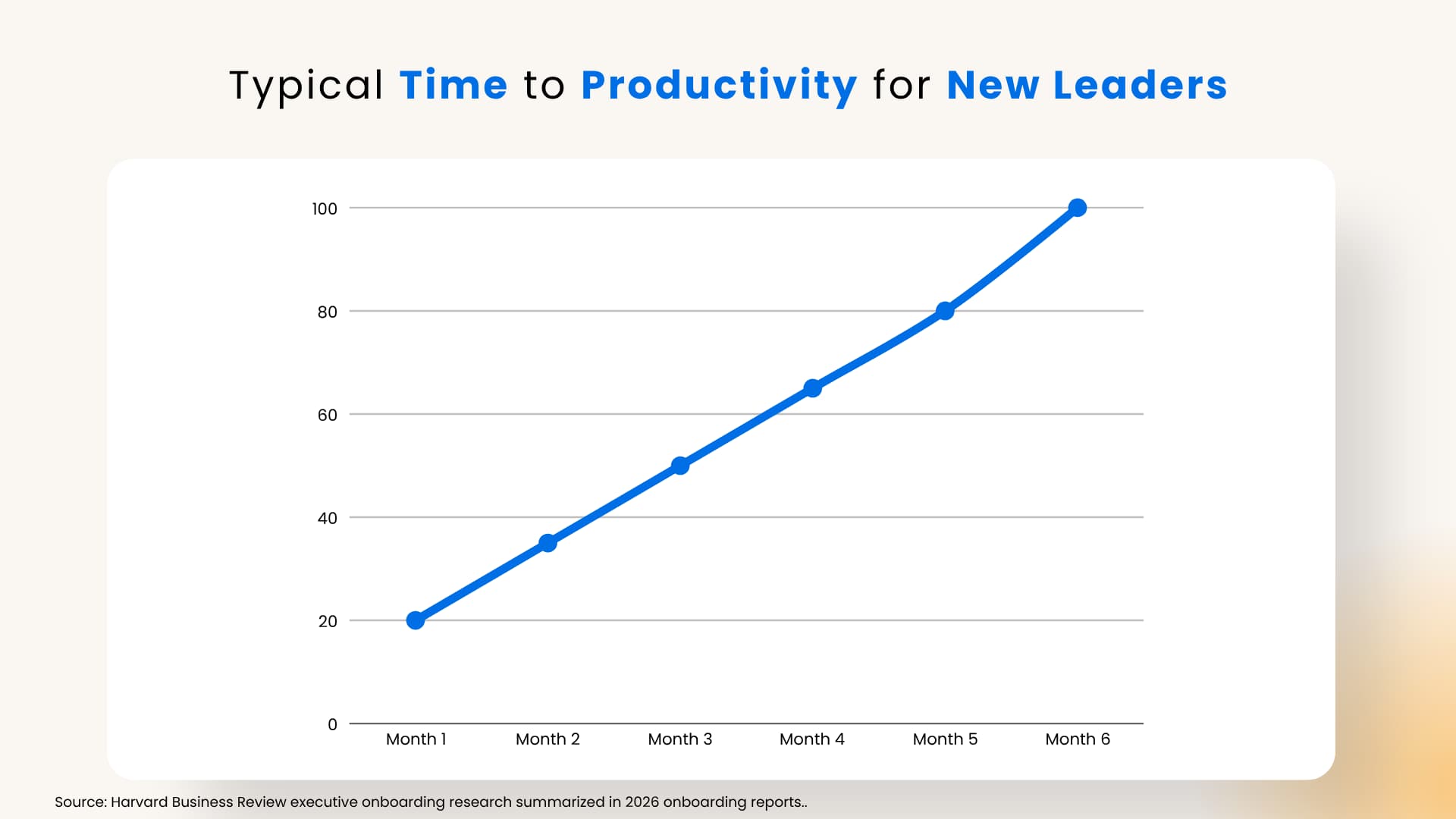
How a 30 60 90 Plan Helped One Leader Get a 70% Raise
The Challenge
Roopa was an experienced operations leader with more than 15 years of experience managing teams, improving processes, and leading business initiatives. Despite her experience, she struggled to convert senior-level interviews into offers.
The issue was not a lack of experience. Hiring teams could see her work. But she needed to show her value early on. A strong plan starts with a strong resume. Read how to make an ATS friendly resume to help you get the first meeting.
Building a 30-60-90 Day Plan
Before interviewing for a senior operations role, Roopa developed a 30-60-90 day plan tailored to the organization.
The first 30 days focused on understanding the business, meeting stakeholders, and identifying operational challenges.
The next 30 days concentrated on improving alignment, addressing process bottlenecks, and supporting existing initiatives.
The final phase focused on measurable outcomes and priorities for the next quarter.
The plan did not attempt to solve every problem. Instead, it demonstrated how she would approach the role.
Changing the Interview Conversation
During the interview, the discussion shifted from past responsibilities to future impact.
Rather than explaining only what she had accomplished in previous roles, Roopa was able to discuss priorities, business challenges, and leadership decisions.
This helped interviewers understand not only her experience but also how she would think and operate within the organization.
The Lesson for Senior Professionals
For senior professionals, the value of a 30-60-90 day plan often extends beyond the first 90 days.
It provides a structured way to communicate leadership thinking, business judgment, and priorities.
The goal is not to predict every action. The goal is to demonstrate how you approach new challenges and create value within a leadership role.
For many experienced professionals, understanding realistic salary hike percentages in India can help evaluate new opportunities and negotiate more confidently.
Hear from Roopa:
Check the salary hike percentage in India to know your value in the market. A good plan helps you ask for more money. Use these ways to negotiate salary to get fair pay.
Common 30 60 90 Plan Mistakes to Avoid
Most 30-60-90 day plans fail because they focus on activity instead of judgment. Senior professionals rarely struggle because of a lack of experience.
They struggle because their plans do not reflect how leadership actually works.
The purpose of a 30-60-90 day plan is not to predict every action. It is to demonstrate how you approach uncertainty, priorities, and decision-making.
Here are the mistakes that often reduce the effectiveness of an otherwise strong plan.
Treating the plan as a task checklist
Many professionals write plans that look like project trackers:
Meet the team
Review processes
Attend meetings
Complete assessments
These activities are expected. They do not differentiate a senior leader.
A stronger approach is to focus on outcomes:
Understand where decisions slow down
Identify cross-functional gaps
Clarify ownership
Define success metrics
The plan should explain what you want to achieve, not simply what you plan to do.
Trying to solve everything too quickly
New leaders often feel pressure to prove themselves immediately.
This leads to:
large transformation proposals
aggressive process changes
early restructuring efforts
Without context, these actions can create resistance.
The first 90 days should build credibility before major change. Early wins are important, but they should support trust rather than disrupt it.
Reusing previous playbooks
What worked in one organization may fail in another.
Every company has:
different priorities
different cultures
different decision structures
Senior professionals who assume past success automatically applies to a new environment often miss important context.
A strong 30-60-90 day plan reflects the current organization, not the previous one.
Focusing only on execution
Execution matters, but leadership roles are evaluated differently.
Organizations also assess:
judgment
communication
stakeholder management
prioritization
If a plan only contains tasks and projects, it can make an experienced professional appear tactical rather than strategic.
Building a generic plan for every opportunity
One of the biggest mistakes during job searches is using the same 30-60-90 day plan everywhere.
Hiring teams want to see:
understanding of their business
awareness of their challenges
relevance to their goals
Even small adjustments can make a plan feel more thoughtful and credible.
Executive takeaway
The best 30-60-90 day plans are not the most detailed.
They are the most relevant.
A clear understanding of priorities, relationships, and business outcomes often creates a stronger impression than a document filled with activities and timelines.
Understanding the framework is one part of the process. Presenting it effectively during interviews is where many opportunities are won or lost.
How to Show Your 30 60 90 Plan in an Interview
A 30-60-90 day plan should not be presented as a finished strategy. It should be presented as a thinking framework that shows how you approach a new role.
Many professionals make the mistake of treating the plan like a project document. They walk interviewers through detailed activities, timelines, and deliverables.
Senior hiring teams are usually looking for something else.
They want to understand:
how you prioritize
how you learn a business
how you make decisions
how you define success
Your plan should demonstrate judgment, not certainty.
Present the framework, not the answer
A 30-60-90 day plan is based on limited information. You do not have access to internal data, team dynamics, or business constraints.
A good way to position it is:
"Based on my current understanding of the role, this is how I would approach the first 90 days. I would expect the plan to evolve as I learn more about the business and stakeholders."
This approach shows:
confidence
flexibility
business maturity
Focus on outcomes
Avoid spending most of the discussion on activities.
Instead of saying:
meet the team
review reports
attend meetings
Focus on:
understanding priorities
aligning stakeholders
identifying opportunities
delivering early improvements
Outcomes create stronger conversations than tasks.
Tailor the plan to the opportunity
Many experienced professionals struggle not because they lack experience, but because they struggle to translate that experience into a compelling leadership narrative.
Structured support, coaching, and platforms such as NxtJob.ai can help candidates refine positioning, prepare for interviews, communicate their thinking more effectively, and understand how to reach out to recruiters on LinkedIn.
Even a simple level of customization adds value.
You can reference:
business challenges mentioned during interviews
public company priorities
industry trends
role expectations
The goal is not to prove that you know everything.
The goal is to demonstrate that you are already thinking about the right problems.
Keep it simple
A senior 30-60-90 day plan does not need to be ten pages long.
In many cases:
one page is enough
two pages are usually sufficient
The strongest plans are:
easy to scan
focused on priorities
built around outcomes
Clarity often creates more impact than detail.
Executive takeaway
A hiring manager is not evaluating whether your plan is perfect.
They are evaluating whether they can trust your thinking.
The strongest 30-60-90 day plans reduce uncertainty, communicate priorities, and show how you approach leadership challenges.
The interview is the time to talk about pay. Learn how to answer expected CTC questions so you do not lose out. You should also know the best way for salary negotiation with HR.
Conclusion: Your First 90 Days Shape Your Leadership Story
The first 90 days do not determine your entire career in a company, but they often shape how your leadership is perceived for years afterward.
A 30-60-90 day plan is not a checklist. For senior professionals, it is a framework for understanding the business, building alignment, and demonstrating judgment.
The strongest plans focus on three priorities:
Align with people, priorities, and expectations.
Leverage opportunities that create visible progress.
Prove your leadership through outcomes and clarity.
Whether you are interviewing for a new role or preparing for a leadership transition, the goal is not to predict every decision you will make.
The goal is to show how you think, prioritize, and create impact.
Senior professionals are rarely hired for what they have done. They are hired for how they think about what comes next.
They evaluate how you approach the next challenge.
A strong 30-60-90 day plan becomes even more powerful when it is supported by the right resume, positioning, and interview preparation.
If you're preparing for your next leadership opportunity, get started with Nxtjob for free.

As a content writer and SEO strategist, I help turn complex AI job search, career-tech, and growth topics into clear, practical content. At NxtJob.ai, I write to help senior professionals make smarter career moves with clarity and confidence.
Githu Ravikkumar
Creative Strategist & Copywriter, Nxtjob
Recent articles

Resume
5 min read
ATS Resume Format: How to Create a Resume That Gets Past Applicant Tracking Systems
Learn how to create an ATS-friendly resume that passes through applicant tracking systems and increases your chances of landing an interview.
Resume
5 min read
ATS Resume Format: How to Create a Resume That Gets Past Applicant Tracking Systems
Learn how to create an ATS-friendly resume that passes through applicant tracking systems and increases your chances of landing an interview.
Resume
5 min read
ATS Resume Format: How to Create a Resume That Gets Past Applicant Tracking Systems
Learn how to create an ATS-friendly resume that passes through applicant tracking systems and increases your chances of landing an interview.
Resume
5 min read
ATS Resume Format: How to Create a Resume That Gets Past Applicant Tracking Systems
Learn how to create an ATS-friendly resume that passes through applicant tracking systems and increases your chances of landing an interview.
Resume
5 min read
ATS Resume Format: How to Create a Resume That Gets Past Applicant Tracking Systems
Learn how to create an ATS-friendly resume that passes through applicant tracking systems and increases your chances of landing an interview.
Resume
5 min read
ATS Resume Format: How to Create a Resume That Gets Past Applicant Tracking Systems
Learn how to create an ATS-friendly resume that passes through applicant tracking systems and increases your chances of landing an interview.
Everything you need to know
Here you can find solutions to all your queries.
What is a 30-60-90 day plan?
Why do employers ask for a 30-60-90 day plan?
Should I bring a 30-60-90 day plan to an interview?
How long should a 30-60-90 day plan be?
What should happen in the first 30 days?
Can a 30-60-90 day plan help me get hired?
Is a 30-60-90 day plan only for executives?
Can I use the same 30-60-90 day plan for every job?
Interview
10 min read
How to Create a 30 60 90 Plan for Senior Professionals
Published Date:
|
Last Modified:
A senior 30-60-90 plan is a tool for showing how you lead. It is not just a list of tasks. Use this plan to align with your team, find where you can help, and prove your value with real results.
Most 30-60-90 day plans are built for execution roles. They focus on learning, building, and delivering in sequence.
That model breaks at leadership roles where success depends less on task completion and more on alignment speed, decision clarity, and organizational trust.
This is why senior leaders need a different structure for their first 90 days, one that reflects how leadership actually works.
The shift becomes clearer when you understand why standard 30-60-90 day frameworks fail at senior-level roles.
Summary of the 30 60 90 Day Plan for Leaders
Phase | Goal | What You Do | The Result |
Days 1 to 30 | Learn and Sync | Meet the team and learn how the company works. | You know who makes decisions and what the goals are. |
Days 31 to 60 | Solve Problems | Find small wins and fix things that slow the team down. | People trust you and work moves faster. |
Days 61 to 90 | Show Results | Finish a big project and set a plan for the future. | The team sees you as a leader and knows your plan. |
5 Questions to Answer Before You Write 30 60 90 Day Plan
Before building a 30-60-90 day plan, senior professionals need to gather context.
The quality of a plan often depends less on the actions inside it and more on the questions that shape it.
The first question is simple: Why does this role exist?
Some leadership positions are created to drive growth, while others are meant to improve operations, rebuild teams, solve execution problems, or lead change initiatives.
Understanding the business reason behind the hire helps define priorities.
The next question is: How will success be measured?
Success may be defined through revenue growth, operational efficiency, customer outcomes, team performance, or strategic execution.
Senior leaders who understand these expectations early can focus their efforts more effectively.
Another important question is: Who influences decisions?
Organizational charts rarely reflect how decisions actually happen.
Identifying key stakeholders, decision-makers, and influential teams provides a clearer picture of the business.
Leaders should also ask: Where does problems already exist?
Delayed decisions, unclear ownership, communication gaps, and conflicting priorities often reveal opportunities for early impact.
Finally, every leader should ask: What assumptions am I making?
A 30-60-90 day plan is built with limited information. The strongest plans remain flexible and evolve as new information becomes available.
Strong plans begin with understanding. Asking the right questions before taking action helps senior professionals build plans that reflect the realities of the organization rather than assumptions.
How to Write a 30 60 90 Plan in 5 Steps
Writing a 30 60 90 plan is about focus. Use these five steps to show how you lead and get results.
Learn why the role exists.
Talk to the CEO or the board. Find out if you are there to fix a broken team or to grow a winning one. Knowing the goal helps you set the right path.
Meet the people who make decisions.
Identify the key leaders you need to work with. Find out what they expect from you in the first few months. Winning their trust early is key.
Pick three goals for each month.
Do not try to fix ten things at once. Focus on three big wins for a month. This keeps your plan clear and easy to follow.
Define what success looks like.
Decide how you will measure your results. It could be a new process or a revenue goal. Be clear about what you will finish by day 90.
Keep your plan short.
A long plan is hard to read. A short plan shows you know what is important. Use one or two pages to show your ideas.
The 3 Phases of Your First 90 Days
Senior leadership transitions are not about learning first and delivering later. They follow a cycle of alignment, leverage, and proof, where clarity and trust matter more than execution speed.
Most traditional 30-60-90 day plans follow a linear model: learn, build, deliver. That works in stable roles with defined outputs.
In senior leadership roles across modern organizations, that model breaks because:
the role definition is often incomplete at the start
stakeholders have different expectations
success criteria evolves in real time
A more accurate model is a transition framework, not a task timeline.
Phase 1: Days 1 to 30 to Learn and Sync
This phase is not passive observation. It is a structured understanding.
Senior professionals focus on:
mapping decision makers and real influencers
understanding business priorities beyond formal documents
identifying where expectations conflict
The goal is not to act quickly. It is to reduce uncertainty.
A common mistake is trying to prove value too early. In reality, premature action often weakens credibility because it signals an incomplete understanding of context.
Phase 2: Days 31 to 60 to Help the Team
Once context is clear, the focus shifts to controlled impact.
This is where senior professionals begin to:
Identify problems in execution
spot gaps between strategy and delivery
test small improvements without overcommitting
This phase is about earning influence, not claiming authority.
The risk here is overcorrection. Acting too aggressively without full alignment can create resistance instead of progress.
Phase 3: Days 61 to 90 for Proof
This phase is about stabilizing perception.
By this stage, expectations are no longer about exploration. They are about visible direction.
Senior professionals focus on:
demonstrating focused outcomes
removing repeat system problems
shaping a clear narrative of ownership
The key shift is simple: from understanding systems → to improving systems in visible ways.
Once this transition model is clear, the next step is understanding what actually happens in the first 30 days when most early leadership mistakes are made.
How to Measure Your Success in 90 Days
Many professionals evaluate their first 90 days by the amount of work completed. Senior leadership roles are often evaluated differently.
Success is not always measured by the number of initiatives launched or projects completed.
Instead, organizations look for evidence that a leader is building trust, creating clarity, and helping the business move forward.
During the first month, success often means understanding the business, building relationships, and aligning expectations.
During the second month, leaders may begin to see signs of progress through improved collaboration, reduced problems, or faster decision-making.
By the final month, leaders should be able to demonstrate visible progress and establish confidence in their direction.
Some useful indicators include:
Strong stakeholder relationships.
Clear ownership and accountability.
Improved cross-functional collaboration.
Faster decision-making.
Progress on important initiatives.
Better alignment across teams.
Early operational or business improvements.
The goal of the first 90 days is not to prove that every problem has been solved.
The goal is to create confidence that the right priorities have been identified and that meaningful progress is underway.
For senior professionals, the first 90 days are often measured through clarity, trust, influence, and visible progress rather than activity alone.
How a 30 60 90 Plan Helped One Leader Get a 70% Raise
The Challenge
Roopa was an experienced operations leader with more than 15 years of experience managing teams, improving processes, and leading business initiatives. Despite her experience, she struggled to convert senior-level interviews into offers.
The issue was not a lack of experience. Hiring teams could see her work. But she needed to show her value early on. A strong plan starts with a strong resume. Read how to make an ATS friendly resume to help you get the first meeting.
Building a 30-60-90 Day Plan
Before interviewing for a senior operations role, Roopa developed a 30-60-90 day plan tailored to the organization.
The first 30 days focused on understanding the business, meeting stakeholders, and identifying operational challenges.
The next 30 days concentrated on improving alignment, addressing process bottlenecks, and supporting existing initiatives.
The final phase focused on measurable outcomes and priorities for the next quarter.
The plan did not attempt to solve every problem. Instead, it demonstrated how she would approach the role.
Changing the Interview Conversation
During the interview, the discussion shifted from past responsibilities to future impact.
Rather than explaining only what she had accomplished in previous roles, Roopa was able to discuss priorities, business challenges, and leadership decisions.
This helped interviewers understand not only her experience but also how she would think and operate within the organization.
The Lesson for Senior Professionals
For senior professionals, the value of a 30-60-90 day plan often extends beyond the first 90 days.
It provides a structured way to communicate leadership thinking, business judgment, and priorities.
The goal is not to predict every action. The goal is to demonstrate how you approach new challenges and create value within a leadership role.
For many experienced professionals, understanding realistic salary hike percentages in India can help evaluate new opportunities and negotiate more confidently.
Hear from Roopa:
Check the salary hike percentage in India to know your value in the market. A good plan helps you ask for more money. Use these ways to negotiate salary to get fair pay.
Common 30 60 90 Plan Mistakes to Avoid
Most 30-60-90 day plans fail because they focus on activity instead of judgment. Senior professionals rarely struggle because of a lack of experience.
They struggle because their plans do not reflect how leadership actually works.
The purpose of a 30-60-90 day plan is not to predict every action. It is to demonstrate how you approach uncertainty, priorities, and decision-making.
Here are the mistakes that often reduce the effectiveness of an otherwise strong plan.
Treating the plan as a task checklist
Many professionals write plans that look like project trackers:
Meet the team
Review processes
Attend meetings
Complete assessments
These activities are expected. They do not differentiate a senior leader.
A stronger approach is to focus on outcomes:
Understand where decisions slow down
Identify cross-functional gaps
Clarify ownership
Define success metrics
The plan should explain what you want to achieve, not simply what you plan to do.
Trying to solve everything too quickly
New leaders often feel pressure to prove themselves immediately.
This leads to:
large transformation proposals
aggressive process changes
early restructuring efforts
Without context, these actions can create resistance.
The first 90 days should build credibility before major change. Early wins are important, but they should support trust rather than disrupt it.
Reusing previous playbooks
What worked in one organization may fail in another.
Every company has:
different priorities
different cultures
different decision structures
Senior professionals who assume past success automatically applies to a new environment often miss important context.
A strong 30-60-90 day plan reflects the current organization, not the previous one.
Focusing only on execution
Execution matters, but leadership roles are evaluated differently.
Organizations also assess:
judgment
communication
stakeholder management
prioritization
If a plan only contains tasks and projects, it can make an experienced professional appear tactical rather than strategic.
Building a generic plan for every opportunity
One of the biggest mistakes during job searches is using the same 30-60-90 day plan everywhere.
Hiring teams want to see:
understanding of their business
awareness of their challenges
relevance to their goals
Even small adjustments can make a plan feel more thoughtful and credible.
Executive takeaway
The best 30-60-90 day plans are not the most detailed.
They are the most relevant.
A clear understanding of priorities, relationships, and business outcomes often creates a stronger impression than a document filled with activities and timelines.
Understanding the framework is one part of the process. Presenting it effectively during interviews is where many opportunities are won or lost.
How to Show Your 30 60 90 Plan in an Interview
A 30-60-90 day plan should not be presented as a finished strategy. It should be presented as a thinking framework that shows how you approach a new role.
Many professionals make the mistake of treating the plan like a project document. They walk interviewers through detailed activities, timelines, and deliverables.
Senior hiring teams are usually looking for something else.
They want to understand:
how you prioritize
how you learn a business
how you make decisions
how you define success
Your plan should demonstrate judgment, not certainty.
Present the framework, not the answer
A 30-60-90 day plan is based on limited information. You do not have access to internal data, team dynamics, or business constraints.
A good way to position it is:
"Based on my current understanding of the role, this is how I would approach the first 90 days. I would expect the plan to evolve as I learn more about the business and stakeholders."
This approach shows:
confidence
flexibility
business maturity
Focus on outcomes
Avoid spending most of the discussion on activities.
Instead of saying:
meet the team
review reports
attend meetings
Focus on:
understanding priorities
aligning stakeholders
identifying opportunities
delivering early improvements
Outcomes create stronger conversations than tasks.
Tailor the plan to the opportunity
Many experienced professionals struggle not because they lack experience, but because they struggle to translate that experience into a compelling leadership narrative.
Structured support, coaching, and platforms such as NxtJob.ai can help candidates refine positioning, prepare for interviews, communicate their thinking more effectively, and understand how to reach out to recruiters on LinkedIn.
Even a simple level of customization adds value.
You can reference:
business challenges mentioned during interviews
public company priorities
industry trends
role expectations
The goal is not to prove that you know everything.
The goal is to demonstrate that you are already thinking about the right problems.
Keep it simple
A senior 30-60-90 day plan does not need to be ten pages long.
In many cases:
one page is enough
two pages are usually sufficient
The strongest plans are:
easy to scan
focused on priorities
built around outcomes
Clarity often creates more impact than detail.
Executive takeaway
A hiring manager is not evaluating whether your plan is perfect.
They are evaluating whether they can trust your thinking.
The strongest 30-60-90 day plans reduce uncertainty, communicate priorities, and show how you approach leadership challenges.
The interview is the time to talk about pay. Learn how to answer expected CTC questions so you do not lose out. You should also know the best way for salary negotiation with HR.
Conclusion: Your First 90 Days Shape Your Leadership Story
The first 90 days do not determine your entire career in a company, but they often shape how your leadership is perceived for years afterward.
A 30-60-90 day plan is not a checklist. For senior professionals, it is a framework for understanding the business, building alignment, and demonstrating judgment.
The strongest plans focus on three priorities:
Align with people, priorities, and expectations.
Leverage opportunities that create visible progress.
Prove your leadership through outcomes and clarity.
Whether you are interviewing for a new role or preparing for a leadership transition, the goal is not to predict every decision you will make.
The goal is to show how you think, prioritize, and create impact.
Senior professionals are rarely hired for what they have done. They are hired for how they think about what comes next.
They evaluate how you approach the next challenge.
A strong 30-60-90 day plan becomes even more powerful when it is supported by the right resume, positioning, and interview preparation.
If you're preparing for your next leadership opportunity, get started with Nxtjob for free.
Table of content

Negotiation
Counter Offer Negotiation: A Strategic Guide for Senior Leaders
A guide for senior professionals on why most counter offers fail and how to use market research to decide your next move.

Negotiation
Expected CTC: How to Answer Salary Expectations As a Senior Professional Copy
Learn how to answer the expected CTC question. Avoid early anchoring, handling HR pushback, and getting a fair salary offer.
As a content writer and SEO strategist, I help turn complex AI job search, career-tech, and growth topics into clear, practical content. At NxtJob.ai, I write to help senior professionals make smarter career moves with clarity and confidence.
Githu Ravikkumar
Creative Strategist & Copywriter, Nxtjob
What is a 30-60-90 day plan?
Why do employers ask for a 30-60-90 day plan?
Should I bring a 30-60-90 day plan to an interview?
How long should a 30-60-90 day plan be?
What should happen in the first 30 days?
Can a 30-60-90 day plan help me get hired?
Is a 30-60-90 day plan only for executives?
Can I use the same 30-60-90 day plan for every job?
Everything you need to know
Here you can find solutions to all your queries.
Interview
10 min read
Published Date:
|
Last Modified:
How to Create a 30 60 90 Plan for Senior Professionals
A senior 30-60-90 plan is a tool for showing how you lead. It is not just a list of tasks. Use this plan to align with your team, find where you can help, and prove your value with real results.
Most 30-60-90 day plans are built for execution roles. They focus on learning, building, and delivering in sequence.
That model breaks at leadership roles where success depends less on task completion and more on alignment speed, decision clarity, and organizational trust.
This is why senior leaders need a different structure for their first 90 days, one that reflects how leadership actually works.
The shift becomes clearer when you understand why standard 30-60-90 day frameworks fail at senior-level roles.
Summary of the 30 60 90 Day Plan for Leaders
Phase | Goal | What You Do | The Result |
Days 1 to 30 | Learn and Sync | Meet the team and learn how the company works. | You know who makes decisions and what the goals are. |
Days 31 to 60 | Solve Problems | Find small wins and fix things that slow the team down. | People trust you and work moves faster. |
Days 61 to 90 | Show Results | Finish a big project and set a plan for the future. | The team sees you as a leader and knows your plan. |
5 Questions to Answer Before You Write 30 60 90 Day Plan
Before building a 30-60-90 day plan, senior professionals need to gather context.
The quality of a plan often depends less on the actions inside it and more on the questions that shape it.
The first question is simple: Why does this role exist?
Some leadership positions are created to drive growth, while others are meant to improve operations, rebuild teams, solve execution problems, or lead change initiatives.
Understanding the business reason behind the hire helps define priorities.
The next question is: How will success be measured?
Success may be defined through revenue growth, operational efficiency, customer outcomes, team performance, or strategic execution.
Senior leaders who understand these expectations early can focus their efforts more effectively.
Another important question is: Who influences decisions?
Organizational charts rarely reflect how decisions actually happen.
Identifying key stakeholders, decision-makers, and influential teams provides a clearer picture of the business.
Leaders should also ask: Where does problems already exist?
Delayed decisions, unclear ownership, communication gaps, and conflicting priorities often reveal opportunities for early impact.
Finally, every leader should ask: What assumptions am I making?
A 30-60-90 day plan is built with limited information. The strongest plans remain flexible and evolve as new information becomes available.
Strong plans begin with understanding. Asking the right questions before taking action helps senior professionals build plans that reflect the realities of the organization rather than assumptions.
How to Write a 30 60 90 Plan in 5 Steps
Writing a 30 60 90 plan is about focus. Use these five steps to show how you lead and get results.
Learn why the role exists.
Talk to the CEO or the board. Find out if you are there to fix a broken team or to grow a winning one. Knowing the goal helps you set the right path.
Meet the people who make decisions.
Identify the key leaders you need to work with. Find out what they expect from you in the first few months. Winning their trust early is key.
Pick three goals for each month.
Do not try to fix ten things at once. Focus on three big wins for a month. This keeps your plan clear and easy to follow.
Define what success looks like.
Decide how you will measure your results. It could be a new process or a revenue goal. Be clear about what you will finish by day 90.
Keep your plan short.
A long plan is hard to read. A short plan shows you know what is important. Use one or two pages to show your ideas.
The 3 Phases of Your First 90 Days
Senior leadership transitions are not about learning first and delivering later. They follow a cycle of alignment, leverage, and proof, where clarity and trust matter more than execution speed.
Most traditional 30-60-90 day plans follow a linear model: learn, build, deliver. That works in stable roles with defined outputs.
In senior leadership roles across modern organizations, that model breaks because:
the role definition is often incomplete at the start
stakeholders have different expectations
success criteria evolves in real time
A more accurate model is a transition framework, not a task timeline.
Phase 1: Days 1 to 30 to Learn and Sync
This phase is not passive observation. It is a structured understanding.
Senior professionals focus on:
mapping decision makers and real influencers
understanding business priorities beyond formal documents
identifying where expectations conflict
The goal is not to act quickly. It is to reduce uncertainty.
A common mistake is trying to prove value too early. In reality, premature action often weakens credibility because it signals an incomplete understanding of context.
Phase 2: Days 31 to 60 to Help the Team
Once context is clear, the focus shifts to controlled impact.
This is where senior professionals begin to:
Identify problems in execution
spot gaps between strategy and delivery
test small improvements without overcommitting
This phase is about earning influence, not claiming authority.
The risk here is overcorrection. Acting too aggressively without full alignment can create resistance instead of progress.
Phase 3: Days 61 to 90 for Proof
This phase is about stabilizing perception.
By this stage, expectations are no longer about exploration. They are about visible direction.
Senior professionals focus on:
demonstrating focused outcomes
removing repeat system problems
shaping a clear narrative of ownership
The key shift is simple: from understanding systems → to improving systems in visible ways.
Once this transition model is clear, the next step is understanding what actually happens in the first 30 days when most early leadership mistakes are made.
How to Measure Your Success in 90 Days
Many professionals evaluate their first 90 days by the amount of work completed. Senior leadership roles are often evaluated differently.
Success is not always measured by the number of initiatives launched or projects completed.
Instead, organizations look for evidence that a leader is building trust, creating clarity, and helping the business move forward.
During the first month, success often means understanding the business, building relationships, and aligning expectations.
During the second month, leaders may begin to see signs of progress through improved collaboration, reduced problems, or faster decision-making.
By the final month, leaders should be able to demonstrate visible progress and establish confidence in their direction.
Some useful indicators include:
Strong stakeholder relationships.
Clear ownership and accountability.
Improved cross-functional collaboration.
Faster decision-making.
Progress on important initiatives.
Better alignment across teams.
Early operational or business improvements.
The goal of the first 90 days is not to prove that every problem has been solved.
The goal is to create confidence that the right priorities have been identified and that meaningful progress is underway.
For senior professionals, the first 90 days are often measured through clarity, trust, influence, and visible progress rather than activity alone.
How a 30 60 90 Plan Helped One Leader Get a 70% Raise
The Challenge
Roopa was an experienced operations leader with more than 15 years of experience managing teams, improving processes, and leading business initiatives. Despite her experience, she struggled to convert senior-level interviews into offers.
The issue was not a lack of experience. Hiring teams could see her work. But she needed to show her value early on. A strong plan starts with a strong resume. Read how to make an ATS friendly resume to help you get the first meeting.
Building a 30-60-90 Day Plan
Before interviewing for a senior operations role, Roopa developed a 30-60-90 day plan tailored to the organization.
The first 30 days focused on understanding the business, meeting stakeholders, and identifying operational challenges.
The next 30 days concentrated on improving alignment, addressing process bottlenecks, and supporting existing initiatives.
The final phase focused on measurable outcomes and priorities for the next quarter.
The plan did not attempt to solve every problem. Instead, it demonstrated how she would approach the role.
Changing the Interview Conversation
During the interview, the discussion shifted from past responsibilities to future impact.
Rather than explaining only what she had accomplished in previous roles, Roopa was able to discuss priorities, business challenges, and leadership decisions.
This helped interviewers understand not only her experience but also how she would think and operate within the organization.
The Lesson for Senior Professionals
For senior professionals, the value of a 30-60-90 day plan often extends beyond the first 90 days.
It provides a structured way to communicate leadership thinking, business judgment, and priorities.
The goal is not to predict every action. The goal is to demonstrate how you approach new challenges and create value within a leadership role.
For many experienced professionals, understanding realistic salary hike percentages in India can help evaluate new opportunities and negotiate more confidently.
Hear from Roopa:
Check the salary hike percentage in India to know your value in the market. A good plan helps you ask for more money. Use these ways to negotiate salary to get fair pay.
Common 30 60 90 Plan Mistakes to Avoid
Most 30-60-90 day plans fail because they focus on activity instead of judgment. Senior professionals rarely struggle because of a lack of experience.
They struggle because their plans do not reflect how leadership actually works.
The purpose of a 30-60-90 day plan is not to predict every action. It is to demonstrate how you approach uncertainty, priorities, and decision-making.
Here are the mistakes that often reduce the effectiveness of an otherwise strong plan.
Treating the plan as a task checklist
Many professionals write plans that look like project trackers:
Meet the team
Review processes
Attend meetings
Complete assessments
These activities are expected. They do not differentiate a senior leader.
A stronger approach is to focus on outcomes:
Understand where decisions slow down
Identify cross-functional gaps
Clarify ownership
Define success metrics
The plan should explain what you want to achieve, not simply what you plan to do.
Trying to solve everything too quickly
New leaders often feel pressure to prove themselves immediately.
This leads to:
large transformation proposals
aggressive process changes
early restructuring efforts
Without context, these actions can create resistance.
The first 90 days should build credibility before major change. Early wins are important, but they should support trust rather than disrupt it.
Reusing previous playbooks
What worked in one organization may fail in another.
Every company has:
different priorities
different cultures
different decision structures
Senior professionals who assume past success automatically applies to a new environment often miss important context.
A strong 30-60-90 day plan reflects the current organization, not the previous one.
Focusing only on execution
Execution matters, but leadership roles are evaluated differently.
Organizations also assess:
judgment
communication
stakeholder management
prioritization
If a plan only contains tasks and projects, it can make an experienced professional appear tactical rather than strategic.
Building a generic plan for every opportunity
One of the biggest mistakes during job searches is using the same 30-60-90 day plan everywhere.
Hiring teams want to see:
understanding of their business
awareness of their challenges
relevance to their goals
Even small adjustments can make a plan feel more thoughtful and credible.
Executive takeaway
The best 30-60-90 day plans are not the most detailed.
They are the most relevant.
A clear understanding of priorities, relationships, and business outcomes often creates a stronger impression than a document filled with activities and timelines.
Understanding the framework is one part of the process. Presenting it effectively during interviews is where many opportunities are won or lost.
How to Show Your 30 60 90 Plan in an Interview
A 30-60-90 day plan should not be presented as a finished strategy. It should be presented as a thinking framework that shows how you approach a new role.
Many professionals make the mistake of treating the plan like a project document. They walk interviewers through detailed activities, timelines, and deliverables.
Senior hiring teams are usually looking for something else.
They want to understand:
how you prioritize
how you learn a business
how you make decisions
how you define success
Your plan should demonstrate judgment, not certainty.
Present the framework, not the answer
A 30-60-90 day plan is based on limited information. You do not have access to internal data, team dynamics, or business constraints.
A good way to position it is:
"Based on my current understanding of the role, this is how I would approach the first 90 days. I would expect the plan to evolve as I learn more about the business and stakeholders."
This approach shows:
confidence
flexibility
business maturity
Focus on outcomes
Avoid spending most of the discussion on activities.
Instead of saying:
meet the team
review reports
attend meetings
Focus on:
understanding priorities
aligning stakeholders
identifying opportunities
delivering early improvements
Outcomes create stronger conversations than tasks.
Tailor the plan to the opportunity
Many experienced professionals struggle not because they lack experience, but because they struggle to translate that experience into a compelling leadership narrative.
Structured support, coaching, and platforms such as NxtJob.ai can help candidates refine positioning, prepare for interviews, communicate their thinking more effectively, and understand how to reach out to recruiters on LinkedIn.
Even a simple level of customization adds value.
You can reference:
business challenges mentioned during interviews
public company priorities
industry trends
role expectations
The goal is not to prove that you know everything.
The goal is to demonstrate that you are already thinking about the right problems.
Keep it simple
A senior 30-60-90 day plan does not need to be ten pages long.
In many cases:
one page is enough
two pages are usually sufficient
The strongest plans are:
easy to scan
focused on priorities
built around outcomes
Clarity often creates more impact than detail.
Executive takeaway
A hiring manager is not evaluating whether your plan is perfect.
They are evaluating whether they can trust your thinking.
The strongest 30-60-90 day plans reduce uncertainty, communicate priorities, and show how you approach leadership challenges.
The interview is the time to talk about pay. Learn how to answer expected CTC questions so you do not lose out. You should also know the best way for salary negotiation with HR.
Conclusion: Your First 90 Days Shape Your Leadership Story
The first 90 days do not determine your entire career in a company, but they often shape how your leadership is perceived for years afterward.
A 30-60-90 day plan is not a checklist. For senior professionals, it is a framework for understanding the business, building alignment, and demonstrating judgment.
The strongest plans focus on three priorities:
Align with people, priorities, and expectations.
Leverage opportunities that create visible progress.
Prove your leadership through outcomes and clarity.
Whether you are interviewing for a new role or preparing for a leadership transition, the goal is not to predict every decision you will make.
The goal is to show how you think, prioritize, and create impact.
Senior professionals are rarely hired for what they have done. They are hired for how they think about what comes next.
They evaluate how you approach the next challenge.
A strong 30-60-90 day plan becomes even more powerful when it is supported by the right resume, positioning, and interview preparation.
If you're preparing for your next leadership opportunity, get started with Nxtjob for free.
Table of content
Negotiation
Counter Offer Negotiation: A Strategic Guide for Senior Leaders
A guide for senior professionals on why most counter offers fail and how to use market research to decide your next move.
Negotiation
Expected CTC: How to Answer Salary Expectations As a Senior Professional Copy
Learn how to answer the expected CTC question. Avoid early anchoring, handling HR pushback, and getting a fair salary offer.
As a content writer and SEO strategist, I help turn complex AI job search, career-tech, and growth topics into clear, practical content. At NxtJob.ai, I write to help senior professionals make smarter career moves with clarity and confidence.
Githu Ravikkumar
Creative Strategist & Copywriter, Nxtjob
Recent articles
Resume
5 min read
Expected CTC: How to Answer Salary Expectations As a Senior Professional Copy
Learn how to answer the expected CTC question. Avoid early anchoring, handling HR pushback, and getting a fair salary offer.
Resume
5 min read
Expected CTC: How to Answer Salary Expectations As a Senior Professional
Learn how to answer the expected CTC question. Avoid early anchoring, handling HR pushback, and getting a fair salary offer.

Resume
5 min read
Beyond the 30% Cap: The Senior Salary Hike Percentage Guide for India
Discover the salary hike percentage professionals can expect in India and learn how to negotiate stronger compensation during a job switch.
Resume
5 min read
Expected CTC: How to Answer Salary Expectations As a Senior Professional Copy
Learn how to answer the expected CTC question. Avoid early anchoring, handling HR pushback, and getting a fair salary offer.
Resume
5 min read
Expected CTC: How to Answer Salary Expectations As a Senior Professional
Learn how to answer the expected CTC question. Avoid early anchoring, handling HR pushback, and getting a fair salary offer.
Everything you need to know
Here you can find solutions to all your queries.
What is a 30-60-90 day plan?
Why do employers ask for a 30-60-90 day plan?
Should I bring a 30-60-90 day plan to an interview?
How long should a 30-60-90 day plan be?
What should happen in the first 30 days?
Can a 30-60-90 day plan help me get hired?
Is a 30-60-90 day plan only for executives?
Can I use the same 30-60-90 day plan for every job?
Join the Revolution
Your AI career copilot to land you top jobs in under 90 days.
Join the Revolution
Your AI career copilot to land you top jobs in under 90 days.
Join the Revolution
Your AI career copilot to land you top jobs in under 90 days.