
Negotiation
10 min read
Salary Negotiation Tactics: Why Senior Leaders Must Never Name a Number First
Published Date:
|
Last Modified:

If you have 15+ years of experience, naming your salary first can cost you millions. Most senior candidates ruin their bargaining power by volunteering their current CTC during the initial HR screening.
They use what you earn now to cap what they offer you next, completely missing the real-world impact you will have on their business.
By the end of this guide, you will have a clear plan to handle salary questions, negotiate your stocks and bonuses, and get past standard HR budget limits with the help of NxtJob.ai.
Before speaking to another recruiter, sign up for free on NxtJob.ai to align your profile with high-value market roles.
Executive Summary: The Senior Negotiation Playbook
Negotiation Stage | Typical Candidate Action | Senior Counter-Strategy | Primary Communication Script |
Initial Screening | Volunteering current CTC or naming a salary expectation early. | Defer the compensation discussion until the full scope of the role and business expectations are defined. | I prefer to focus on understanding the strategic expectations of this role first before discussing numbers, so we can align on a package that reflects the scale of the business outcomes. |
Handling Pushback | Accepting a stated "maximum budget cap" as an unbendable rule. | Proposing a structured variable compensation model that offsets base-pay caps with performance bonuses or equity. | If the base salary is constrained by corporate grade policies, I am open to structuring a performance-based bonus linked directly to our target metrics. |
Managing Compliance | Handing over Form 16 or past payslips early, allowing HR to anchor the final offer. | Demurring on tax documents until a written, value-based offer is formally extended and agreed upon. | I will gladly share my financial verification documents as part of the formal background check once we have agreed on the written offer terms. |
Equity Negotiation | Accepting stock options without understanding vesting terms, strike prices, or liquidation preferences. | Demanding absolute clarity on the latest valuation, strike price, dilution history, and vesting schedules. | To evaluate the equity component of this offer, I need to understand the current share valuation, the historical dilution rates, and the specific terms of the vesting schedule. |
If this interests you, hang on, because I’m also going to explain how our Negotiator AI agent can make the negotiation as easy as saying ABC.
If you want more insights on salary negotiation, check out my other blog on salary negotiation with HR.
Why Naming Your Current CTC Destroys Senior Executive Bargaining Power
Recruiters use your past salary to solve their internal budgeting problems, not to reward your actual worth. When you volunteer your current compensation, you hand over your primary negotiating advantage.
The Bias of First Impressions
A compensation survey by Procurement Tactics found that 87% of employers have never withdrawn a job offer just because a candidate negotiated their salary. This shows that senior professionals often have more room to negotiate than they think.
Most standard salary negotiation tips for employee focus on simple responses, but senior leaders should treat compensation as their value. Sharing your current salary too early can set a low benchmark in the hiring team's mind.
Instead of assessing the value you can bring to the role, they may base their offer on the smallest increase needed to convince you to switch jobs.
For example, imagine you're an Engineering Director in Bengaluru earning ₹45 LPA. When asked about your current compensation, you disclose it right away. The company then offers a typical 30% increase, bringing your package to ₹58 LPA. That offer may have little to do with the impact you're expected to deliver.
If you're being hired to solve a problem that costs the company ₹5 crore a year, your value could justify much higher compensation.
If the company had budgeted up to ₹80 LPA for the role, revealing your salary early may have limited your negotiating position and resulted in a significantly lower offer.
The Danger of Internal Parity
HR often uses a concept called "internal parity" to justify low offers. They compare your proposed package with that of existing team members at the same grade.
If your current salary becomes the reference point, it's easier for HR to position you near the bottom of that pay range. They assume you will be satisfied with a standard 20 to 30 percent raise.
According to research from the UCLA Anderson School of Management, 85% of tech job seekers who made a formal counteroffer successfully increased their base pay.
When you avoid naming a number first, the discussion is more likely to focus on the company's budget for the role rather than your previous compensation. This can give you greater leverage during negotiations.
To strengthen your position, shift the conversation away from your salary history and toward the business results, leadership value, and measurable impact you can deliver in the role.
How to Reframe the Expected Salary Question
The "Expected CTC" question is a tricky question designed to qualify candidates based on cost rather than contribution.
Shifting the Narrative from Cost to Investment Return
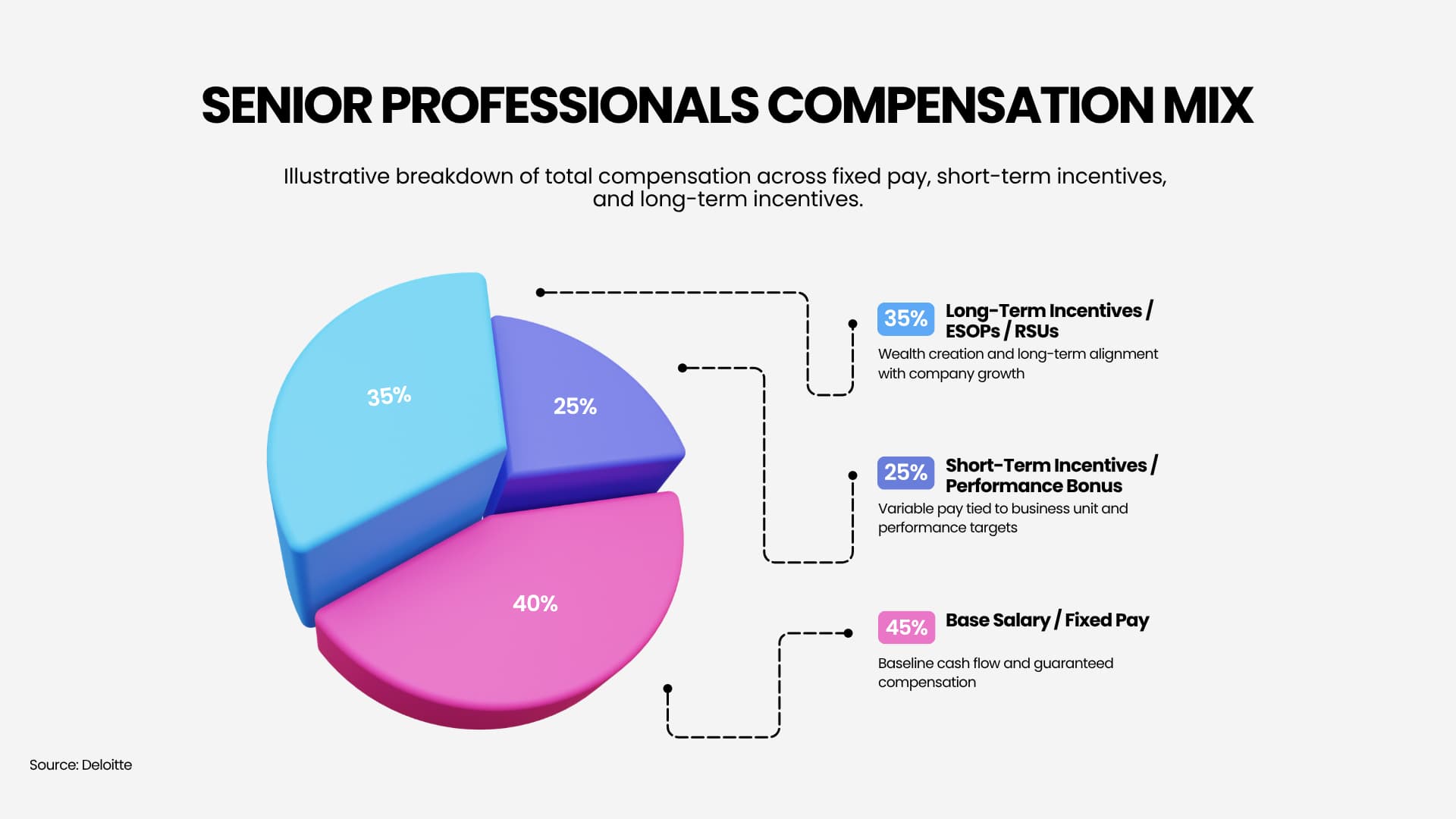
According to the Deloitte India Executive Performance and Rewards Survey, variable pay and long-term incentives now make up over 50% of total executive compensation packages.
Executing a value-based salary negotiation strategy requires shifting the narrative from cost to investment return. This shifting landscape proves that senior roles are valued on business impact rather than standardized salary scales.
When a recruiter asks for your target number, you must position yourself as a business partner. Your price should align with the size of the problem you are solving, not your previous pay structure.
Consider a Director of Product Management interviewing at an AI-driven enterprise software company. Instead of naming a static number, she uses a value-based reframing script.
She explains that her compensation expectations depend on the product roadmap scale and the target ARR milestones. This response shifts the focus to her execution strategy and prevents early cost filtering.
Conducting Pre-Interview Value Discovery
To successfully reframe the salary question, you must uncover the actual cost of the company's business problems. This requires asking targeted questions during your early technical and managerial interviews.
Ask the hiring manager about their chief operational bottlenecks, target revenue timelines, and the cost of leaving this leadership position vacant.
What is the primary metric this business unit must hit over the next twelve months?
What specific obstacles prevented the previous team from achieving this goal?
How does this role’s performance directly impact the company's annual recurring revenue?
Once you know the exact value of the problems you are hired to solve, you can link your compensation expectations to those exact business metrics.
Once the company understands the value and results you can deliver, you can begin discussing the right mix of base salary and performance-based compensation.
The Variable Pay: Negotiating Stocks, LTI, and Performance Bonuses
Guaranteed base salary is only one part of a modern executive compensation package.
Mastering the Mechanics of Executive Equity
According to the EY India Future of Pay Report, tech companies are applying sharper performance differentiation, raising variable payout ratios to over 35% for senior management.
This trend means your long-term wealth is increasingly tied to equity and milestone bonuses.
Most quick salary negotiation hacks focus on what to say. But for senior roles, you also need to understand how equity works..
When you receive an equity offer, don't focus only on the total value of the shares.
Check the details, such as:
How long does it take for the shares to vest
Whether there is a cliff period before vesting starts
The strike price, if stock options are involved
A four-year vesting schedule with a one-year cliff is common, but some terms can be negotiated.
If you are being hired to lead a major business initiative, you may be able to negotiate a vesting schedule that better rewards you for achieving specific goals. You can also negotiate protections that allow your shares to vest sooner if the company is acquired.
For example, a VP of Sales joining an APAC SaaS company could not increase the base salary. Instead, he negotiated a three-year vesting schedule with no cliff, allowing him to access the value of his equity sooner.
Evaluating Stock Options: Strike Prices and Dilution Risks
Many senior professionals accept stock options without understanding what they are really worth. As a result, they can end up holding shares that have little or no value.
Before accepting an equity offer, ask for key details about the company's shares and valuation.
Find out:
The company's latest valuation
The current fair market value of the shares
The strike price, or how much you must pay to buy each share
The total number of shares outstanding, so you can calculate your ownership percentage
For example, a Director of Engineering at an AI startup in Pune was offered 10,000 stock options. Instead of focusing on the number of options, he asked for the company's valuation details.
He discovered that the strike price was so high that there would be very little financial gain if the company succeeded. He negotiated a lower strike price and a larger equity package, increasing his potential long-term return.
Understanding how equity works can help you negotiate more value, even when the company cannot increase your base salary.
How Senior Leaders Win Before They Speak
The toughest part of salary negotiation is not the conversation itself. It is the preparation that happens before it.
By the time a company makes an offer, it has already formed an opinion about your value. That opinion is based on your resume, interview performance, experience, leadership level, and the results you have delivered in previous roles.
That is why salary negotiation should not be treated as a single discussion at the end of the hiring process. For senior professionals, it starts much earlier.
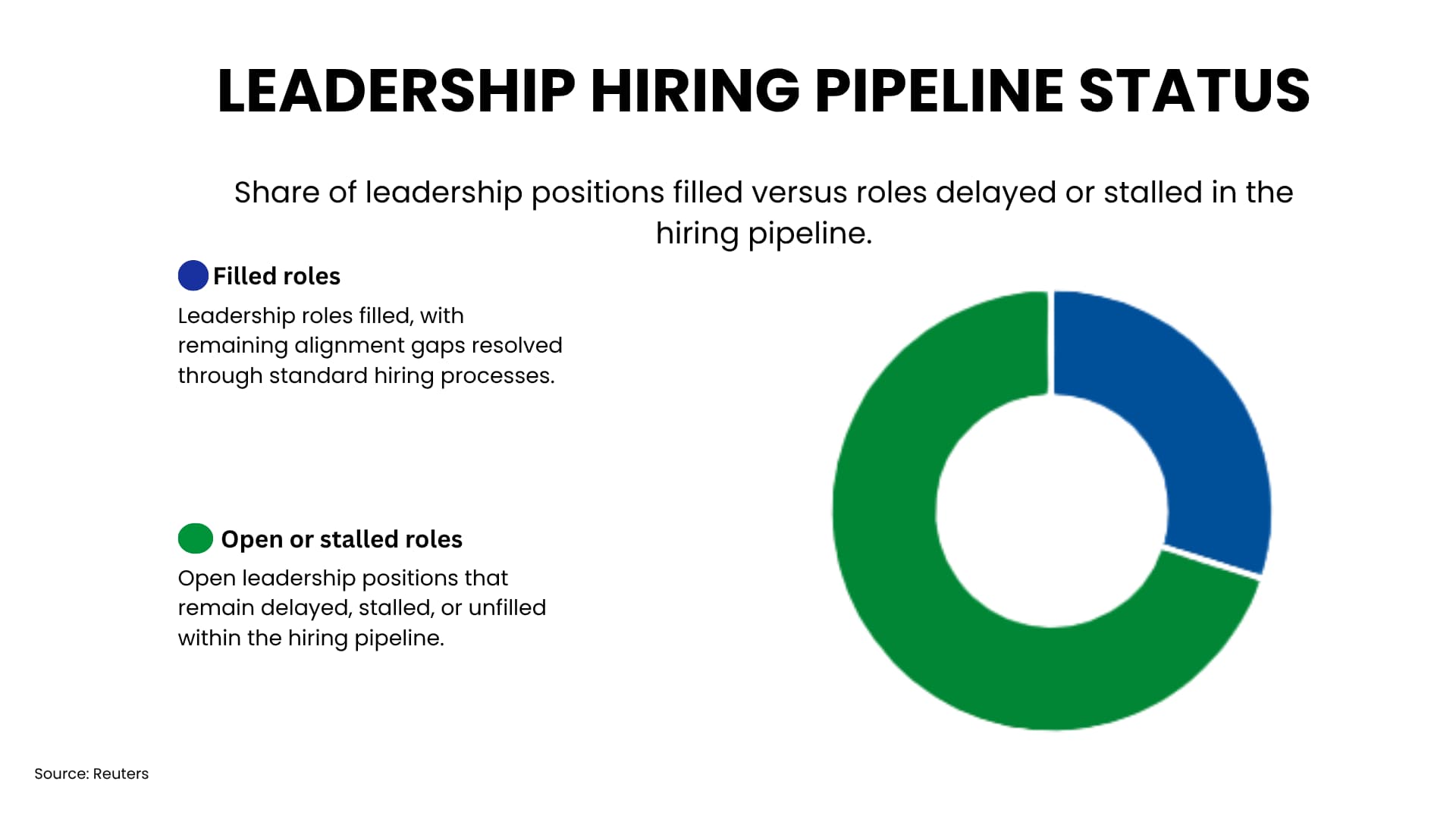
According to a market report published by Reuters, hiring firms like TeamLease are currently able to fill only about 30% percent of active client openings due to severe mismatches in salary expectations, location preferences, and candidate skills.
Before speaking with recruiters, define a clear salary range for yourself. Many professionals know they want higher compensation, but they do not have a well-researched target in mind.
Your range should be based on:
Your current CTC and compensation structure
The budget and scope of the role you are targeting
The minimum offer you are willing to accept
The business results and impact you have delivered in previous roles
Having these numbers ready helps you respond confidently when a recruiter asks about salary expectations during an early screening call. It also reduces the risk of underselling yourself before formal negotiations even begin.
Want to evade ATS checkers every time? Check out my other blog on how to make an ATS-friendly resume.
Shifting from Personal Demands to Business Cases
A weak salary negotiation focuses only on personal needs. Saying you deserve more pay because you have many years of experience or because your expenses have increased is rarely a convincing argument.
A stronger approach is to treat compensation as a business discussion. Connect your salary expectations to the responsibilities of the role, the size of the team or budget you will manage, and the results you are expected to deliver.
Recruiters and HR teams can easily challenge a request based on an arbitrary percentage increase. It is much harder to challenge a well-supported case backed by market data, role expectations, and clear evidence of your past achievements.
The more you can demonstrate the value you bring to the business, the stronger your position during salary negotiations.
How to Practice Salary Negotiation With NxtJob.ai
Most senior professionals understand salary negotiation skills in theory. The challenge comes when they face real objections during a live conversation.
That is where practice becomes important.
NxtJob.ai includes an AI-powered Negotiation agent that lets you rehearse salary discussions before speaking with a recruiter.
You can practice responding to common objections, test different compensation ranges, and get feedback on how effectively you communicate your value.
By simulating real negotiation scenarios, the tool helps you build confidence and prepare for high-stakes compensation conversations.
Here is the step-by-step process for practicing salary negotiation using the platform:
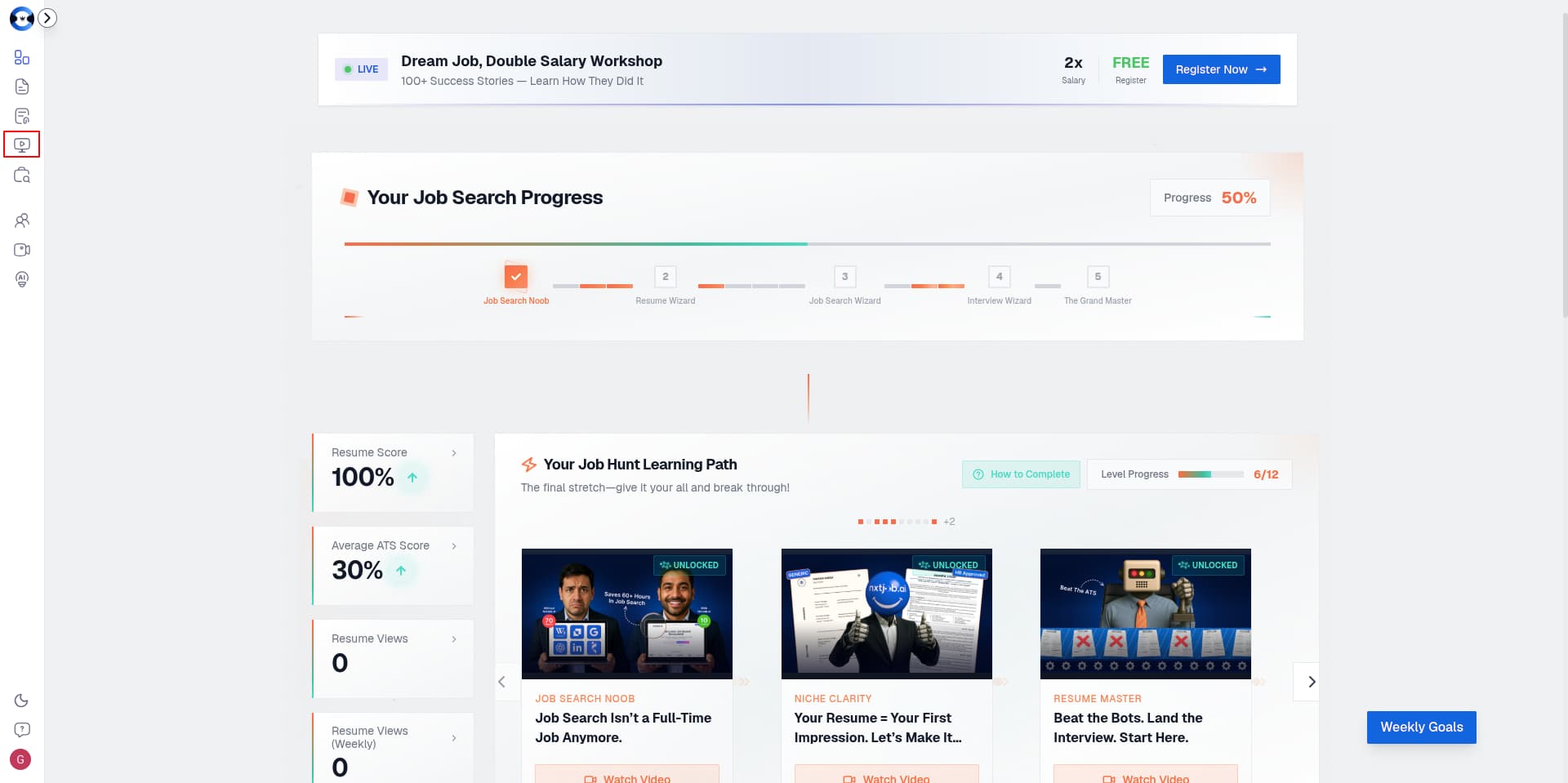
Step 1: Open the Interviewer Section
From your NxtJob.ai dashboard, click the Interviewer icon in the left-hand navigation menu.
Step 2: Start a New Practice Session
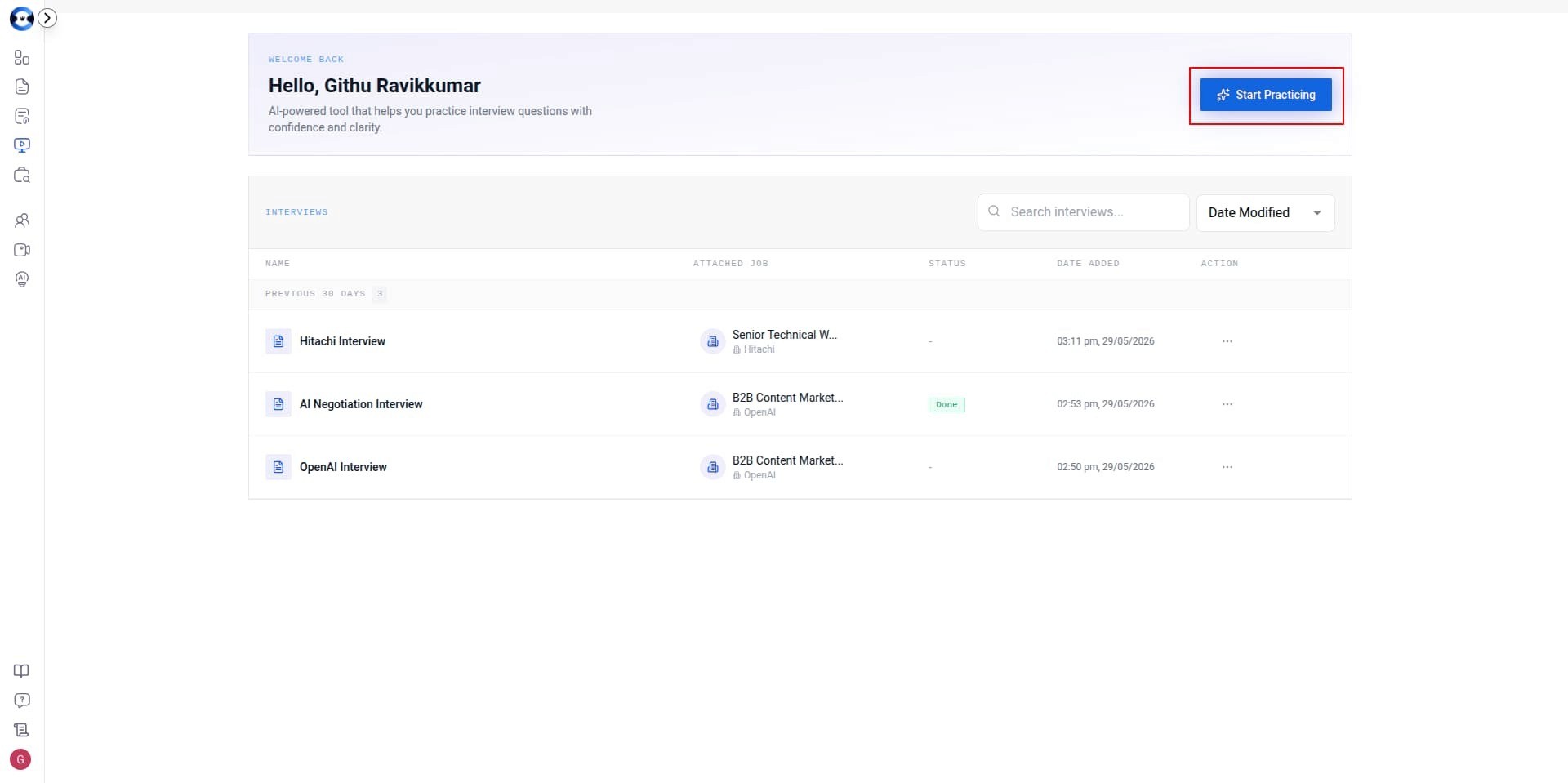
Inside the Interviewer dashboard, click “Start Practicing” in the top-right corner to create a new practice session.
Step 3: Select Your Target Job
Choose a job from your saved jobs list. This helps the AI tailor the negotiation scenario to the role, company, and seniority level you are targeting.
If you want to practice general salary negotiations, you can also continue without selecting a specific job.
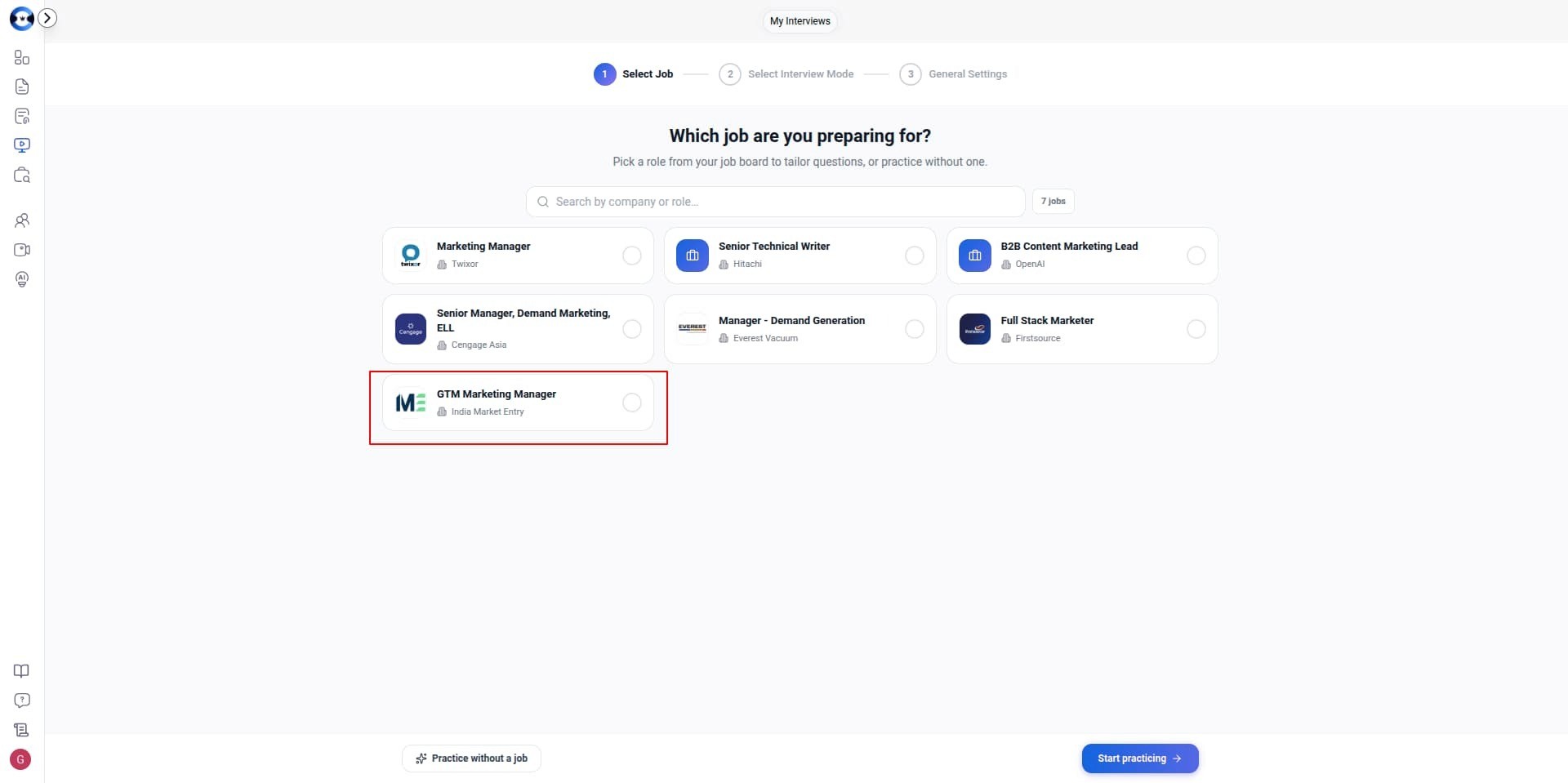
Step 4: Choose Interview Mode
You can either practice a real interview experience with your AI interviewer or prepare specific questions to tailor your AI interview practice.

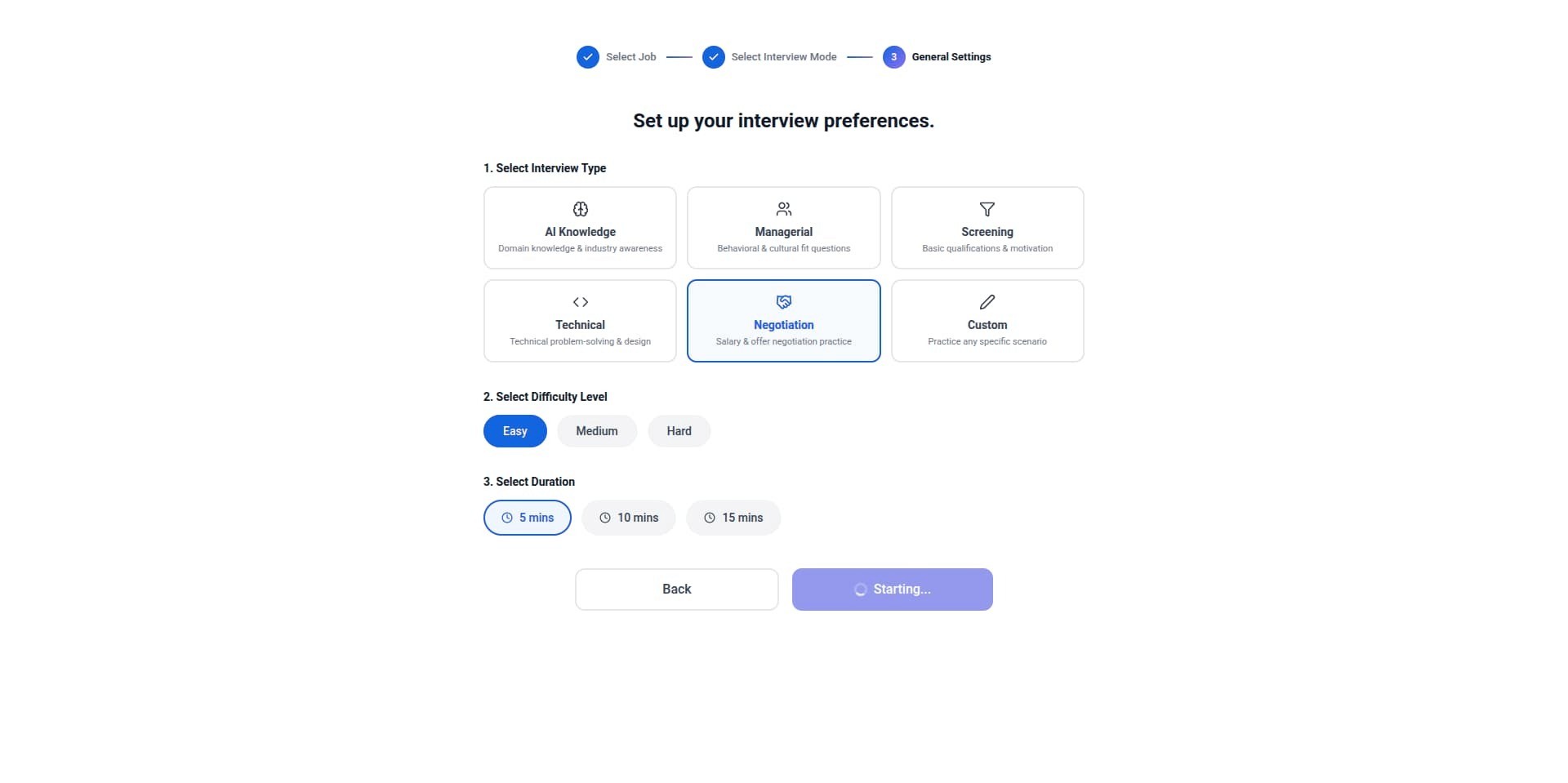
Step 5: Configure Your Session
Set your preferred difficulty level:
Select interview type (negotiation, in our case)
Select difficulty level: easy, medium, and hard
Next, choose a session length of 5, 10, or 15 minutes.
Step 6: Practice and Review Your Performance
Click Start Interview to begin.
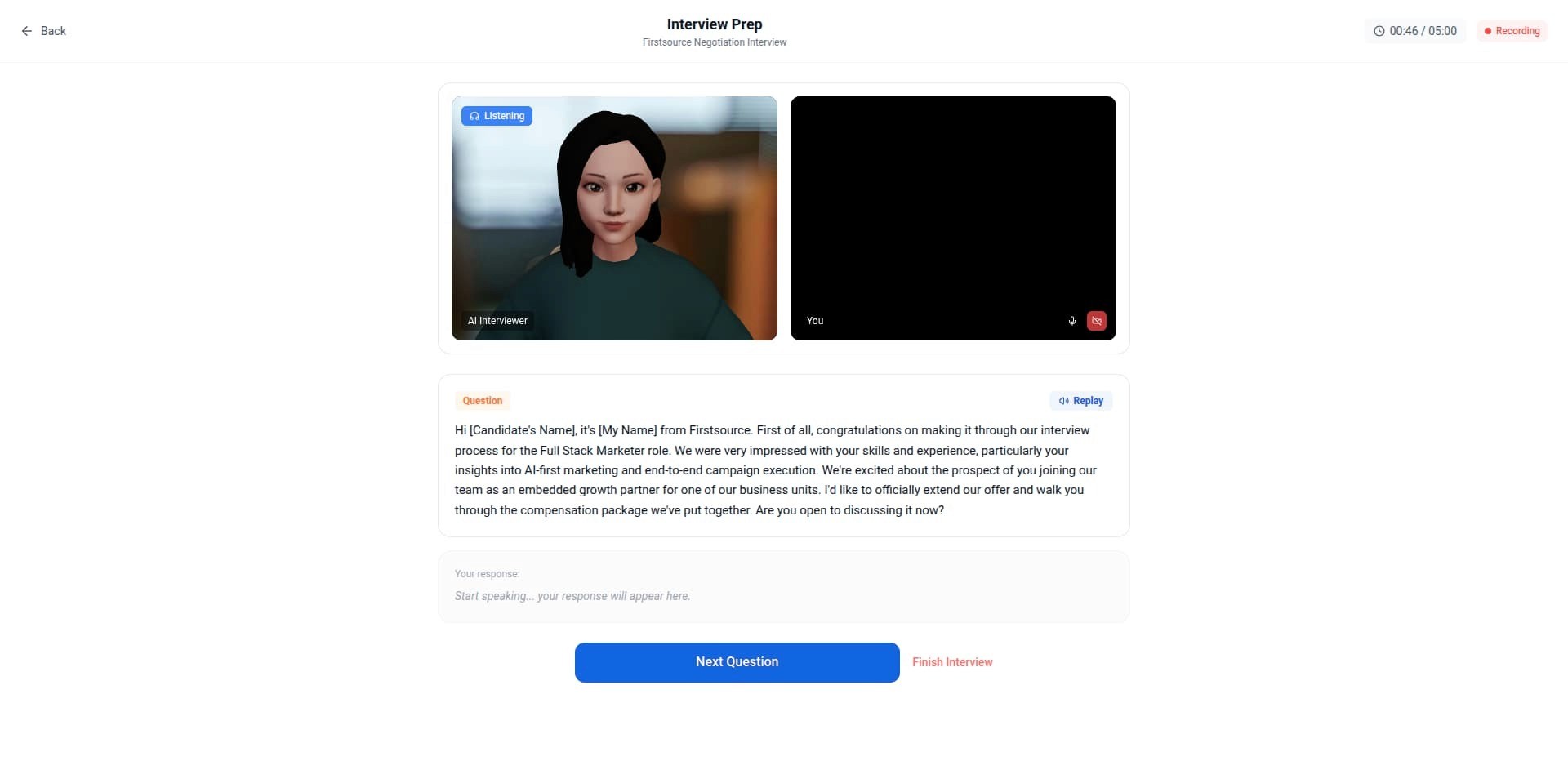
The AI recruiter will present realistic salary negotiation scenarios, compensation objections, and follow-up questions. Practice explaining your target range, business impact, and compensation expectations with confidence.
After the session, you will receive a detailed performance report that includes:
An overall interview score
A complete transcript of your responses
Speaking pace and words-per-minute (WPM) analysis
Filler-word tracking
Personalized feedback to improve future negotiations
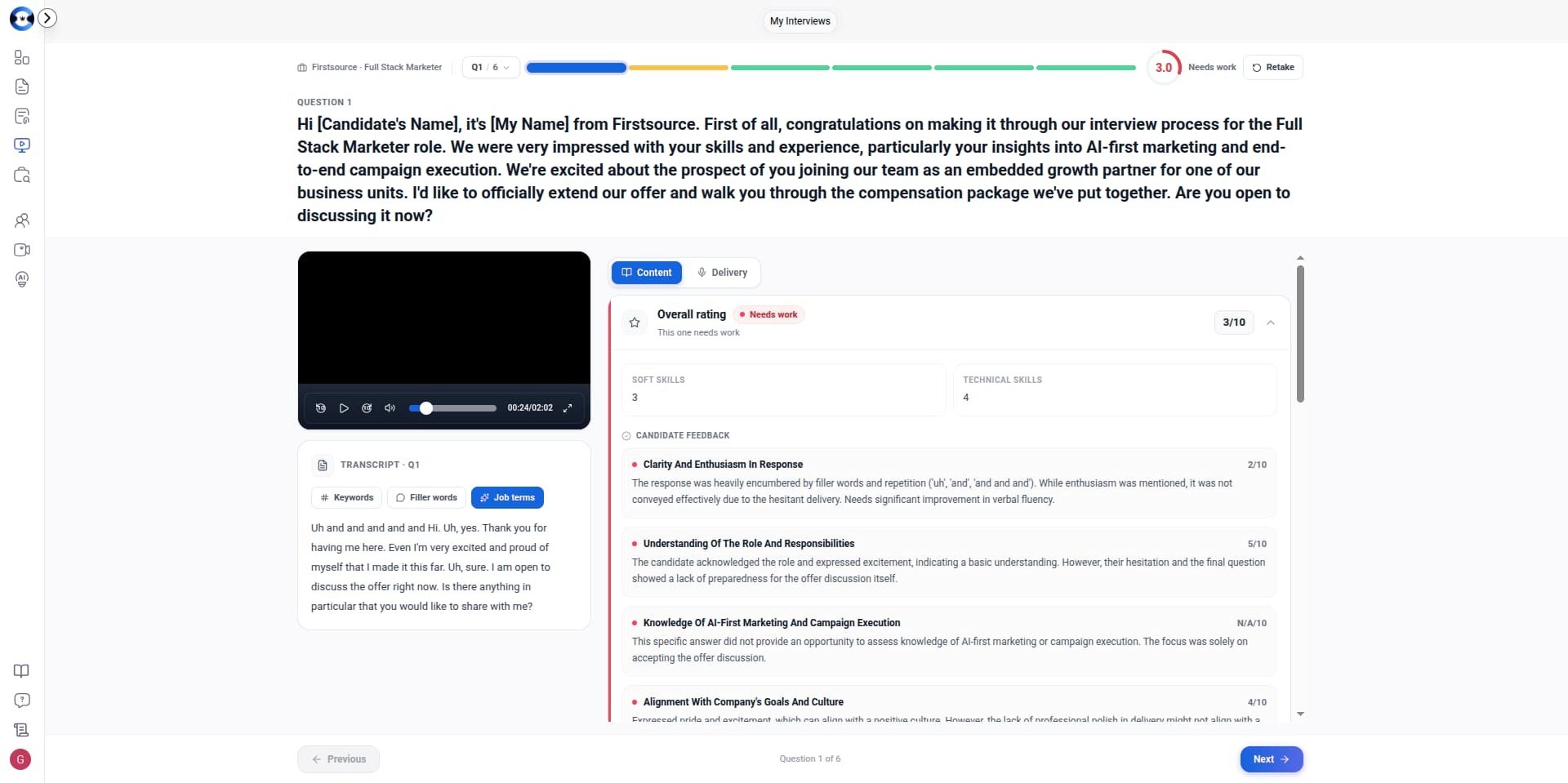
Review these insights, refine your approach, and repeat the exercise until you can handle compensation discussions with confidence.
NOTE:
Negotiator works together with other AI agents like Networker. If you want to master the art f networking, check out this blog: How to reach out to a recruiter on LinkedIn.
Bypassing the Indian Form 16 and Payslip Situation
Most international career resources focus on standard salary negotiation tips; India, however, requires a completely different approach due to the common demand for past payslips.
The challenge is that your current salary may not reflect your actual market value. Professionals with in-demand skills often command significantly higher compensation when changing roles, especially at the senior level.
Because of this, relying solely on past salary documents can create an inaccurate picture of what you are worth today.
That said, refusing to share these documents outright can slow down the hiring process. The key is to manage the conversation carefully.
Delay Document Sharing Until Later Stages
If possible, wait until you have received a written offer before sharing sensitive compensation documents.
At that point, the company has already assessed your skills, experience, and fit for the role. The discussion is more likely to focus on your value rather than your salary history.
As executive search professionals often point out, companies hire senior leaders for the results they can deliver in the future, not for what they earned in the past.
How to Respond to Early Requests
If a recruiter asks for your payslip or Form 16 during the initial stages, consider responding professionally:
Explain that your compensation information is confidential.
Emphasize that you are happy to complete any required verification later in the process.
Offer alternative verification methods if needed.
Confirm that you will provide all necessary documents once an offer is finalized.
Keep the Focus on Your Value
The goal is not to avoid verification. It is to ensure that compensation discussions are based on:
The scope of the role
The business outcomes you are expected to deliver
Current market rates
Your skills and leadership experience
By handling document requests carefully, you reduce the risk of having your offer anchored to your current salary and increase the chances of being evaluated based on your potential impact.
The Senior Negotiation Playbook: A Step-by-Step Practical Framework
Research from Harvard Business School and UCLA Anderson found that 85% of tech and SaaS professionals who negotiated their initial offer received improved compensation terms.
So, getting the compensation you deserve requires more than a strong negotiation call. It requires a structured process from preparation to final offer review.
Prepare Before Negotiations Begin
Before discussing compensation, establish a clear plan.
Make sure you know:
The minimum offer you are willing to accept
The value of any bonuses, stock options, or equity you would leave behind at your current company
Current market compensation for similar roles
During early interviews, focus conversations on the business problems you can solve and the value you bring. Avoid discussing your current salary until later in the hiring process, whenever possible.
Analyze the Offer
When you receive a written offer, review every component carefully, not just the base salary.
You should evaluate:
Fixed compensation
Performance bonuses and incentives
Equity or stock options
Joining bonuses
Benefits and long-term rewards
NxtJob.ai's AI Negotiator Agent can help analyze these components, identify potential gaps, and generate a structured counteroffer based on your goals.
Present a Structured Counteroffer
Instead of asking for a higher salary alone, consider the entire compensation package.
Your counteroffer can include adjustments to:
Base salary
Variable pay and bonuses
Equity grants or stock options
Joining bonuses
Additional benefits or flexibility
A well-structured proposal gives employers multiple ways to improve the offer while staying within budget constraints.
Review the Fine Print Before Signing
Before accepting the final offer, review all compensation details carefully.
Pay special attention to:
Equity vesting schedules
Strike prices for stock options
Bonus payout conditions
Tax implications
Any clauses that affect future compensation
A thorough review helps ensure there are no surprises after you join.
Following this process allows you to approach compensation discussions with clear data, stronger leverage, and a better understanding of the total value of the offer.
Conclusion
Successful salary negotiation starts long before the offer stage. The strongest candidates prepare their strategy early, understand their market value, and negotiate the entire compensation package rather than focusing only on base salary.
Keep these principles in mind:
Avoid discussing salary expectations too early and keep the focus on the value you can deliver.
Look beyond base pay and negotiate bonuses, equity, sign-on incentives, and other compensation components.
Carefully review equity terms, including vesting schedules and option details, before signing.
Share payslips and tax documents only when necessary and preferably after a written offer has been agreed upon.
Most importantly, remember that your future compensation should be based on the impact you can create, not simply on what you earned in your previous role.
If you want help preparing for compensation discussions, analyzing offers, or practicing negotiation scenarios, NxtJob.ai's AI Negotiator Agent can help you evaluate opportunities and approach salary conversations with greater confidence.

As a content writer and SEO strategist, I help turn complex AI job search, career-tech, and growth topics into clear, practical content. At NxtJob.ai, I write to help senior professionals make smarter career moves with clarity and confidence.
Githu Ravikkumar
Creative Strategist & Copywriter
Recent articles

Resume
5 min read
ATS Resume Format: How to Create a Resume That Gets Past Applicant Tracking Systems
Learn how to create an ATS-friendly resume that passes through applicant tracking systems and increases your chances of landing an interview.
Resume
5 min read
ATS Resume Format: How to Create a Resume That Gets Past Applicant Tracking Systems
Learn how to create an ATS-friendly resume that passes through applicant tracking systems and increases your chances of landing an interview.
Resume
5 min read
ATS Resume Format: How to Create a Resume That Gets Past Applicant Tracking Systems
Learn how to create an ATS-friendly resume that passes through applicant tracking systems and increases your chances of landing an interview.
Resume
5 min read
ATS Resume Format: How to Create a Resume That Gets Past Applicant Tracking Systems
Learn how to create an ATS-friendly resume that passes through applicant tracking systems and increases your chances of landing an interview.
Resume
5 min read
ATS Resume Format: How to Create a Resume That Gets Past Applicant Tracking Systems
Learn how to create an ATS-friendly resume that passes through applicant tracking systems and increases your chances of landing an interview.
Resume
5 min read
ATS Resume Format: How to Create a Resume That Gets Past Applicant Tracking Systems
Learn how to create an ATS-friendly resume that passes through applicant tracking systems and increases your chances of landing an interview.
Everything you need to know
Here you can find solutions to all your queries.
How do I handle recruiters who demand my current CTC before scheduling interviews?
What should I do if a company claims they have a strict 30% hike policy?
Is it possible for an employer to rescind an offer because I negotiated?
How can the NxtJob.ai AI Negotiator Agent help me get a higher offer?
How do I negotiate my notice period buyout as part of my offer?
How do I negotiate a higher package during an internal promotion?
How is an executive sign-on bonus taxed in India, and how should I negotiate it?
How should I handle a counter-offer from my current employer?
Negotiation
10 min read
Salary Negotiation Tactics: Why Senior Leaders Must Never Name a Number First
Published Date:
|
Last Modified:
If you have 15+ years of experience, naming your salary first can cost you millions. Most senior candidates ruin their bargaining power by volunteering their current CTC during the initial HR screening.
They use what you earn now to cap what they offer you next, completely missing the real-world impact you will have on their business.
By the end of this guide, you will have a clear plan to handle salary questions, negotiate your stocks and bonuses, and get past standard HR budget limits with the help of NxtJob.ai.
Before speaking to another recruiter, sign up for free on NxtJob.ai to align your profile with high-value market roles.
Executive Summary: The Senior Negotiation Playbook
Negotiation Stage | Typical Candidate Action | Senior Counter-Strategy | Primary Communication Script |
Initial Screening | Volunteering current CTC or naming a salary expectation early. | Defer the compensation discussion until the full scope of the role and business expectations are defined. | I prefer to focus on understanding the strategic expectations of this role first before discussing numbers, so we can align on a package that reflects the scale of the business outcomes. |
Handling Pushback | Accepting a stated "maximum budget cap" as an unbendable rule. | Proposing a structured variable compensation model that offsets base-pay caps with performance bonuses or equity. | If the base salary is constrained by corporate grade policies, I am open to structuring a performance-based bonus linked directly to our target metrics. |
Managing Compliance | Handing over Form 16 or past payslips early, allowing HR to anchor the final offer. | Demurring on tax documents until a written, value-based offer is formally extended and agreed upon. | I will gladly share my financial verification documents as part of the formal background check once we have agreed on the written offer terms. |
Equity Negotiation | Accepting stock options without understanding vesting terms, strike prices, or liquidation preferences. | Demanding absolute clarity on the latest valuation, strike price, dilution history, and vesting schedules. | To evaluate the equity component of this offer, I need to understand the current share valuation, the historical dilution rates, and the specific terms of the vesting schedule. |
If this interests you, hang on, because I’m also going to explain how our Negotiator AI agent can make the negotiation as easy as saying ABC.
If you want more insights on salary negotiation, check out my other blog on salary negotiation with HR.
Why Naming Your Current CTC Destroys Senior Executive Bargaining Power
Recruiters use your past salary to solve their internal budgeting problems, not to reward your actual worth. When you volunteer your current compensation, you hand over your primary negotiating advantage.
The Bias of First Impressions
A compensation survey by Procurement Tactics found that 87% of employers have never withdrawn a job offer just because a candidate negotiated their salary. This shows that senior professionals often have more room to negotiate than they think.
Most standard salary negotiation tips for employee focus on simple responses, but senior leaders should treat compensation as their value. Sharing your current salary too early can set a low benchmark in the hiring team's mind.
Instead of assessing the value you can bring to the role, they may base their offer on the smallest increase needed to convince you to switch jobs.
For example, imagine you're an Engineering Director in Bengaluru earning ₹45 LPA. When asked about your current compensation, you disclose it right away. The company then offers a typical 30% increase, bringing your package to ₹58 LPA. That offer may have little to do with the impact you're expected to deliver.
If you're being hired to solve a problem that costs the company ₹5 crore a year, your value could justify much higher compensation.
If the company had budgeted up to ₹80 LPA for the role, revealing your salary early may have limited your negotiating position and resulted in a significantly lower offer.
The Danger of Internal Parity
HR often uses a concept called "internal parity" to justify low offers. They compare your proposed package with that of existing team members at the same grade.
If your current salary becomes the reference point, it's easier for HR to position you near the bottom of that pay range. They assume you will be satisfied with a standard 20 to 30 percent raise.
According to research from the UCLA Anderson School of Management, 85% of tech job seekers who made a formal counteroffer successfully increased their base pay.
When you avoid naming a number first, the discussion is more likely to focus on the company's budget for the role rather than your previous compensation. This can give you greater leverage during negotiations.
To strengthen your position, shift the conversation away from your salary history and toward the business results, leadership value, and measurable impact you can deliver in the role.
How to Reframe the Expected Salary Question
The "Expected CTC" question is a tricky question designed to qualify candidates based on cost rather than contribution.
Shifting the Narrative from Cost to Investment Return
According to the Deloitte India Executive Performance and Rewards Survey, variable pay and long-term incentives now make up over 50% of total executive compensation packages.
Executing a value-based salary negotiation strategy requires shifting the narrative from cost to investment return. This shifting landscape proves that senior roles are valued on business impact rather than standardized salary scales.
When a recruiter asks for your target number, you must position yourself as a business partner. Your price should align with the size of the problem you are solving, not your previous pay structure.
Consider a Director of Product Management interviewing at an AI-driven enterprise software company. Instead of naming a static number, she uses a value-based reframing script.
She explains that her compensation expectations depend on the product roadmap scale and the target ARR milestones. This response shifts the focus to her execution strategy and prevents early cost filtering.
Conducting Pre-Interview Value Discovery
To successfully reframe the salary question, you must uncover the actual cost of the company's business problems. This requires asking targeted questions during your early technical and managerial interviews.
Ask the hiring manager about their chief operational bottlenecks, target revenue timelines, and the cost of leaving this leadership position vacant.
What is the primary metric this business unit must hit over the next twelve months?
What specific obstacles prevented the previous team from achieving this goal?
How does this role’s performance directly impact the company's annual recurring revenue?
Once you know the exact value of the problems you are hired to solve, you can link your compensation expectations to those exact business metrics.
Once the company understands the value and results you can deliver, you can begin discussing the right mix of base salary and performance-based compensation.
The Variable Pay: Negotiating Stocks, LTI, and Performance Bonuses
Guaranteed base salary is only one part of a modern executive compensation package.
Mastering the Mechanics of Executive Equity
According to the EY India Future of Pay Report, tech companies are applying sharper performance differentiation, raising variable payout ratios to over 35% for senior management.
This trend means your long-term wealth is increasingly tied to equity and milestone bonuses.
Most quick salary negotiation hacks focus on what to say. But for senior roles, you also need to understand how equity works..
When you receive an equity offer, don't focus only on the total value of the shares.
Check the details, such as:
How long does it take for the shares to vest
Whether there is a cliff period before vesting starts
The strike price, if stock options are involved
A four-year vesting schedule with a one-year cliff is common, but some terms can be negotiated.
If you are being hired to lead a major business initiative, you may be able to negotiate a vesting schedule that better rewards you for achieving specific goals. You can also negotiate protections that allow your shares to vest sooner if the company is acquired.
For example, a VP of Sales joining an APAC SaaS company could not increase the base salary. Instead, he negotiated a three-year vesting schedule with no cliff, allowing him to access the value of his equity sooner.
Evaluating Stock Options: Strike Prices and Dilution Risks
Many senior professionals accept stock options without understanding what they are really worth. As a result, they can end up holding shares that have little or no value.
Before accepting an equity offer, ask for key details about the company's shares and valuation.
Find out:
The company's latest valuation
The current fair market value of the shares
The strike price, or how much you must pay to buy each share
The total number of shares outstanding, so you can calculate your ownership percentage
For example, a Director of Engineering at an AI startup in Pune was offered 10,000 stock options. Instead of focusing on the number of options, he asked for the company's valuation details.
He discovered that the strike price was so high that there would be very little financial gain if the company succeeded. He negotiated a lower strike price and a larger equity package, increasing his potential long-term return.
Understanding how equity works can help you negotiate more value, even when the company cannot increase your base salary.
How Senior Leaders Win Before They Speak
The toughest part of salary negotiation is not the conversation itself. It is the preparation that happens before it.
By the time a company makes an offer, it has already formed an opinion about your value. That opinion is based on your resume, interview performance, experience, leadership level, and the results you have delivered in previous roles.
That is why salary negotiation should not be treated as a single discussion at the end of the hiring process. For senior professionals, it starts much earlier.
According to a market report published by Reuters, hiring firms like TeamLease are currently able to fill only about 30% percent of active client openings due to severe mismatches in salary expectations, location preferences, and candidate skills.
Before speaking with recruiters, define a clear salary range for yourself. Many professionals know they want higher compensation, but they do not have a well-researched target in mind.
Your range should be based on:
Your current CTC and compensation structure
The budget and scope of the role you are targeting
The minimum offer you are willing to accept
The business results and impact you have delivered in previous roles
Having these numbers ready helps you respond confidently when a recruiter asks about salary expectations during an early screening call. It also reduces the risk of underselling yourself before formal negotiations even begin.
Want to evade ATS checkers every time? Check out my other blog on how to make an ATS-friendly resume.
Shifting from Personal Demands to Business Cases
A weak salary negotiation focuses only on personal needs. Saying you deserve more pay because you have many years of experience or because your expenses have increased is rarely a convincing argument.
A stronger approach is to treat compensation as a business discussion. Connect your salary expectations to the responsibilities of the role, the size of the team or budget you will manage, and the results you are expected to deliver.
Recruiters and HR teams can easily challenge a request based on an arbitrary percentage increase. It is much harder to challenge a well-supported case backed by market data, role expectations, and clear evidence of your past achievements.
The more you can demonstrate the value you bring to the business, the stronger your position during salary negotiations.
How to Practice Salary Negotiation With NxtJob.ai
Most senior professionals understand salary negotiation skills in theory. The challenge comes when they face real objections during a live conversation.
That is where practice becomes important.
NxtJob.ai includes an AI-powered Negotiation agent that lets you rehearse salary discussions before speaking with a recruiter.
You can practice responding to common objections, test different compensation ranges, and get feedback on how effectively you communicate your value.
By simulating real negotiation scenarios, the tool helps you build confidence and prepare for high-stakes compensation conversations.
Here is the step-by-step process for practicing salary negotiation using the platform:
Step 1: Open the Interviewer Section
From your NxtJob.ai dashboard, click the Interviewer icon in the left-hand navigation menu.
Step 2: Start a New Practice Session
Inside the Interviewer dashboard, click “Start Practicing” in the top-right corner to create a new practice session.
Step 3: Select Your Target Job
Choose a job from your saved jobs list. This helps the AI tailor the negotiation scenario to the role, company, and seniority level you are targeting.
If you want to practice general salary negotiations, you can also continue without selecting a specific job.
Step 4: Choose Interview Mode
You can either practice a real interview experience with your AI interviewer or prepare specific questions to tailor your AI interview practice.
Step 5: Configure Your Session
Set your preferred difficulty level:
Select interview type (negotiation, in our case)
Select difficulty level: easy, medium, and hard
Next, choose a session length of 5, 10, or 15 minutes.
Step 6: Practice and Review Your Performance
Click Start Interview to begin.
The AI recruiter will present realistic salary negotiation scenarios, compensation objections, and follow-up questions. Practice explaining your target range, business impact, and compensation expectations with confidence.
After the session, you will receive a detailed performance report that includes:
An overall interview score
A complete transcript of your responses
Speaking pace and words-per-minute (WPM) analysis
Filler-word tracking
Personalized feedback to improve future negotiations
Review these insights, refine your approach, and repeat the exercise until you can handle compensation discussions with confidence.
NOTE:
Negotiator works together with other AI agents like Networker. If you want to master the art f networking, check out this blog: How to reach out to a recruiter on LinkedIn.
Bypassing the Indian Form 16 and Payslip Situation
Most international career resources focus on standard salary negotiation tips; India, however, requires a completely different approach due to the common demand for past payslips.
The challenge is that your current salary may not reflect your actual market value. Professionals with in-demand skills often command significantly higher compensation when changing roles, especially at the senior level.
Because of this, relying solely on past salary documents can create an inaccurate picture of what you are worth today.
That said, refusing to share these documents outright can slow down the hiring process. The key is to manage the conversation carefully.
Delay Document Sharing Until Later Stages
If possible, wait until you have received a written offer before sharing sensitive compensation documents.
At that point, the company has already assessed your skills, experience, and fit for the role. The discussion is more likely to focus on your value rather than your salary history.
As executive search professionals often point out, companies hire senior leaders for the results they can deliver in the future, not for what they earned in the past.
How to Respond to Early Requests
If a recruiter asks for your payslip or Form 16 during the initial stages, consider responding professionally:
Explain that your compensation information is confidential.
Emphasize that you are happy to complete any required verification later in the process.
Offer alternative verification methods if needed.
Confirm that you will provide all necessary documents once an offer is finalized.
Keep the Focus on Your Value
The goal is not to avoid verification. It is to ensure that compensation discussions are based on:
The scope of the role
The business outcomes you are expected to deliver
Current market rates
Your skills and leadership experience
By handling document requests carefully, you reduce the risk of having your offer anchored to your current salary and increase the chances of being evaluated based on your potential impact.
The Senior Negotiation Playbook: A Step-by-Step Practical Framework
Research from Harvard Business School and UCLA Anderson found that 85% of tech and SaaS professionals who negotiated their initial offer received improved compensation terms.
So, getting the compensation you deserve requires more than a strong negotiation call. It requires a structured process from preparation to final offer review.
Prepare Before Negotiations Begin
Before discussing compensation, establish a clear plan.
Make sure you know:
The minimum offer you are willing to accept
The value of any bonuses, stock options, or equity you would leave behind at your current company
Current market compensation for similar roles
During early interviews, focus conversations on the business problems you can solve and the value you bring. Avoid discussing your current salary until later in the hiring process, whenever possible.
Analyze the Offer
When you receive a written offer, review every component carefully, not just the base salary.
You should evaluate:
Fixed compensation
Performance bonuses and incentives
Equity or stock options
Joining bonuses
Benefits and long-term rewards
NxtJob.ai's AI Negotiator Agent can help analyze these components, identify potential gaps, and generate a structured counteroffer based on your goals.
Present a Structured Counteroffer
Instead of asking for a higher salary alone, consider the entire compensation package.
Your counteroffer can include adjustments to:
Base salary
Variable pay and bonuses
Equity grants or stock options
Joining bonuses
Additional benefits or flexibility
A well-structured proposal gives employers multiple ways to improve the offer while staying within budget constraints.
Review the Fine Print Before Signing
Before accepting the final offer, review all compensation details carefully.
Pay special attention to:
Equity vesting schedules
Strike prices for stock options
Bonus payout conditions
Tax implications
Any clauses that affect future compensation
A thorough review helps ensure there are no surprises after you join.
Following this process allows you to approach compensation discussions with clear data, stronger leverage, and a better understanding of the total value of the offer.
Conclusion
Successful salary negotiation starts long before the offer stage. The strongest candidates prepare their strategy early, understand their market value, and negotiate the entire compensation package rather than focusing only on base salary.
Keep these principles in mind:
Avoid discussing salary expectations too early and keep the focus on the value you can deliver.
Look beyond base pay and negotiate bonuses, equity, sign-on incentives, and other compensation components.
Carefully review equity terms, including vesting schedules and option details, before signing.
Share payslips and tax documents only when necessary and preferably after a written offer has been agreed upon.
Most importantly, remember that your future compensation should be based on the impact you can create, not simply on what you earned in your previous role.
If you want help preparing for compensation discussions, analyzing offers, or practicing negotiation scenarios, NxtJob.ai's AI Negotiator Agent can help you evaluate opportunities and approach salary conversations with greater confidence.
Table of content

Interview
Behavioral interview questions & answers for senior leaders
A senior resume summary is four lines: your level, your scope, one proven result, and the role you want. Here is the formula, five examples, and a rewrite you can copy tonight.
Resume
Professional Summary Resumes to Grab Recruiters' Attention
A senior resume summary is four lines: your level, your scope, one proven result, and the role you want. Here is the formula, five examples, and a rewrite you can copy tonight.
As a content writer and SEO strategist, I help turn complex AI job search, career-tech, and growth topics into clear, practical content. At NxtJob.ai, I write to help senior professionals make smarter career moves with clarity and confidence.
Githu Ravikkumar
Creative Strategist & Copywriter
How do I handle recruiters who demand my current CTC before scheduling interviews?
What should I do if a company claims they have a strict 30% hike policy?
Is it possible for an employer to rescind an offer because I negotiated?
How can the NxtJob.ai AI Negotiator Agent help me get a higher offer?
How do I negotiate my notice period buyout as part of my offer?
How do I negotiate a higher package during an internal promotion?
How is an executive sign-on bonus taxed in India, and how should I negotiate it?
How should I handle a counter-offer from my current employer?
Everything you need to know
Here you can find solutions to all your queries.
Negotiation
10 min read
Published Date:
|
Last Modified:
Salary Negotiation Tactics: Why Senior Leaders Must Never Name a Number First
If you have 15+ years of experience, naming your salary first can cost you millions. Most senior candidates ruin their bargaining power by volunteering their current CTC during the initial HR screening.
They use what you earn now to cap what they offer you next, completely missing the real-world impact you will have on their business.
By the end of this guide, you will have a clear plan to handle salary questions, negotiate your stocks and bonuses, and get past standard HR budget limits with the help of NxtJob.ai.
Before speaking to another recruiter, sign up for free on NxtJob.ai to align your profile with high-value market roles.
Executive Summary: The Senior Negotiation Playbook
Negotiation Stage | Typical Candidate Action | Senior Counter-Strategy | Primary Communication Script |
Initial Screening | Volunteering current CTC or naming a salary expectation early. | Defer the compensation discussion until the full scope of the role and business expectations are defined. | I prefer to focus on understanding the strategic expectations of this role first before discussing numbers, so we can align on a package that reflects the scale of the business outcomes. |
Handling Pushback | Accepting a stated "maximum budget cap" as an unbendable rule. | Proposing a structured variable compensation model that offsets base-pay caps with performance bonuses or equity. | If the base salary is constrained by corporate grade policies, I am open to structuring a performance-based bonus linked directly to our target metrics. |
Managing Compliance | Handing over Form 16 or past payslips early, allowing HR to anchor the final offer. | Demurring on tax documents until a written, value-based offer is formally extended and agreed upon. | I will gladly share my financial verification documents as part of the formal background check once we have agreed on the written offer terms. |
Equity Negotiation | Accepting stock options without understanding vesting terms, strike prices, or liquidation preferences. | Demanding absolute clarity on the latest valuation, strike price, dilution history, and vesting schedules. | To evaluate the equity component of this offer, I need to understand the current share valuation, the historical dilution rates, and the specific terms of the vesting schedule. |
If this interests you, hang on, because I’m also going to explain how our Negotiator AI agent can make the negotiation as easy as saying ABC.
If you want more insights on salary negotiation, check out my other blog on salary negotiation with HR.
Why Naming Your Current CTC Destroys Senior Executive Bargaining Power
Recruiters use your past salary to solve their internal budgeting problems, not to reward your actual worth. When you volunteer your current compensation, you hand over your primary negotiating advantage.
The Bias of First Impressions
A compensation survey by Procurement Tactics found that 87% of employers have never withdrawn a job offer just because a candidate negotiated their salary. This shows that senior professionals often have more room to negotiate than they think.
Most standard salary negotiation tips for employee focus on simple responses, but senior leaders should treat compensation as their value. Sharing your current salary too early can set a low benchmark in the hiring team's mind.
Instead of assessing the value you can bring to the role, they may base their offer on the smallest increase needed to convince you to switch jobs.
For example, imagine you're an Engineering Director in Bengaluru earning ₹45 LPA. When asked about your current compensation, you disclose it right away. The company then offers a typical 30% increase, bringing your package to ₹58 LPA. That offer may have little to do with the impact you're expected to deliver.
If you're being hired to solve a problem that costs the company ₹5 crore a year, your value could justify much higher compensation.
If the company had budgeted up to ₹80 LPA for the role, revealing your salary early may have limited your negotiating position and resulted in a significantly lower offer.
The Danger of Internal Parity
HR often uses a concept called "internal parity" to justify low offers. They compare your proposed package with that of existing team members at the same grade.
If your current salary becomes the reference point, it's easier for HR to position you near the bottom of that pay range. They assume you will be satisfied with a standard 20 to 30 percent raise.
According to research from the UCLA Anderson School of Management, 85% of tech job seekers who made a formal counteroffer successfully increased their base pay.
When you avoid naming a number first, the discussion is more likely to focus on the company's budget for the role rather than your previous compensation. This can give you greater leverage during negotiations.
To strengthen your position, shift the conversation away from your salary history and toward the business results, leadership value, and measurable impact you can deliver in the role.
How to Reframe the Expected Salary Question
The "Expected CTC" question is a tricky question designed to qualify candidates based on cost rather than contribution.
Shifting the Narrative from Cost to Investment Return
According to the Deloitte India Executive Performance and Rewards Survey, variable pay and long-term incentives now make up over 50% of total executive compensation packages.
Executing a value-based salary negotiation strategy requires shifting the narrative from cost to investment return. This shifting landscape proves that senior roles are valued on business impact rather than standardized salary scales.
When a recruiter asks for your target number, you must position yourself as a business partner. Your price should align with the size of the problem you are solving, not your previous pay structure.
Consider a Director of Product Management interviewing at an AI-driven enterprise software company. Instead of naming a static number, she uses a value-based reframing script.
She explains that her compensation expectations depend on the product roadmap scale and the target ARR milestones. This response shifts the focus to her execution strategy and prevents early cost filtering.
Conducting Pre-Interview Value Discovery
To successfully reframe the salary question, you must uncover the actual cost of the company's business problems. This requires asking targeted questions during your early technical and managerial interviews.
Ask the hiring manager about their chief operational bottlenecks, target revenue timelines, and the cost of leaving this leadership position vacant.
What is the primary metric this business unit must hit over the next twelve months?
What specific obstacles prevented the previous team from achieving this goal?
How does this role’s performance directly impact the company's annual recurring revenue?
Once you know the exact value of the problems you are hired to solve, you can link your compensation expectations to those exact business metrics.
Once the company understands the value and results you can deliver, you can begin discussing the right mix of base salary and performance-based compensation.
The Variable Pay: Negotiating Stocks, LTI, and Performance Bonuses
Guaranteed base salary is only one part of a modern executive compensation package.
Mastering the Mechanics of Executive Equity
According to the EY India Future of Pay Report, tech companies are applying sharper performance differentiation, raising variable payout ratios to over 35% for senior management.
This trend means your long-term wealth is increasingly tied to equity and milestone bonuses.
Most quick salary negotiation hacks focus on what to say. But for senior roles, you also need to understand how equity works..
When you receive an equity offer, don't focus only on the total value of the shares.
Check the details, such as:
How long does it take for the shares to vest
Whether there is a cliff period before vesting starts
The strike price, if stock options are involved
A four-year vesting schedule with a one-year cliff is common, but some terms can be negotiated.
If you are being hired to lead a major business initiative, you may be able to negotiate a vesting schedule that better rewards you for achieving specific goals. You can also negotiate protections that allow your shares to vest sooner if the company is acquired.
For example, a VP of Sales joining an APAC SaaS company could not increase the base salary. Instead, he negotiated a three-year vesting schedule with no cliff, allowing him to access the value of his equity sooner.
Evaluating Stock Options: Strike Prices and Dilution Risks
Many senior professionals accept stock options without understanding what they are really worth. As a result, they can end up holding shares that have little or no value.
Before accepting an equity offer, ask for key details about the company's shares and valuation.
Find out:
The company's latest valuation
The current fair market value of the shares
The strike price, or how much you must pay to buy each share
The total number of shares outstanding, so you can calculate your ownership percentage
For example, a Director of Engineering at an AI startup in Pune was offered 10,000 stock options. Instead of focusing on the number of options, he asked for the company's valuation details.
He discovered that the strike price was so high that there would be very little financial gain if the company succeeded. He negotiated a lower strike price and a larger equity package, increasing his potential long-term return.
Understanding how equity works can help you negotiate more value, even when the company cannot increase your base salary.
How Senior Leaders Win Before They Speak
The toughest part of salary negotiation is not the conversation itself. It is the preparation that happens before it.
By the time a company makes an offer, it has already formed an opinion about your value. That opinion is based on your resume, interview performance, experience, leadership level, and the results you have delivered in previous roles.
That is why salary negotiation should not be treated as a single discussion at the end of the hiring process. For senior professionals, it starts much earlier.
According to a market report published by Reuters, hiring firms like TeamLease are currently able to fill only about 30% percent of active client openings due to severe mismatches in salary expectations, location preferences, and candidate skills.
Before speaking with recruiters, define a clear salary range for yourself. Many professionals know they want higher compensation, but they do not have a well-researched target in mind.
Your range should be based on:
Your current CTC and compensation structure
The budget and scope of the role you are targeting
The minimum offer you are willing to accept
The business results and impact you have delivered in previous roles
Having these numbers ready helps you respond confidently when a recruiter asks about salary expectations during an early screening call. It also reduces the risk of underselling yourself before formal negotiations even begin.
Want to evade ATS checkers every time? Check out my other blog on how to make an ATS-friendly resume.
Shifting from Personal Demands to Business Cases
A weak salary negotiation focuses only on personal needs. Saying you deserve more pay because you have many years of experience or because your expenses have increased is rarely a convincing argument.
A stronger approach is to treat compensation as a business discussion. Connect your salary expectations to the responsibilities of the role, the size of the team or budget you will manage, and the results you are expected to deliver.
Recruiters and HR teams can easily challenge a request based on an arbitrary percentage increase. It is much harder to challenge a well-supported case backed by market data, role expectations, and clear evidence of your past achievements.
The more you can demonstrate the value you bring to the business, the stronger your position during salary negotiations.
How to Practice Salary Negotiation With NxtJob.ai
Most senior professionals understand salary negotiation skills in theory. The challenge comes when they face real objections during a live conversation.
That is where practice becomes important.
NxtJob.ai includes an AI-powered Negotiation agent that lets you rehearse salary discussions before speaking with a recruiter.
You can practice responding to common objections, test different compensation ranges, and get feedback on how effectively you communicate your value.
By simulating real negotiation scenarios, the tool helps you build confidence and prepare for high-stakes compensation conversations.
Here is the step-by-step process for practicing salary negotiation using the platform:
Step 1: Open the Interviewer Section
From your NxtJob.ai dashboard, click the Interviewer icon in the left-hand navigation menu.
Step 2: Start a New Practice Session
Inside the Interviewer dashboard, click “Start Practicing” in the top-right corner to create a new practice session.
Step 3: Select Your Target Job
Choose a job from your saved jobs list. This helps the AI tailor the negotiation scenario to the role, company, and seniority level you are targeting.
If you want to practice general salary negotiations, you can also continue without selecting a specific job.
Step 4: Choose Interview Mode
You can either practice a real interview experience with your AI interviewer or prepare specific questions to tailor your AI interview practice.
Step 5: Configure Your Session
Set your preferred difficulty level:
Select interview type (negotiation, in our case)
Select difficulty level: easy, medium, and hard
Next, choose a session length of 5, 10, or 15 minutes.
Step 6: Practice and Review Your Performance
Click Start Interview to begin.
The AI recruiter will present realistic salary negotiation scenarios, compensation objections, and follow-up questions. Practice explaining your target range, business impact, and compensation expectations with confidence.
After the session, you will receive a detailed performance report that includes:
An overall interview score
A complete transcript of your responses
Speaking pace and words-per-minute (WPM) analysis
Filler-word tracking
Personalized feedback to improve future negotiations
Review these insights, refine your approach, and repeat the exercise until you can handle compensation discussions with confidence.
NOTE:
Negotiator works together with other AI agents like Networker. If you want to master the art f networking, check out this blog: How to reach out to a recruiter on LinkedIn.
Bypassing the Indian Form 16 and Payslip Situation
Most international career resources focus on standard salary negotiation tips; India, however, requires a completely different approach due to the common demand for past payslips.
The challenge is that your current salary may not reflect your actual market value. Professionals with in-demand skills often command significantly higher compensation when changing roles, especially at the senior level.
Because of this, relying solely on past salary documents can create an inaccurate picture of what you are worth today.
That said, refusing to share these documents outright can slow down the hiring process. The key is to manage the conversation carefully.
Delay Document Sharing Until Later Stages
If possible, wait until you have received a written offer before sharing sensitive compensation documents.
At that point, the company has already assessed your skills, experience, and fit for the role. The discussion is more likely to focus on your value rather than your salary history.
As executive search professionals often point out, companies hire senior leaders for the results they can deliver in the future, not for what they earned in the past.
How to Respond to Early Requests
If a recruiter asks for your payslip or Form 16 during the initial stages, consider responding professionally:
Explain that your compensation information is confidential.
Emphasize that you are happy to complete any required verification later in the process.
Offer alternative verification methods if needed.
Confirm that you will provide all necessary documents once an offer is finalized.
Keep the Focus on Your Value
The goal is not to avoid verification. It is to ensure that compensation discussions are based on:
The scope of the role
The business outcomes you are expected to deliver
Current market rates
Your skills and leadership experience
By handling document requests carefully, you reduce the risk of having your offer anchored to your current salary and increase the chances of being evaluated based on your potential impact.
The Senior Negotiation Playbook: A Step-by-Step Practical Framework
Research from Harvard Business School and UCLA Anderson found that 85% of tech and SaaS professionals who negotiated their initial offer received improved compensation terms.
So, getting the compensation you deserve requires more than a strong negotiation call. It requires a structured process from preparation to final offer review.
Prepare Before Negotiations Begin
Before discussing compensation, establish a clear plan.
Make sure you know:
The minimum offer you are willing to accept
The value of any bonuses, stock options, or equity you would leave behind at your current company
Current market compensation for similar roles
During early interviews, focus conversations on the business problems you can solve and the value you bring. Avoid discussing your current salary until later in the hiring process, whenever possible.
Analyze the Offer
When you receive a written offer, review every component carefully, not just the base salary.
You should evaluate:
Fixed compensation
Performance bonuses and incentives
Equity or stock options
Joining bonuses
Benefits and long-term rewards
NxtJob.ai's AI Negotiator Agent can help analyze these components, identify potential gaps, and generate a structured counteroffer based on your goals.
Present a Structured Counteroffer
Instead of asking for a higher salary alone, consider the entire compensation package.
Your counteroffer can include adjustments to:
Base salary
Variable pay and bonuses
Equity grants or stock options
Joining bonuses
Additional benefits or flexibility
A well-structured proposal gives employers multiple ways to improve the offer while staying within budget constraints.
Review the Fine Print Before Signing
Before accepting the final offer, review all compensation details carefully.
Pay special attention to:
Equity vesting schedules
Strike prices for stock options
Bonus payout conditions
Tax implications
Any clauses that affect future compensation
A thorough review helps ensure there are no surprises after you join.
Following this process allows you to approach compensation discussions with clear data, stronger leverage, and a better understanding of the total value of the offer.
Conclusion
Successful salary negotiation starts long before the offer stage. The strongest candidates prepare their strategy early, understand their market value, and negotiate the entire compensation package rather than focusing only on base salary.
Keep these principles in mind:
Avoid discussing salary expectations too early and keep the focus on the value you can deliver.
Look beyond base pay and negotiate bonuses, equity, sign-on incentives, and other compensation components.
Carefully review equity terms, including vesting schedules and option details, before signing.
Share payslips and tax documents only when necessary and preferably after a written offer has been agreed upon.
Most importantly, remember that your future compensation should be based on the impact you can create, not simply on what you earned in your previous role.
If you want help preparing for compensation discussions, analyzing offers, or practicing negotiation scenarios, NxtJob.ai's AI Negotiator Agent can help you evaluate opportunities and approach salary conversations with greater confidence.
Table of content
Interview
Behavioral interview questions & answers for senior leaders
A senior resume summary is four lines: your level, your scope, one proven result, and the role you want. Here is the formula, five examples, and a rewrite you can copy tonight.
Resume
Professional Summary Resumes to Grab Recruiters' Attention
A senior resume summary is four lines: your level, your scope, one proven result, and the role you want. Here is the formula, five examples, and a rewrite you can copy tonight.
As a content writer and SEO strategist, I help turn complex AI job search, career-tech, and growth topics into clear, practical content. At NxtJob.ai, I write to help senior professionals make smarter career moves with clarity and confidence.
Githu Ravikkumar
Creative Strategist & Copywriter
Recent articles

Resume
5 min read
Interview Questions by HR at Senior Level: What Recruiters Screen For and How to Rehearse
The nine HR round questions senior professionals face, what each one really tests, and why interview calls fail to turn into offers. Includes a 10-day rehearsal plan and a real success story.

Resume
5 min read
Career planning for mid-senior professionals is a system. Not a vision board.
A guide to career planning for mid-senior professionals, built on eight decisions and backed by 2025 and 2026 data. It includes a real case, prompts you can use with an AI assistant, and a plan you can start this week

Resume
5 min read
Counter Offer Negotiation: A Strategic Guide for Senior Leaders
A guide for senior professionals on why most counter offers fail and how to use market research to decide your next move.
Resume
5 min read
Interview Questions by HR at Senior Level: What Recruiters Screen For and How to Rehearse
The nine HR round questions senior professionals face, what each one really tests, and why interview calls fail to turn into offers. Includes a 10-day rehearsal plan and a real success story.
Resume
5 min read
Career planning for mid-senior professionals is a system. Not a vision board.
A guide to career planning for mid-senior professionals, built on eight decisions and backed by 2025 and 2026 data. It includes a real case, prompts you can use with an AI assistant, and a plan you can start this week
Everything you need to know
Here you can find solutions to all your queries.
How do I handle recruiters who demand my current CTC before scheduling interviews?
What should I do if a company claims they have a strict 30% hike policy?
Is it possible for an employer to rescind an offer because I negotiated?
How can the NxtJob.ai AI Negotiator Agent help me get a higher offer?
How do I negotiate my notice period buyout as part of my offer?
How do I negotiate a higher package during an internal promotion?
How is an executive sign-on bonus taxed in India, and how should I negotiate it?
How should I handle a counter-offer from my current employer?
Join the Revolution
Your AI career copilot to land you top jobs in under 90 days.
Join the Revolution
Your AI career copilot to land you top jobs in under 90 days.
Join the Revolution
Your AI career copilot to land you top jobs in under 90 days.