
Resume
5 min read
Why 75% of Executive Resumes Never Reach a Recruiter (And How an ATS Resume Checker Fixes It)
Published Date:
|
Last Modified:
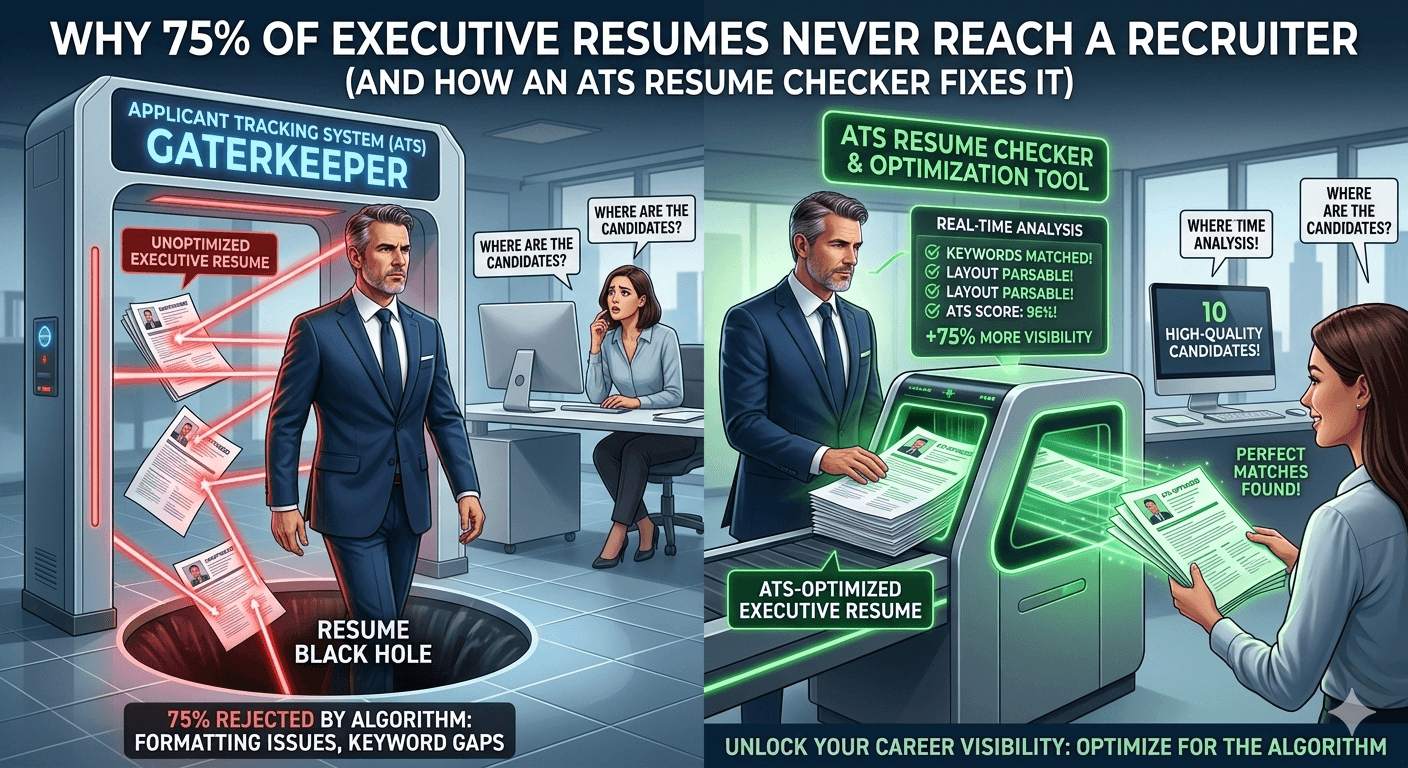
For mid–senior professionals aiming for ₹50L–₹1Cr leadership roles, the biggest obstacle in the job search isn’t competition — it’s invisibility.
Most candidates believe their resume is the problem only after they stop getting interview calls. They assume the market is slow, recruiters are unresponsive, or companies are ghosting them.
But the real reason is far more technical.
Nearly 75% of executive resumes never reach a recruiter at all.
They are filtered out long before a human ever reads them.
And the gatekeeper responsible for this silent rejection is the Applicant Tracking System (ATS).
Understanding how this system works — and how to optimize for it — is the difference between sending hundreds of applications into a void and consistently landing interviews for high-paying roles.
The Hidden Gatekeeper: What Is an ATS?
An Applicant Tracking System (ATS) is software companies use to manage and filter job applications.
When you apply for a role on LinkedIn, a company website, or a job portal, your resume is not read by a recruiter first. Instead, it goes through the ATS.
The system scans your resume for key signals such as:
Skills and keywords
Relevant experience
Role alignment
Resume structure and formatting
Industry terminology
Based on these signals, the ATS assigns a match score.
Only the top-scoring resumes are forwarded to recruiters.
Everyone else is automatically filtered out.
This means your resume is essentially competing against software algorithms before it competes against people.
Why Executive Resumes Fail ATS Screening
Ironically, many highly experienced professionals struggle the most with ATS systems.
Here are the most common reasons executive resumes get rejected.
1. Generic Resumes
Many professionals use the same resume for every job application.
But ATS systems are designed to compare resumes against specific job descriptions.
If the language in your resume doesn’t closely match the job posting, your score drops significantly.
2. Missing High-Frequency Keywords
Recruiters design job descriptions around specific capabilities.
For example, a leadership role might repeatedly mention terms like:
Stakeholder management
Business transformation
Revenue growth
Strategic planning
If these keywords are missing or phrased differently in your resume, the ATS may assume you lack the required experience.
3. Poor Resume Formatting
Certain formatting choices can confuse ATS systems, including:
Tables
Columns
Graphics
Text boxes
Non-standard fonts
When the system cannot properly read your resume structure, critical information may never be parsed correctly.
4. Weak Role Alignment
Executive resumes often describe responsibilities instead of impact.
However, ATS algorithms are optimized to detect results, metrics, and strategic outcomes.
For example:
Weak statement:
Responsible for managing sales teams.
Stronger ATS-friendly version:
Led a 25-member sales team driving ₹120Cr annual revenue across 4 regions.
Clear business impact increases both ATS scores and recruiter interest.
The Cost of ATS Failure
When your resume fails ATS screening, the consequences compound quickly.
You may experience:
Dozens of applications with no response
Recruiter ghosting
Repeated rejections
Long job search cycles
Many professionals assume they need more applications.
But the real solution is better positioning and ATS optimization.
This is where an ATS Resume Checker becomes essential.
What an ATS Resume Checker Actually Does
An ATS Resume Checker simulates how hiring software evaluates your resume.
Instead of guessing what might be wrong, you get data-driven insights into your resume performance.
A high-quality ATS checker evaluates several key factors:
1. Keyword Match Score
It compares your resume against a job description and identifies missing keywords that affect your ranking.
This ensures your resume reflects the exact language recruiters and ATS systems are searching for.
2. Resume Structure & Formatting
The tool scans for structural issues that may prevent ATS systems from reading your resume properly.
This includes:
formatting errors
section hierarchy
readability issues
3. Skill Gap Identification
An ATS checker can highlight skills and competencies that frequently appear in target roles but are missing from your resume.
This allows you to reposition your experience strategically.
4. Impact Optimization
Advanced systems also evaluate whether your resume highlights quantifiable outcomes, which significantly increases ATS match scores.
How AI-Powered Resume Checkers Change the Game
Traditional resume advice focuses on writing tips.
But modern job searches require something more powerful: data-driven resume optimization.
AI-powered ATS resume checkers can:
Reverse-engineer job descriptions
Identify high-frequency skills across multiple roles
Recommend precise keyword placement
Improve resume scoring before you apply
This dramatically improves your chances of reaching recruiters.
Instead of guessing what works, you operate with clear performance signals.
From Resume Rejection to Interview Calls
When your resume is optimized for ATS systems, several things change almost immediately.
Applications become more visible.
Recruiters start noticing your profile.
Interview invitations increase.
In fact, professionals who optimize their resumes strategically often experience:
3.2× more interviews
43% higher offers
85% less recruiter ghosting
The difference isn’t applying more.
It’s ensuring your resume gets through the first gatekeeper.
The New Reality of Executive Job Search
Today’s job market is no longer just about experience.
It’s about how effectively your experience is translated into signals that hiring systems recognize.
If your resume isn’t optimized for ATS, your career story may never even be seen.
But when you use the right tools — like an ATS Resume Checker — you gain something far more powerful:
control over your job search visibility.
And that’s the first step toward consistently landing the interviews — and opportunities — your experience deserves.

As a co-founder and CEO of NxtJob.ai, I help mid and senior level professionals land 3-5 job offers within 3 months with a substantial salary hike. I am an Internationally Certified Career Coach, Resume Writing Expert, Job Interview and LinkedIn Strategist, and a Motivational Speaker.
Richik Sinha Roy
CEO, NxtJob
Recent articles

Resume
5 min read
ATS Resume Format: How to Create a Resume That Gets Past Applicant Tracking Systems
Learn how to create an ATS-friendly resume that passes through applicant tracking systems and increases your chances of landing an interview.
Resume
5 min read
ATS Resume Format: How to Create a Resume That Gets Past Applicant Tracking Systems
Learn how to create an ATS-friendly resume that passes through applicant tracking systems and increases your chances of landing an interview.
Resume
5 min read
ATS Resume Format: How to Create a Resume That Gets Past Applicant Tracking Systems
Learn how to create an ATS-friendly resume that passes through applicant tracking systems and increases your chances of landing an interview.
Resume
5 min read
ATS Resume Format: How to Create a Resume That Gets Past Applicant Tracking Systems
Learn how to create an ATS-friendly resume that passes through applicant tracking systems and increases your chances of landing an interview.
Resume
5 min read
ATS Resume Format: How to Create a Resume That Gets Past Applicant Tracking Systems
Learn how to create an ATS-friendly resume that passes through applicant tracking systems and increases your chances of landing an interview.
Resume
5 min read
ATS Resume Format: How to Create a Resume That Gets Past Applicant Tracking Systems
Learn how to create an ATS-friendly resume that passes through applicant tracking systems and increases your chances of landing an interview.
Everything you need to know
Here you can find solutions to all your queries.
Resume
5 min read
Why 75% of Executive Resumes Never Reach a Recruiter (And How an ATS Resume Checker Fixes It)
Published Date:
|
Last Modified:
For mid–senior professionals aiming for ₹50L–₹1Cr leadership roles, the biggest obstacle in the job search isn’t competition — it’s invisibility.
Most candidates believe their resume is the problem only after they stop getting interview calls. They assume the market is slow, recruiters are unresponsive, or companies are ghosting them.
But the real reason is far more technical.
Nearly 75% of executive resumes never reach a recruiter at all.
They are filtered out long before a human ever reads them.
And the gatekeeper responsible for this silent rejection is the Applicant Tracking System (ATS).
Understanding how this system works — and how to optimize for it — is the difference between sending hundreds of applications into a void and consistently landing interviews for high-paying roles.
The Hidden Gatekeeper: What Is an ATS?
An Applicant Tracking System (ATS) is software companies use to manage and filter job applications.
When you apply for a role on LinkedIn, a company website, or a job portal, your resume is not read by a recruiter first. Instead, it goes through the ATS.
The system scans your resume for key signals such as:
Skills and keywords
Relevant experience
Role alignment
Resume structure and formatting
Industry terminology
Based on these signals, the ATS assigns a match score.
Only the top-scoring resumes are forwarded to recruiters.
Everyone else is automatically filtered out.
This means your resume is essentially competing against software algorithms before it competes against people.
Why Executive Resumes Fail ATS Screening
Ironically, many highly experienced professionals struggle the most with ATS systems.
Here are the most common reasons executive resumes get rejected.
1. Generic Resumes
Many professionals use the same resume for every job application.
But ATS systems are designed to compare resumes against specific job descriptions.
If the language in your resume doesn’t closely match the job posting, your score drops significantly.
2. Missing High-Frequency Keywords
Recruiters design job descriptions around specific capabilities.
For example, a leadership role might repeatedly mention terms like:
Stakeholder management
Business transformation
Revenue growth
Strategic planning
If these keywords are missing or phrased differently in your resume, the ATS may assume you lack the required experience.
3. Poor Resume Formatting
Certain formatting choices can confuse ATS systems, including:
Tables
Columns
Graphics
Text boxes
Non-standard fonts
When the system cannot properly read your resume structure, critical information may never be parsed correctly.
4. Weak Role Alignment
Executive resumes often describe responsibilities instead of impact.
However, ATS algorithms are optimized to detect results, metrics, and strategic outcomes.
For example:
Weak statement:
Responsible for managing sales teams.
Stronger ATS-friendly version:
Led a 25-member sales team driving ₹120Cr annual revenue across 4 regions.
Clear business impact increases both ATS scores and recruiter interest.
The Cost of ATS Failure
When your resume fails ATS screening, the consequences compound quickly.
You may experience:
Dozens of applications with no response
Recruiter ghosting
Repeated rejections
Long job search cycles
Many professionals assume they need more applications.
But the real solution is better positioning and ATS optimization.
This is where an ATS Resume Checker becomes essential.
What an ATS Resume Checker Actually Does
An ATS Resume Checker simulates how hiring software evaluates your resume.
Instead of guessing what might be wrong, you get data-driven insights into your resume performance.
A high-quality ATS checker evaluates several key factors:
1. Keyword Match Score
It compares your resume against a job description and identifies missing keywords that affect your ranking.
This ensures your resume reflects the exact language recruiters and ATS systems are searching for.
2. Resume Structure & Formatting
The tool scans for structural issues that may prevent ATS systems from reading your resume properly.
This includes:
formatting errors
section hierarchy
readability issues
3. Skill Gap Identification
An ATS checker can highlight skills and competencies that frequently appear in target roles but are missing from your resume.
This allows you to reposition your experience strategically.
4. Impact Optimization
Advanced systems also evaluate whether your resume highlights quantifiable outcomes, which significantly increases ATS match scores.
How AI-Powered Resume Checkers Change the Game
Traditional resume advice focuses on writing tips.
But modern job searches require something more powerful: data-driven resume optimization.
AI-powered ATS resume checkers can:
Reverse-engineer job descriptions
Identify high-frequency skills across multiple roles
Recommend precise keyword placement
Improve resume scoring before you apply
This dramatically improves your chances of reaching recruiters.
Instead of guessing what works, you operate with clear performance signals.
From Resume Rejection to Interview Calls
When your resume is optimized for ATS systems, several things change almost immediately.
Applications become more visible.
Recruiters start noticing your profile.
Interview invitations increase.
In fact, professionals who optimize their resumes strategically often experience:
3.2× more interviews
43% higher offers
85% less recruiter ghosting
The difference isn’t applying more.
It’s ensuring your resume gets through the first gatekeeper.
The New Reality of Executive Job Search
Today’s job market is no longer just about experience.
It’s about how effectively your experience is translated into signals that hiring systems recognize.
If your resume isn’t optimized for ATS, your career story may never even be seen.
But when you use the right tools — like an ATS Resume Checker — you gain something far more powerful:
control over your job search visibility.
And that’s the first step toward consistently landing the interviews — and opportunities — your experience deserves.
Table of content

Negotiation
Salary Negotiation Tactics: Why Senior Leaders Must Never Name a Number First
Learn advanced salary negotiation tactics to bypass HR budget caps, reframe your current CTC, and maximize your executive equity.
Job search
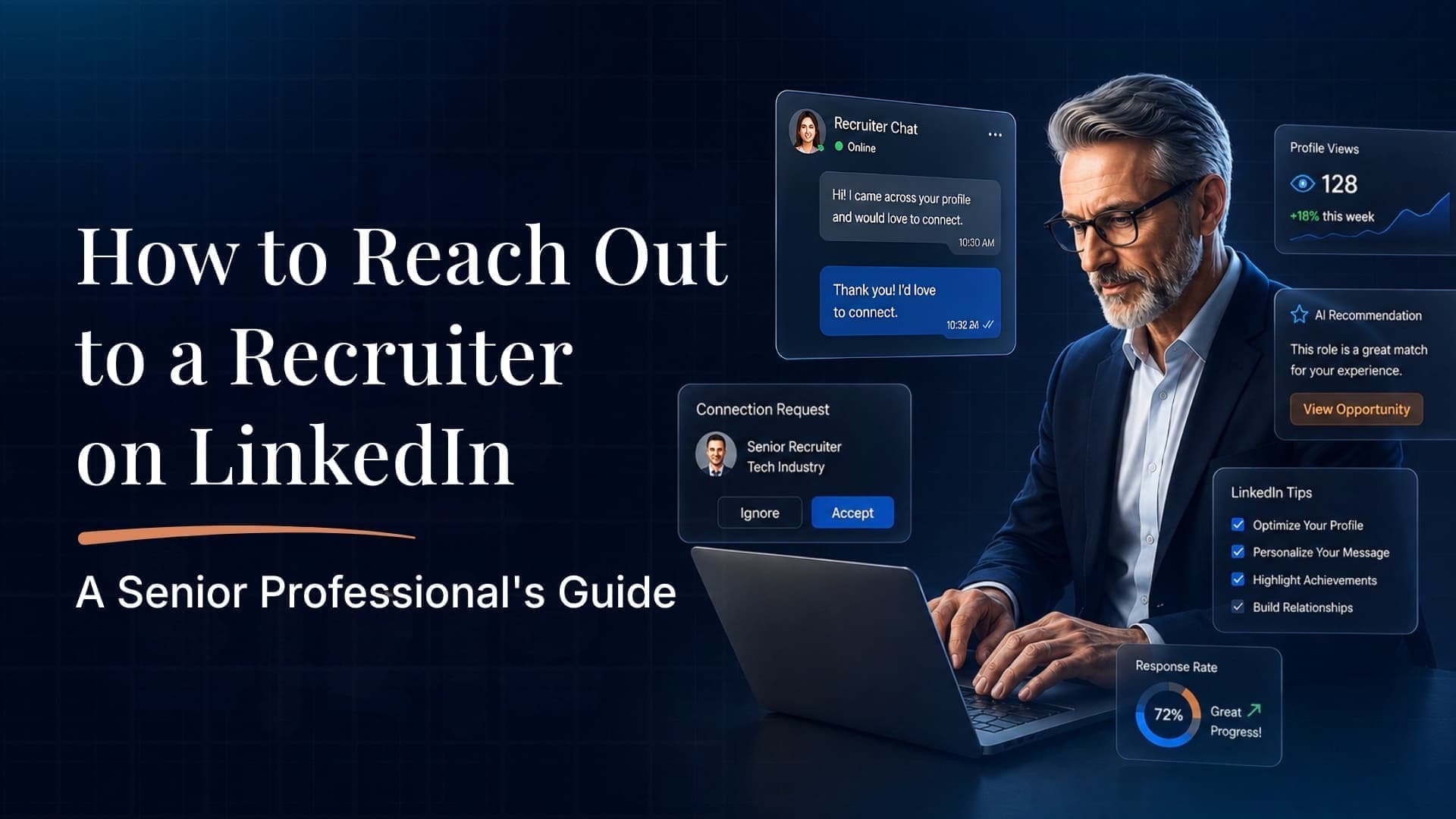
How to Reach Out to a Recruiter on LinkedIn: A Senior Professional’s Guide
Discover how senior professionals can use recruiter outreach, referrals, and networking to unlock better career opportunities on LinkedIn.
As a co-founder and CEO of NxtJob.ai, I help mid and senior level professionals land 3-5 job offers within 3 months with a substantial salary hike. I am an Internationally Certified Career Coach, Resume Writing Expert, Job Interview and LinkedIn Strategist, and a Motivational Speaker.
Richik Sinha Roy
CEO, NxtJob
Everything you need to know
Here you can find solutions to all your queries.
Resume
5 min read
Why 75% of Executive Resumes Never Reach a Recruiter (And How an ATS Resume Checker Fixes It)
Published Date:
|
Last Modified:
For mid–senior professionals aiming for ₹50L–₹1Cr leadership roles, the biggest obstacle in the job search isn’t competition — it’s invisibility.
Most candidates believe their resume is the problem only after they stop getting interview calls. They assume the market is slow, recruiters are unresponsive, or companies are ghosting them.
But the real reason is far more technical.
Nearly 75% of executive resumes never reach a recruiter at all.
They are filtered out long before a human ever reads them.
And the gatekeeper responsible for this silent rejection is the Applicant Tracking System (ATS).
Understanding how this system works — and how to optimize for it — is the difference between sending hundreds of applications into a void and consistently landing interviews for high-paying roles.
The Hidden Gatekeeper: What Is an ATS?
An Applicant Tracking System (ATS) is software companies use to manage and filter job applications.
When you apply for a role on LinkedIn, a company website, or a job portal, your resume is not read by a recruiter first. Instead, it goes through the ATS.
The system scans your resume for key signals such as:
Skills and keywords
Relevant experience
Role alignment
Resume structure and formatting
Industry terminology
Based on these signals, the ATS assigns a match score.
Only the top-scoring resumes are forwarded to recruiters.
Everyone else is automatically filtered out.
This means your resume is essentially competing against software algorithms before it competes against people.
Why Executive Resumes Fail ATS Screening
Ironically, many highly experienced professionals struggle the most with ATS systems.
Here are the most common reasons executive resumes get rejected.
1. Generic Resumes
Many professionals use the same resume for every job application.
But ATS systems are designed to compare resumes against specific job descriptions.
If the language in your resume doesn’t closely match the job posting, your score drops significantly.
2. Missing High-Frequency Keywords
Recruiters design job descriptions around specific capabilities.
For example, a leadership role might repeatedly mention terms like:
Stakeholder management
Business transformation
Revenue growth
Strategic planning
If these keywords are missing or phrased differently in your resume, the ATS may assume you lack the required experience.
3. Poor Resume Formatting
Certain formatting choices can confuse ATS systems, including:
Tables
Columns
Graphics
Text boxes
Non-standard fonts
When the system cannot properly read your resume structure, critical information may never be parsed correctly.
4. Weak Role Alignment
Executive resumes often describe responsibilities instead of impact.
However, ATS algorithms are optimized to detect results, metrics, and strategic outcomes.
For example:
Weak statement:
Responsible for managing sales teams.
Stronger ATS-friendly version:
Led a 25-member sales team driving ₹120Cr annual revenue across 4 regions.
Clear business impact increases both ATS scores and recruiter interest.
The Cost of ATS Failure
When your resume fails ATS screening, the consequences compound quickly.
You may experience:
Dozens of applications with no response
Recruiter ghosting
Repeated rejections
Long job search cycles
Many professionals assume they need more applications.
But the real solution is better positioning and ATS optimization.
This is where an ATS Resume Checker becomes essential.
What an ATS Resume Checker Actually Does
An ATS Resume Checker simulates how hiring software evaluates your resume.
Instead of guessing what might be wrong, you get data-driven insights into your resume performance.
A high-quality ATS checker evaluates several key factors:
1. Keyword Match Score
It compares your resume against a job description and identifies missing keywords that affect your ranking.
This ensures your resume reflects the exact language recruiters and ATS systems are searching for.
2. Resume Structure & Formatting
The tool scans for structural issues that may prevent ATS systems from reading your resume properly.
This includes:
formatting errors
section hierarchy
readability issues
3. Skill Gap Identification
An ATS checker can highlight skills and competencies that frequently appear in target roles but are missing from your resume.
This allows you to reposition your experience strategically.
4. Impact Optimization
Advanced systems also evaluate whether your resume highlights quantifiable outcomes, which significantly increases ATS match scores.
How AI-Powered Resume Checkers Change the Game
Traditional resume advice focuses on writing tips.
But modern job searches require something more powerful: data-driven resume optimization.
AI-powered ATS resume checkers can:
Reverse-engineer job descriptions
Identify high-frequency skills across multiple roles
Recommend precise keyword placement
Improve resume scoring before you apply
This dramatically improves your chances of reaching recruiters.
Instead of guessing what works, you operate with clear performance signals.
From Resume Rejection to Interview Calls
When your resume is optimized for ATS systems, several things change almost immediately.
Applications become more visible.
Recruiters start noticing your profile.
Interview invitations increase.
In fact, professionals who optimize their resumes strategically often experience:
3.2× more interviews
43% higher offers
85% less recruiter ghosting
The difference isn’t applying more.
It’s ensuring your resume gets through the first gatekeeper.
The New Reality of Executive Job Search
Today’s job market is no longer just about experience.
It’s about how effectively your experience is translated into signals that hiring systems recognize.
If your resume isn’t optimized for ATS, your career story may never even be seen.
But when you use the right tools — like an ATS Resume Checker — you gain something far more powerful:
control over your job search visibility.
And that’s the first step toward consistently landing the interviews — and opportunities — your experience deserves.
Table of content
Negotiation
Salary Negotiation Tactics: Why Senior Leaders Must Never Name a Number First
Learn advanced salary negotiation tactics to bypass HR budget caps, reframe your current CTC, and maximize your executive equity.
Job search
How to Reach Out to a Recruiter on LinkedIn: A Senior Professional’s Guide
Discover how senior professionals can use recruiter outreach, referrals, and networking to unlock better career opportunities on LinkedIn.
As a co-founder and CEO of NxtJob.ai, I help mid and senior level professionals land 3-5 job offers within 3 months with a substantial salary hike. I am an Internationally Certified Career Coach, Resume Writing Expert, Job Interview and LinkedIn Strategist, and a Motivational Speaker.
Richik Sinha Roy
CEO, NxtJob
Recent articles
Resume
5 min read
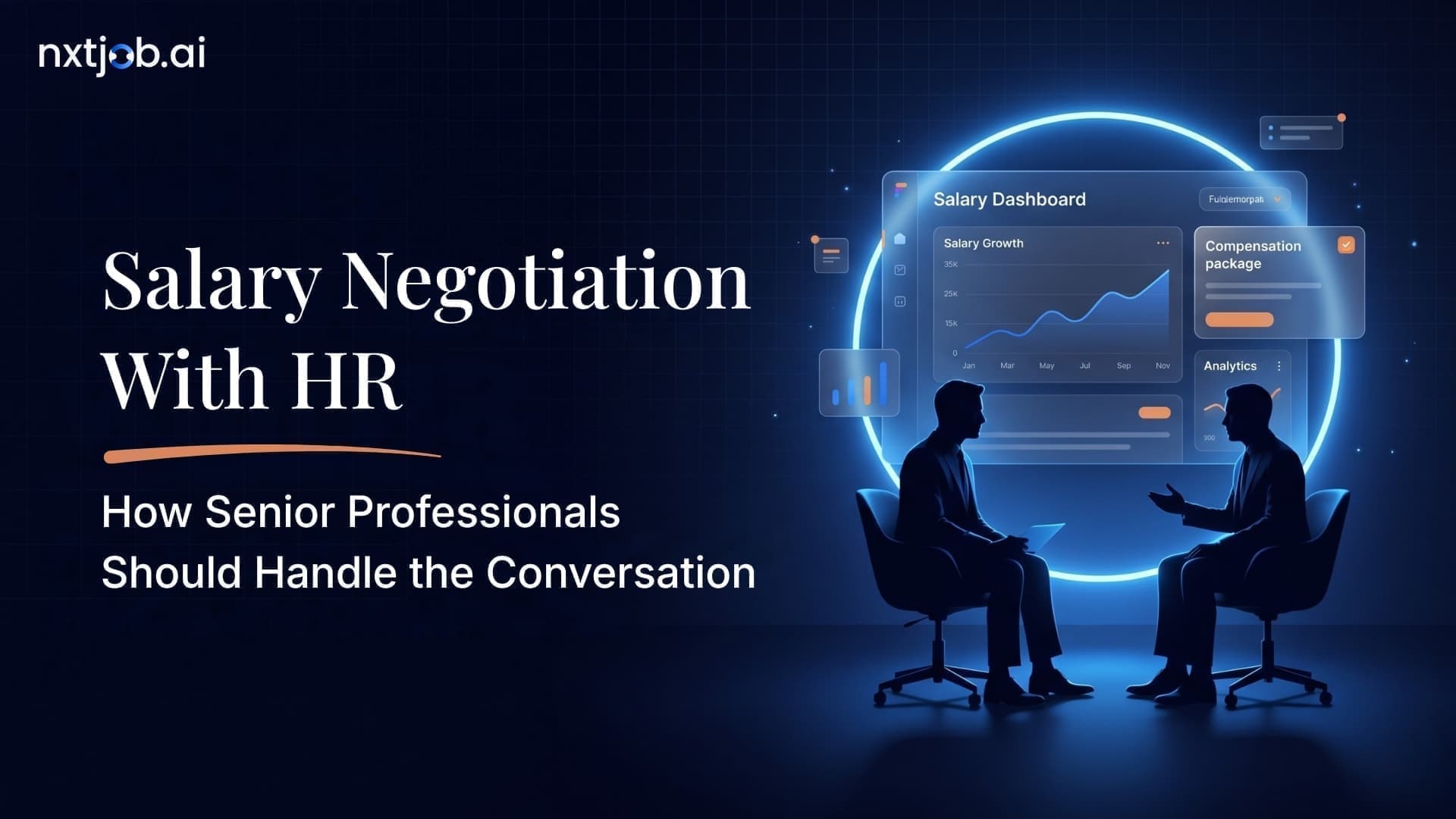
Salary Negotiation With HR: How Senior Professionals Should Handle the Conversation
Learn how senior professionals can handle salary negotiation with HR, respond to pushback, protect their value, and avoid underselling themselves.
Resume
5 min read
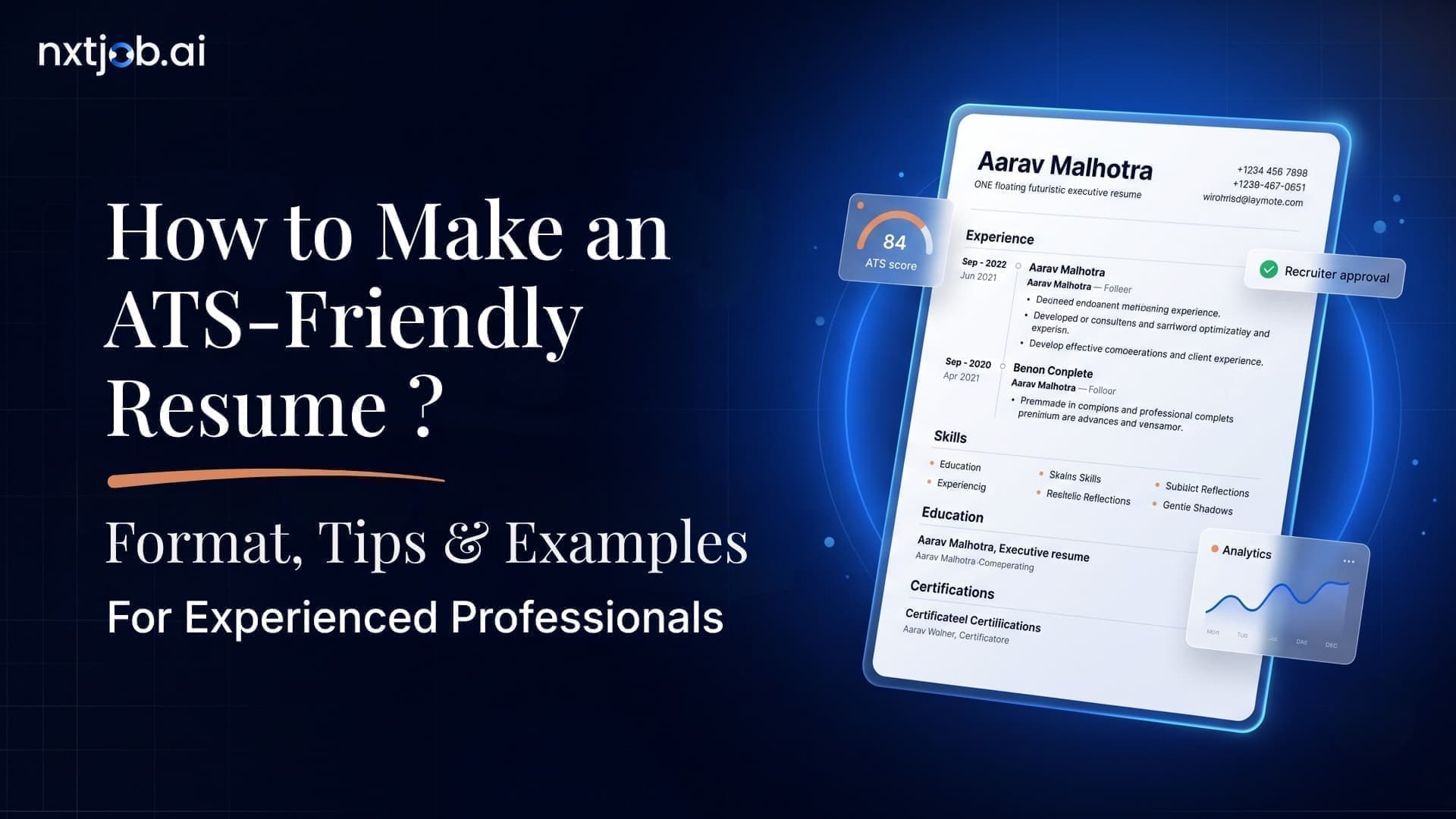
How to Make an ATS-Friendly Resume: Format, Tips, and Examples for Experienced Professionals
Learn how to make an ATS-friendly resume with the right format, keywords, structure, and role-specific details for experienced professionals.
Resume
5 min read
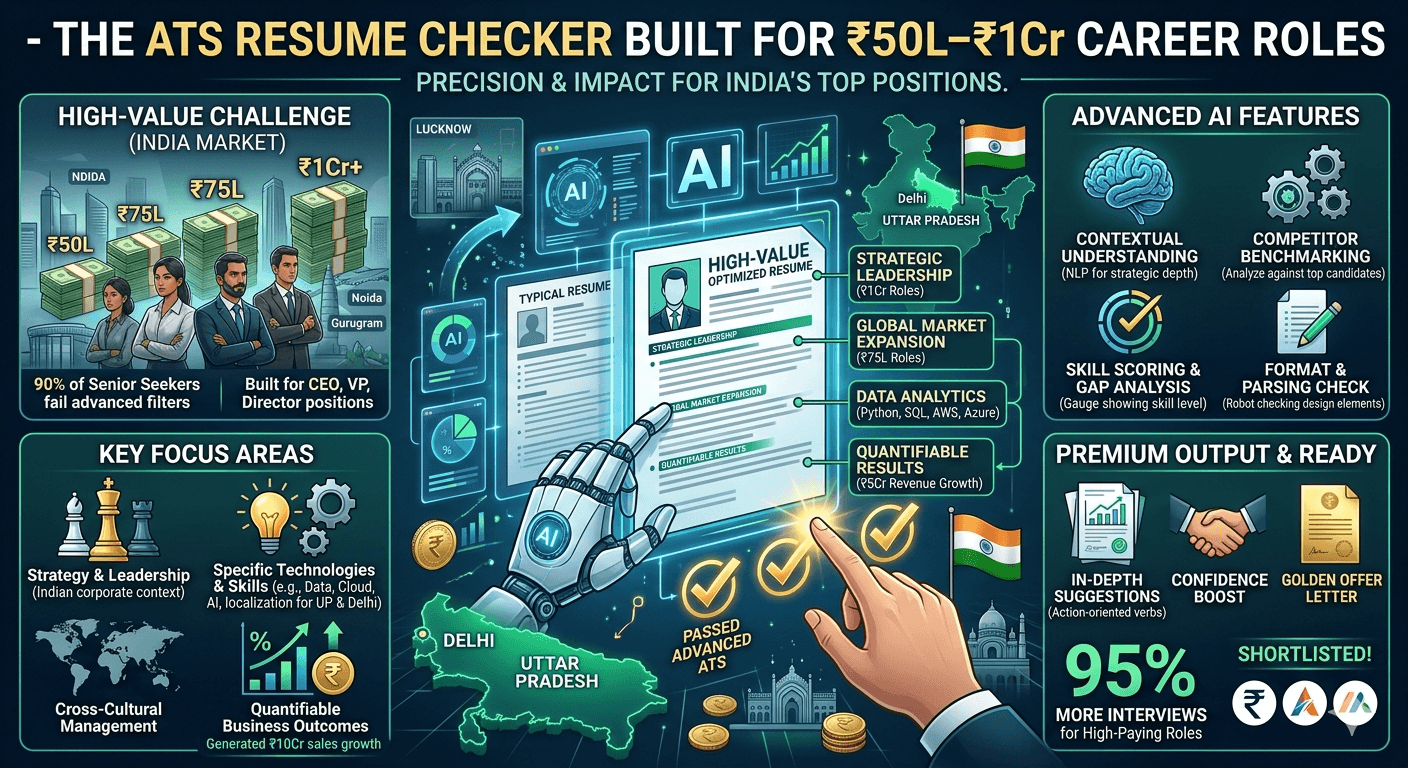
The ATS Resume Checker Built for ₹50L–₹1Cr Career Roles
The ATS Resume Checker Built for ₹50L–₹1Cr Career Roles
Resume
5 min read
Salary Negotiation With HR: How Senior Professionals Should Handle the Conversation
Learn how senior professionals can handle salary negotiation with HR, respond to pushback, protect their value, and avoid underselling themselves.
Resume
5 min read
How to Make an ATS-Friendly Resume: Format, Tips, and Examples for Experienced Professionals
Learn how to make an ATS-friendly resume with the right format, keywords, structure, and role-specific details for experienced professionals.
Everything you need to know
Here you can find solutions to all your queries.
Join the Revolution
Your AI career copilot to land you top jobs in under 90 days.
A Pinnacle Shift Company
by Richik Sinha Roy
Join the Revolution
Your AI career copilot to land you top jobs in under 90 days.
Join the Revolution
Your AI career copilot to land you top jobs in under 90 days.