
Resume
5 min read
The Invisible Resume: How Recruiters Really Evaluate You
Published Date:
|
Last Modified:
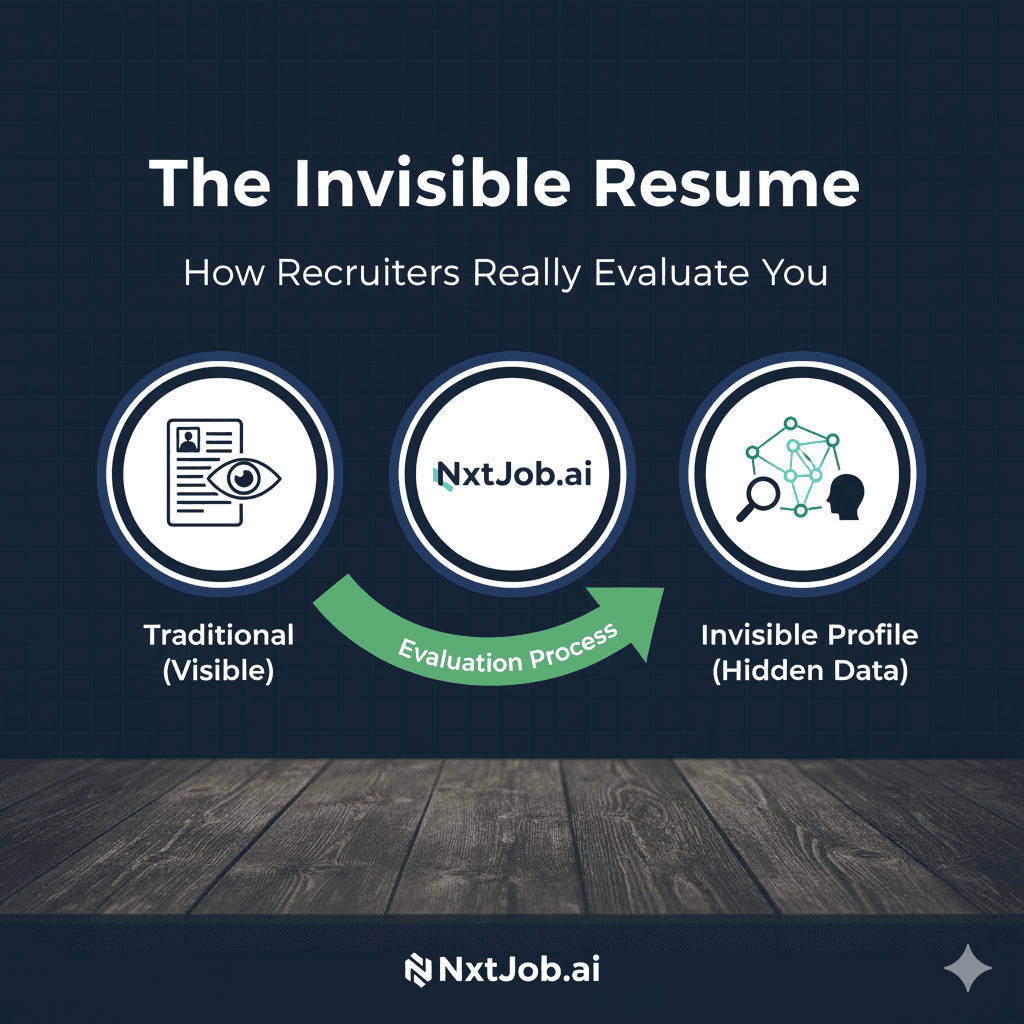
Most professionals assume recruiters judge them only by the resume they upload. The visible one. The PDF they attach and hope for the best.
That’s only half the story.
In reality, there’s a second evaluation happening almost immediately. Quiet. Unspoken. Often subconscious. It’s made up of patterns, signals, and small cues that never show up in feedback emails. I think of this as your Invisible Resume, and it’s usually the real reason you either get shortlisted… or don’t.
If you’ve ever wondered why your resume “looks fine” but still doesn’t convert, this is probably why.
Let’s talk about what recruiters actually notice when they open your resume. And what they rarely explain.
Structure speaks before your words do
Before anyone reads a single bullet point, your resume has already communicated something.
Recruiters subconsciously judge how you think by how your resume is structured. Clean sections, logical flow, and clear ordering signal maturity and professionalism. A messy or incomplete structure suggests the opposite, even if your experience is solid.
Most recruiters expect five basic sections. No creativity here. Just the fundamentals:
Personal Details
Summary
Skills
Work Experience
Education
When one of these is missing, something feels off. Not “wrong” enough to call out. Just incomplete. And incomplete resumes quietly lose trust.
Even chronology matters more than people realize. Jumping back and forth between dates doesn’t just confuse the reader, it signals disorganization. Sometimes it even feels like you’re trying to hide something, whether you are or not. Recruiters won’t ask. They’ll just move on.
Length becomes a proxy for how you communicate
Resume length is judged instantly. Not rationally. Instinctively.
In most cases, strong resumes land somewhere between 450 and 850 words. Enough to show substance. Not so much that it feels like work to read.
When a resume runs long, recruiters often infer:
Poor prioritization
Weak communication skills
An inability to synthesize information
When it’s too short, the assumptions flip:
Limited experience
Shallow impact
Not much depth to work with
Your word count quietly becomes a stand-in for how you’ll think, explain, and communicate on the job.
Fair? Maybe not. Real? Very.
Results matter more than responsibilities
This is where many resumes quietly fail.
Most people describe what they were responsible for. Recruiters, however, are scanning for what actually changed because you were there.
Descriptions feel safe. Numbers feel convincing.
Compare the two:
“Led a team and improved performance.”
versus
“Led a 12-member team and increased delivery speed by 28%.”
The second one reduces uncertainty. It shows scale. It signals credibility. And it makes the recruiter’s decision easier.
Your invisible resume is built from this kind of proof. Numbers act like shortcuts for trust.
Soft skills aren’t read. They’re inferred.
Almost everyone claims to have strong communication, leadership, adaptability, or problem-solving skills.
Recruiters barely register those words anymore.
Instead, they infer soft skills from how you describe your work. The verbs you choose. The way outcomes are framed. The complexity of situations you reference.
“Good leader” says very little.
“Led cross-functional meetings across three departments, resolving workflow gaps and improving efficiency by 15%” says a lot, without ever naming the skill.
That’s the invisible resume at work. Showing, not telling.
Buzzwords quietly erode trust
This part surprises people.
Many candidates think polished phrases make them sound impressive. Recruiters usually read them as filler.
Words like “strategic thinker,” “self-starter,” “results-driven,” or “highly motivated” don’t add clarity. They often do the opposite. They suggest you’re padding because there’s nothing concrete underneath.
Specifics feel honest. Clichés feel evasive.
Even when recruiters don’t consciously think this, the reaction is there.
Alignment matters more than people admit
One of the strongest hidden signals is how well your resume aligns with the role itself.
Recruiters quickly sense whether you actually understand what the job requires. This comes through in:
The keywords you naturally use
The achievements you highlight
What you choose to prioritize, or leave out
They’re silently asking:
Does this person get the role?
Would they ramp up quickly?
Is the complexity of their work at the right level?
This subjective judgment often outweighs objective qualifications.
You’re never evaluated alone
Your resume isn’t judged in isolation. It’s compared, rapidly, against dozens, sometimes hundreds, of others.
Others with:
Clearer structure
Sharper outcomes
Better quantification
Stronger role alignment
Your invisible resume isn’t measured against an abstract standard. It’s measured against what the top 5% of candidates tend to submit.
If you don’t compete at that level, you rarely get time.
In the end, recruiters hire for risk
This might be the most uncomfortable truth.
Recruiters don’t hire the most talented candidate. They hire the least risky one.
Your resume is quietly answering questions like:
Can I justify shortlisting this person?
Will they make my hiring manager happy?
Do they communicate clearly?
Does their work feel credible?
Your experience absolutely matters.
But your invisible resume decides whether anyone ever gets close enough to see it.

As a co-founder and CEO of NxtJob.ai, I help mid and senior level professionals land 3-5 job offers within 3 months with a substantial salary hike. I am an Internationally Certified Career Coach, Resume Writing Expert, Job Interview and LinkedIn Strategist, and a Motivational Speaker.
Richik Sinha Roy
CEO, NxtJob
Recent articles

Resume
5 min read
ATS Resume Format: How to Create a Resume That Gets Past Applicant Tracking Systems
Learn how to create an ATS-friendly resume that passes through applicant tracking systems and increases your chances of landing an interview.
Resume
5 min read
ATS Resume Format: How to Create a Resume That Gets Past Applicant Tracking Systems
Learn how to create an ATS-friendly resume that passes through applicant tracking systems and increases your chances of landing an interview.
Resume
5 min read
ATS Resume Format: How to Create a Resume That Gets Past Applicant Tracking Systems
Learn how to create an ATS-friendly resume that passes through applicant tracking systems and increases your chances of landing an interview.
Resume
5 min read
ATS Resume Format: How to Create a Resume That Gets Past Applicant Tracking Systems
Learn how to create an ATS-friendly resume that passes through applicant tracking systems and increases your chances of landing an interview.
Resume
5 min read
ATS Resume Format: How to Create a Resume That Gets Past Applicant Tracking Systems
Learn how to create an ATS-friendly resume that passes through applicant tracking systems and increases your chances of landing an interview.
Resume
5 min read
ATS Resume Format: How to Create a Resume That Gets Past Applicant Tracking Systems
Learn how to create an ATS-friendly resume that passes through applicant tracking systems and increases your chances of landing an interview.
Everything you need to know
Here you can find solutions to all your queries.
Resume
5 min read
The Invisible Resume: How Recruiters Really Evaluate You
Published Date:
|
Last Modified:
Most professionals assume recruiters judge them only by the resume they upload. The visible one. The PDF they attach and hope for the best.
That’s only half the story.
In reality, there’s a second evaluation happening almost immediately. Quiet. Unspoken. Often subconscious. It’s made up of patterns, signals, and small cues that never show up in feedback emails. I think of this as your Invisible Resume, and it’s usually the real reason you either get shortlisted… or don’t.
If you’ve ever wondered why your resume “looks fine” but still doesn’t convert, this is probably why.
Let’s talk about what recruiters actually notice when they open your resume. And what they rarely explain.
Structure speaks before your words do
Before anyone reads a single bullet point, your resume has already communicated something.
Recruiters subconsciously judge how you think by how your resume is structured. Clean sections, logical flow, and clear ordering signal maturity and professionalism. A messy or incomplete structure suggests the opposite, even if your experience is solid.
Most recruiters expect five basic sections. No creativity here. Just the fundamentals:
Personal Details
Summary
Skills
Work Experience
Education
When one of these is missing, something feels off. Not “wrong” enough to call out. Just incomplete. And incomplete resumes quietly lose trust.
Even chronology matters more than people realize. Jumping back and forth between dates doesn’t just confuse the reader, it signals disorganization. Sometimes it even feels like you’re trying to hide something, whether you are or not. Recruiters won’t ask. They’ll just move on.
Length becomes a proxy for how you communicate
Resume length is judged instantly. Not rationally. Instinctively.
In most cases, strong resumes land somewhere between 450 and 850 words. Enough to show substance. Not so much that it feels like work to read.
When a resume runs long, recruiters often infer:
Poor prioritization
Weak communication skills
An inability to synthesize information
When it’s too short, the assumptions flip:
Limited experience
Shallow impact
Not much depth to work with
Your word count quietly becomes a stand-in for how you’ll think, explain, and communicate on the job.
Fair? Maybe not. Real? Very.
Results matter more than responsibilities
This is where many resumes quietly fail.
Most people describe what they were responsible for. Recruiters, however, are scanning for what actually changed because you were there.
Descriptions feel safe. Numbers feel convincing.
Compare the two:
“Led a team and improved performance.”
versus
“Led a 12-member team and increased delivery speed by 28%.”
The second one reduces uncertainty. It shows scale. It signals credibility. And it makes the recruiter’s decision easier.
Your invisible resume is built from this kind of proof. Numbers act like shortcuts for trust.
Soft skills aren’t read. They’re inferred.
Almost everyone claims to have strong communication, leadership, adaptability, or problem-solving skills.
Recruiters barely register those words anymore.
Instead, they infer soft skills from how you describe your work. The verbs you choose. The way outcomes are framed. The complexity of situations you reference.
“Good leader” says very little.
“Led cross-functional meetings across three departments, resolving workflow gaps and improving efficiency by 15%” says a lot, without ever naming the skill.
That’s the invisible resume at work. Showing, not telling.
Buzzwords quietly erode trust
This part surprises people.
Many candidates think polished phrases make them sound impressive. Recruiters usually read them as filler.
Words like “strategic thinker,” “self-starter,” “results-driven,” or “highly motivated” don’t add clarity. They often do the opposite. They suggest you’re padding because there’s nothing concrete underneath.
Specifics feel honest. Clichés feel evasive.
Even when recruiters don’t consciously think this, the reaction is there.
Alignment matters more than people admit
One of the strongest hidden signals is how well your resume aligns with the role itself.
Recruiters quickly sense whether you actually understand what the job requires. This comes through in:
The keywords you naturally use
The achievements you highlight
What you choose to prioritize, or leave out
They’re silently asking:
Does this person get the role?
Would they ramp up quickly?
Is the complexity of their work at the right level?
This subjective judgment often outweighs objective qualifications.
You’re never evaluated alone
Your resume isn’t judged in isolation. It’s compared, rapidly, against dozens, sometimes hundreds, of others.
Others with:
Clearer structure
Sharper outcomes
Better quantification
Stronger role alignment
Your invisible resume isn’t measured against an abstract standard. It’s measured against what the top 5% of candidates tend to submit.
If you don’t compete at that level, you rarely get time.
In the end, recruiters hire for risk
This might be the most uncomfortable truth.
Recruiters don’t hire the most talented candidate. They hire the least risky one.
Your resume is quietly answering questions like:
Can I justify shortlisting this person?
Will they make my hiring manager happy?
Do they communicate clearly?
Does their work feel credible?
Your experience absolutely matters.
But your invisible resume decides whether anyone ever gets close enough to see it.
Table of content
Interview
Salary Negotiation With HR: How Senior Professionals Should Handle the Conversation
Learn how senior professionals can handle salary negotiation with HR, respond to pushback, protect their value, and avoid underselling themselves.
Resume
How to Make an ATS-Friendly Resume: Format, Tips, and Examples for Experienced Professionals
Learn how to make an ATS-friendly resume with the right format, keywords, structure, and role-specific details for experienced professionals.
As a co-founder and CEO of NxtJob.ai, I help mid and senior level professionals land 3-5 job offers within 3 months with a substantial salary hike. I am an Internationally Certified Career Coach, Resume Writing Expert, Job Interview and LinkedIn Strategist, and a Motivational Speaker.
Richik Sinha Roy
CEO, NxtJob
Everything you need to know
Here you can find solutions to all your queries.
Resume
5 min read
The Invisible Resume: How Recruiters Really Evaluate You
Published Date:
|
Last Modified:
Most professionals assume recruiters judge them only by the resume they upload. The visible one. The PDF they attach and hope for the best.
That’s only half the story.
In reality, there’s a second evaluation happening almost immediately. Quiet. Unspoken. Often subconscious. It’s made up of patterns, signals, and small cues that never show up in feedback emails. I think of this as your Invisible Resume, and it’s usually the real reason you either get shortlisted… or don’t.
If you’ve ever wondered why your resume “looks fine” but still doesn’t convert, this is probably why.
Let’s talk about what recruiters actually notice when they open your resume. And what they rarely explain.
Structure speaks before your words do
Before anyone reads a single bullet point, your resume has already communicated something.
Recruiters subconsciously judge how you think by how your resume is structured. Clean sections, logical flow, and clear ordering signal maturity and professionalism. A messy or incomplete structure suggests the opposite, even if your experience is solid.
Most recruiters expect five basic sections. No creativity here. Just the fundamentals:
Personal Details
Summary
Skills
Work Experience
Education
When one of these is missing, something feels off. Not “wrong” enough to call out. Just incomplete. And incomplete resumes quietly lose trust.
Even chronology matters more than people realize. Jumping back and forth between dates doesn’t just confuse the reader, it signals disorganization. Sometimes it even feels like you’re trying to hide something, whether you are or not. Recruiters won’t ask. They’ll just move on.
Length becomes a proxy for how you communicate
Resume length is judged instantly. Not rationally. Instinctively.
In most cases, strong resumes land somewhere between 450 and 850 words. Enough to show substance. Not so much that it feels like work to read.
When a resume runs long, recruiters often infer:
Poor prioritization
Weak communication skills
An inability to synthesize information
When it’s too short, the assumptions flip:
Limited experience
Shallow impact
Not much depth to work with
Your word count quietly becomes a stand-in for how you’ll think, explain, and communicate on the job.
Fair? Maybe not. Real? Very.
Results matter more than responsibilities
This is where many resumes quietly fail.
Most people describe what they were responsible for. Recruiters, however, are scanning for what actually changed because you were there.
Descriptions feel safe. Numbers feel convincing.
Compare the two:
“Led a team and improved performance.”
versus
“Led a 12-member team and increased delivery speed by 28%.”
The second one reduces uncertainty. It shows scale. It signals credibility. And it makes the recruiter’s decision easier.
Your invisible resume is built from this kind of proof. Numbers act like shortcuts for trust.
Soft skills aren’t read. They’re inferred.
Almost everyone claims to have strong communication, leadership, adaptability, or problem-solving skills.
Recruiters barely register those words anymore.
Instead, they infer soft skills from how you describe your work. The verbs you choose. The way outcomes are framed. The complexity of situations you reference.
“Good leader” says very little.
“Led cross-functional meetings across three departments, resolving workflow gaps and improving efficiency by 15%” says a lot, without ever naming the skill.
That’s the invisible resume at work. Showing, not telling.
Buzzwords quietly erode trust
This part surprises people.
Many candidates think polished phrases make them sound impressive. Recruiters usually read them as filler.
Words like “strategic thinker,” “self-starter,” “results-driven,” or “highly motivated” don’t add clarity. They often do the opposite. They suggest you’re padding because there’s nothing concrete underneath.
Specifics feel honest. Clichés feel evasive.
Even when recruiters don’t consciously think this, the reaction is there.
Alignment matters more than people admit
One of the strongest hidden signals is how well your resume aligns with the role itself.
Recruiters quickly sense whether you actually understand what the job requires. This comes through in:
The keywords you naturally use
The achievements you highlight
What you choose to prioritize, or leave out
They’re silently asking:
Does this person get the role?
Would they ramp up quickly?
Is the complexity of their work at the right level?
This subjective judgment often outweighs objective qualifications.
You’re never evaluated alone
Your resume isn’t judged in isolation. It’s compared, rapidly, against dozens, sometimes hundreds, of others.
Others with:
Clearer structure
Sharper outcomes
Better quantification
Stronger role alignment
Your invisible resume isn’t measured against an abstract standard. It’s measured against what the top 5% of candidates tend to submit.
If you don’t compete at that level, you rarely get time.
In the end, recruiters hire for risk
This might be the most uncomfortable truth.
Recruiters don’t hire the most talented candidate. They hire the least risky one.
Your resume is quietly answering questions like:
Can I justify shortlisting this person?
Will they make my hiring manager happy?
Do they communicate clearly?
Does their work feel credible?
Your experience absolutely matters.
But your invisible resume decides whether anyone ever gets close enough to see it.
Table of content
Interview
Salary Negotiation With HR: How Senior Professionals Should Handle the Conversation
Learn how senior professionals can handle salary negotiation with HR, respond to pushback, protect their value, and avoid underselling themselves.
Resume
How to Make an ATS-Friendly Resume: Format, Tips, and Examples for Experienced Professionals
Learn how to make an ATS-friendly resume with the right format, keywords, structure, and role-specific details for experienced professionals.
As a co-founder and CEO of NxtJob.ai, I help mid and senior level professionals land 3-5 job offers within 3 months with a substantial salary hike. I am an Internationally Certified Career Coach, Resume Writing Expert, Job Interview and LinkedIn Strategist, and a Motivational Speaker.
Richik Sinha Roy
CEO, NxtJob
Recent articles
Resume
5 min read
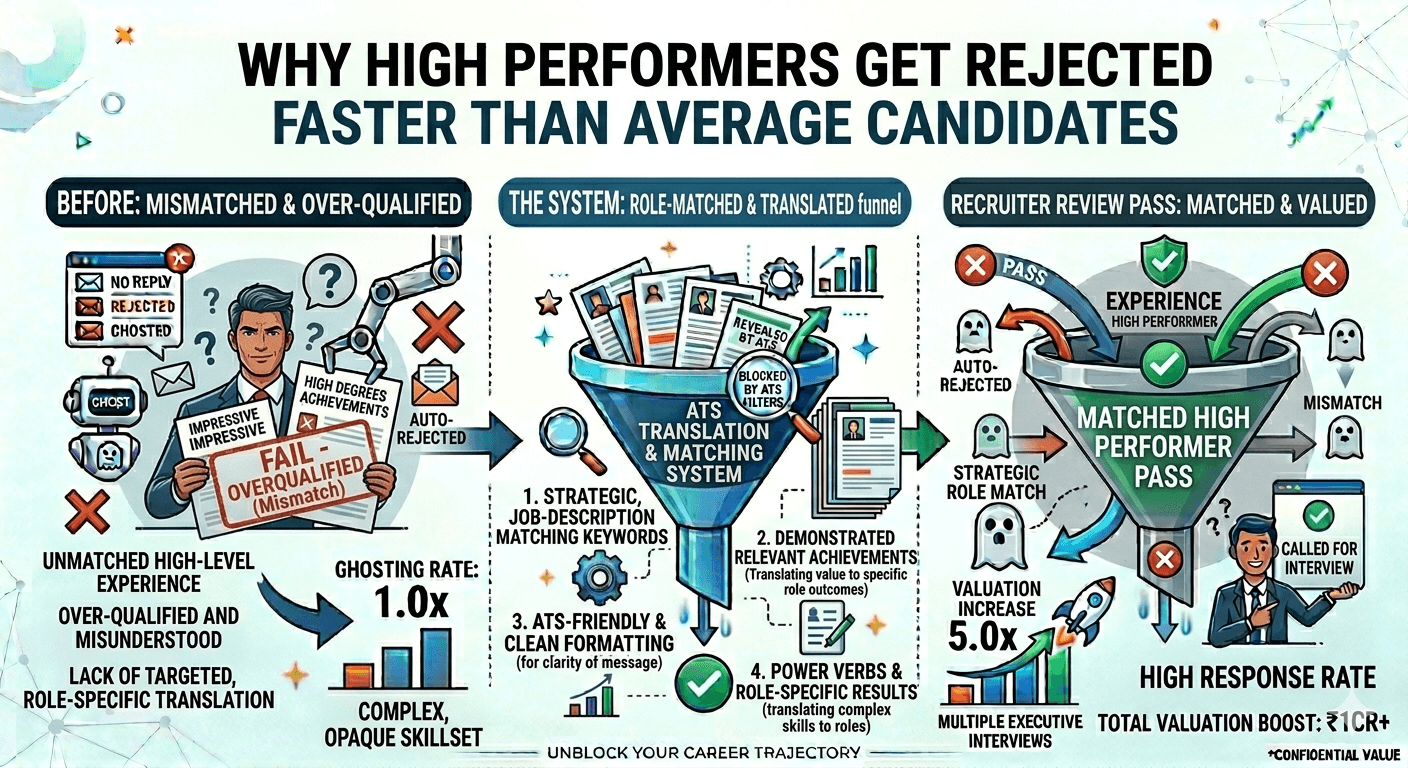
Why High Performers Get Rejected Faster Than Average Candidates
Why High Performers Get Rejected Faster Than Average Candidates
Resume
5 min read
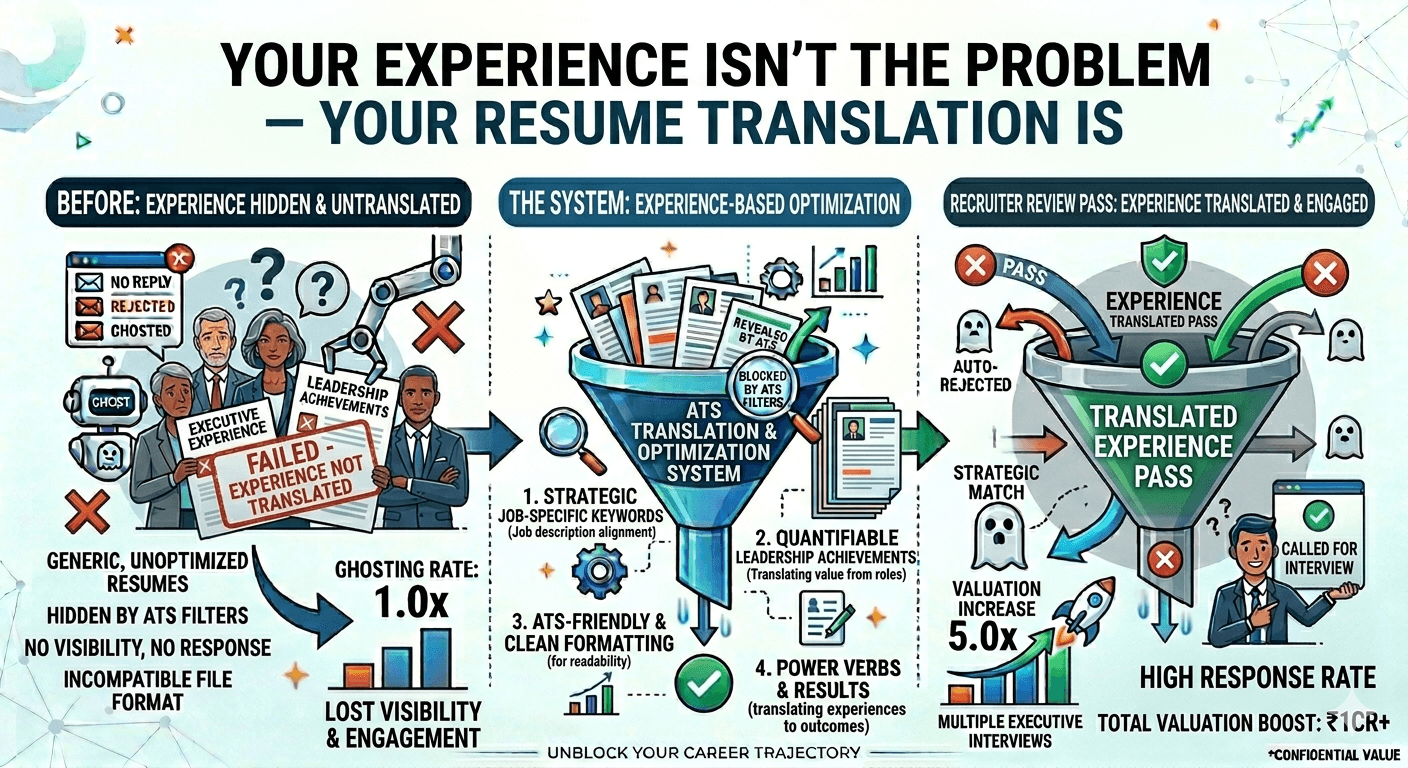
Your Experience Isn’t the Problem, Your Resume Translation Is
Struggling to get interviews despite strong experience? Discover how an ATS Resume Checker reveals hidden resume gaps and helps you translate your experience into results that recruiters actually notice.
Resume
5 min read
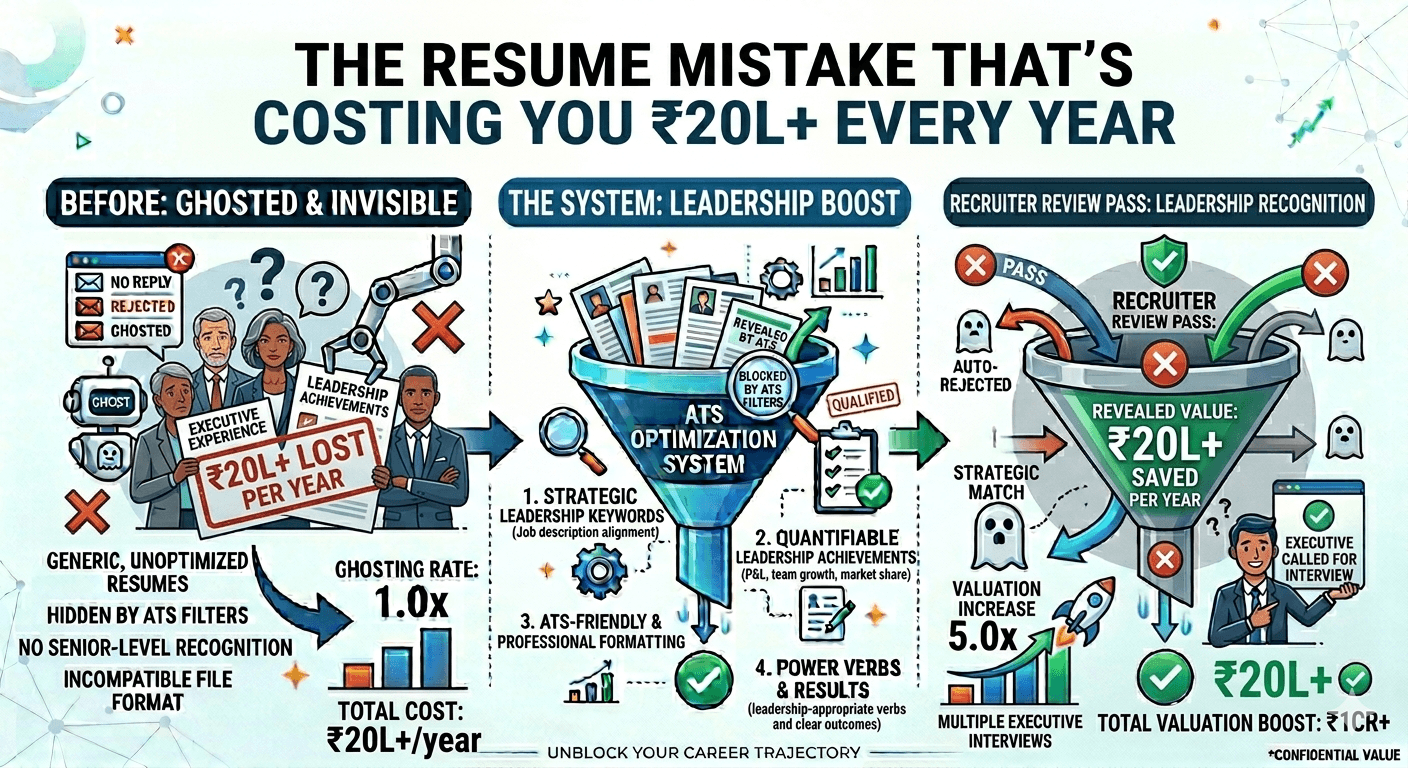
The Resume Mistake That’s Costing You ₹20L+ Every Year
The Resume Mistake That’s Costing You ₹20L+ Every Year
Resume
5 min read
Why High Performers Get Rejected Faster Than Average Candidates
Why High Performers Get Rejected Faster Than Average Candidates
Resume
5 min read
Your Experience Isn’t the Problem, Your Resume Translation Is
Struggling to get interviews despite strong experience? Discover how an ATS Resume Checker reveals hidden resume gaps and helps you translate your experience into results that recruiters actually notice.
Everything you need to know
Here you can find solutions to all your queries.
Join the Revolution
Your AI career copilot to land you top jobs in under 90 days.
Join the Revolution
Your AI career copilot to land you top jobs in under 90 days.
Join the Revolution
Your AI career copilot to land you top jobs in under 90 days.