
Interview
5 min read
Stuck in a Job with No Progression? Here’s How to Break Free
Published Date:
|
Last Modified:

If you’re a mid-senior professional in India someone who has already spent 7 to 15 years in the workforce you probably know this feeling: you’ve been loyal to your company, consistent in your performance, but somewhere along the way, the promotions stopped coming, the learning slowed down, and suddenly your job started feeling like a rut. You may even find yourself asking, “Is this all there is to my career?”
I want to have a straight, big-brother style conversation with you. Because the truth is, many Indian professionals reach this exact stage in their careers. It’s not just you—structural issues in Indian workplaces, cultural mindsets around stability, and even our own hesitation to take risks contribute to this feeling of being stuck. But here’s the good news: being stuck isn’t the end of the story. It’s actually the beginning of a new chapter—if you choose to take control.
Let’s break this down step by step.
Why Do Mid-Senior Professionals in India Feel Stuck?
Before you plan your next move, you need to understand why you’re feeling stagnant. Some of the most common reasons include:
Limited growth ladders in traditional companies: Many Indian corporates still have rigid hierarchies where promotions are tied to years of service, not merit. By the time you’re 35–40, the ladder narrows.
Skill gap with market needs: You may have been great at your role, but the market has shifted. New technologies, digital transformation, and AI-driven workflows are redefining skills faster than ever.
Comfort zone trap: After 10 years in the same industry or company, it’s easy to confuse comfort with security. This often leads to ignoring opportunities that feel “risky.”
Fear of starting over: At mid-senior level, you may feel you’re “too experienced” to switch roles or “too old” to go back to learning. That mindset keeps many professionals stuck.
Step 1: Reframe the Situation – You’re Not Stuck, You’re at a Crossroad
The first mindset shift you need is to stop thinking of yourself as “stuck.” You’re at a crossroad. Think of it like driving on a highway—you’ve been on one lane for years, and now you see multiple exits. It’s not the end of the road, it’s a chance to choose which lane takes you closer to where you truly want to go.
Ask yourself:
Do I want to climb further up the corporate ladder?
Do I want to shift industries?
Do I want to explore entrepreneurship or consulting?
Do I simply want more meaning in my work?
Clarity on what you actually want is the fuel that powers all the next steps.
Step 2: Audit Your Current Skills and Market Value
This is where most Indian professionals hesitate, but it’s non-negotiable. You need a brutal, honest skills audit.
List your core skills: Technical abilities, domain knowledge, leadership skills.
Check market demand: Browse job portals like Naukri, LinkedIn, iimjobs. Look at the roles 1–2 levels above yours. What skills do they demand that you lack?
Ask mentors and peers: A quick, honest feedback session with someone you trust can reveal blind spots.
Once you see the gap between what you have and what the market rewards, you’ll know exactly where to focus. For example, a mid-level manager in BFSI may realize that data analytics and digital transformation knowledge are now baseline expectations for senior roles.
Step 3: Invest in Upskilling Without Quitting
Here’s a hard truth: most mid-senior professionals expect companies to “train” them. That’s outdated thinking. The Indian market rewards those who take ownership.
Short executive programs: ISB, IIMs, and global platforms like INSEAD or Wharton offer executive programs that add credibility without taking you out of the workforce.
Digital skills: Whether it’s AI, product management, data science, or digital marketing—online platforms like Coursera, Udemy, or Great Learning can help you upskill at your pace.
Soft skills upgrade: Communication, stakeholder management, and executive presence are often what separate mid-level managers from senior leaders.
Upskilling doesn’t mean you need another degree—it means showing the market you’re relevant today, not just riding on yesterday’s achievements.
Step 4: Leverage Networking the Right Way
In India, networking often gets misunderstood as “asking for favors.” But the real value of networking is building visibility and exchanging value.
Reconnect with dormant contacts: People you worked with 5–10 years ago may now be decision-makers. Don’t just message them when you need a job—rebuild genuine relationships.
Engage on LinkedIn thoughtfully: Share insights from your industry, comment on thought leaders’ posts, and make yourself visible. Recruiters and senior leaders notice consistent voices.
Mentorship circles: Seek out mentors who are 5–10 years ahead of you. Their journey will give you a roadmap, and many times, opportunities flow through such relationships.
Remember, in India, opportunities don’t always come through job portals—they often come through networks.
Step 5: Explore Internal Progression Before Jumping Ship
Before resigning in frustration, evaluate if your current company has hidden opportunities.
Can you move laterally into a new function? For example, shifting from operations to strategy.
Can you propose a new project or initiative? Mid-senior leaders often carve roles for themselves by solving business problems management hasn’t addressed yet.
Can you negotiate role expansion during appraisal cycles? Sometimes companies won’t create new titles, but they’ll expand your scope if you ask the right way.
This isn’t about staying stuck—it’s about ensuring you don’t leave opportunities on the table.
Step 6: Build a Transition Strategy
If internal growth isn’t working, it’s time to plan your exit strategically. Don’t just quit in frustration—map out your move.
Update your resume and LinkedIn: Highlight leadership impact, not just tasks. Indian recruiters at mid-senior level want to see business outcomes, not activity lists.
Target the right companies: Growth-oriented startups, multinational firms entering India, or global capability centers (GCCs) often value mid-senior professionals looking for impact roles.
Prepare financially: A transition may involve a temporary pay dip or probation. Have at least 6–12 months of financial stability before making the jump.
Step 7: Don’t Ignore the Entrepreneurship Path
More Indian professionals are now exploring consulting, freelancing, or entrepreneurship after 10–15 years in the workforce. If you’ve built strong domain expertise, starting a boutique consultancy or advisory practice can actually bring more satisfaction and income than waiting for the next corporate promotion.
Yes, it’s risky. Yes, it’s uncomfortable. But the Indian economy is ripe with opportunities for specialists—whether it’s HR transformation, digital strategy, supply chain optimization, or sales enablement. If you have expertise, there’s a market.
Step 8: Master the Psychological Game
This may be the most important part. Being stuck in a job isn’t just about the role—it’s about the impact on your confidence, energy, and even family life. At mid-senior stage, your career decisions affect not just you but your dependents too.
Stop comparing yourself to peers. Everyone’s timeline is different.
Focus on progress, not perfection. Even one new certification or one new mentor can create momentum.
See this phase as a transition, not a failure. Many successful professionals had 1–2 years of stagnation before a big leap.
Final Thoughts: Your Career Is Still in Your Hands
If you’re stuck in a job with no progression, remember this: your career isn’t over. You’re not “too old,” and you’re certainly not “too late.” The Indian job market is dynamic—companies are constantly looking for leaders who can combine experience with adaptability.
But you need to take control. Don’t wait for HR, don’t wait for your boss, and definitely don’t wait for luck. Start with clarity, invest in your skills, activate your network, and take calculated risks.
Think of this as your second innings. The first innings of your career got you stability. The second innings is about growth, impact, and legacy. And trust me, if you play it right, the second innings can be far more rewarding than the first.

As a co-founder and CEO of NxtJob.ai, I help mid and senior level professionals land 3-5 job offers within 3 months with a substantial salary hike. I am an Internationally Certified Career Coach, Resume Writing Expert, Job Interview and LinkedIn Strategist, and a Motivational Speaker.
Richik Sinha Roy
CEO, NxtJob
Recent articles

Resume
5 min read
ATS Resume Format: How to Create a Resume That Gets Past Applicant Tracking Systems
Learn how to create an ATS-friendly resume that passes through applicant tracking systems and increases your chances of landing an interview.
Resume
5 min read
ATS Resume Format: How to Create a Resume That Gets Past Applicant Tracking Systems
Learn how to create an ATS-friendly resume that passes through applicant tracking systems and increases your chances of landing an interview.
Resume
5 min read
ATS Resume Format: How to Create a Resume That Gets Past Applicant Tracking Systems
Learn how to create an ATS-friendly resume that passes through applicant tracking systems and increases your chances of landing an interview.
Resume
5 min read
ATS Resume Format: How to Create a Resume That Gets Past Applicant Tracking Systems
Learn how to create an ATS-friendly resume that passes through applicant tracking systems and increases your chances of landing an interview.
Resume
5 min read
ATS Resume Format: How to Create a Resume That Gets Past Applicant Tracking Systems
Learn how to create an ATS-friendly resume that passes through applicant tracking systems and increases your chances of landing an interview.
Resume
5 min read
ATS Resume Format: How to Create a Resume That Gets Past Applicant Tracking Systems
Learn how to create an ATS-friendly resume that passes through applicant tracking systems and increases your chances of landing an interview.
Everything you need to know
Here you can find solutions to all your queries.
How do I know if I’m truly stuck in my job or just going through a slow phase?
Is it risky to switch jobs at a mid-senior level in India?
Should I focus on upskilling or immediately look for a new job?
Can I grow in the same company if promotions are limited?
What if I want more meaning, not just a promotion?
Interview
5 min read
Stuck in a Job with No Progression? Here’s How to Break Free
Published Date:
|
Last Modified:
If you’re a mid-senior professional in India someone who has already spent 7 to 15 years in the workforce you probably know this feeling: you’ve been loyal to your company, consistent in your performance, but somewhere along the way, the promotions stopped coming, the learning slowed down, and suddenly your job started feeling like a rut. You may even find yourself asking, “Is this all there is to my career?”
I want to have a straight, big-brother style conversation with you. Because the truth is, many Indian professionals reach this exact stage in their careers. It’s not just you—structural issues in Indian workplaces, cultural mindsets around stability, and even our own hesitation to take risks contribute to this feeling of being stuck. But here’s the good news: being stuck isn’t the end of the story. It’s actually the beginning of a new chapter—if you choose to take control.
Let’s break this down step by step.
Why Do Mid-Senior Professionals in India Feel Stuck?
Before you plan your next move, you need to understand why you’re feeling stagnant. Some of the most common reasons include:
Limited growth ladders in traditional companies: Many Indian corporates still have rigid hierarchies where promotions are tied to years of service, not merit. By the time you’re 35–40, the ladder narrows.
Skill gap with market needs: You may have been great at your role, but the market has shifted. New technologies, digital transformation, and AI-driven workflows are redefining skills faster than ever.
Comfort zone trap: After 10 years in the same industry or company, it’s easy to confuse comfort with security. This often leads to ignoring opportunities that feel “risky.”
Fear of starting over: At mid-senior level, you may feel you’re “too experienced” to switch roles or “too old” to go back to learning. That mindset keeps many professionals stuck.
Step 1: Reframe the Situation – You’re Not Stuck, You’re at a Crossroad
The first mindset shift you need is to stop thinking of yourself as “stuck.” You’re at a crossroad. Think of it like driving on a highway—you’ve been on one lane for years, and now you see multiple exits. It’s not the end of the road, it’s a chance to choose which lane takes you closer to where you truly want to go.
Ask yourself:
Do I want to climb further up the corporate ladder?
Do I want to shift industries?
Do I want to explore entrepreneurship or consulting?
Do I simply want more meaning in my work?
Clarity on what you actually want is the fuel that powers all the next steps.
Step 2: Audit Your Current Skills and Market Value
This is where most Indian professionals hesitate, but it’s non-negotiable. You need a brutal, honest skills audit.
List your core skills: Technical abilities, domain knowledge, leadership skills.
Check market demand: Browse job portals like Naukri, LinkedIn, iimjobs. Look at the roles 1–2 levels above yours. What skills do they demand that you lack?
Ask mentors and peers: A quick, honest feedback session with someone you trust can reveal blind spots.
Once you see the gap between what you have and what the market rewards, you’ll know exactly where to focus. For example, a mid-level manager in BFSI may realize that data analytics and digital transformation knowledge are now baseline expectations for senior roles.
Step 3: Invest in Upskilling Without Quitting
Here’s a hard truth: most mid-senior professionals expect companies to “train” them. That’s outdated thinking. The Indian market rewards those who take ownership.
Short executive programs: ISB, IIMs, and global platforms like INSEAD or Wharton offer executive programs that add credibility without taking you out of the workforce.
Digital skills: Whether it’s AI, product management, data science, or digital marketing—online platforms like Coursera, Udemy, or Great Learning can help you upskill at your pace.
Soft skills upgrade: Communication, stakeholder management, and executive presence are often what separate mid-level managers from senior leaders.
Upskilling doesn’t mean you need another degree—it means showing the market you’re relevant today, not just riding on yesterday’s achievements.
Step 4: Leverage Networking the Right Way
In India, networking often gets misunderstood as “asking for favors.” But the real value of networking is building visibility and exchanging value.
Reconnect with dormant contacts: People you worked with 5–10 years ago may now be decision-makers. Don’t just message them when you need a job—rebuild genuine relationships.
Engage on LinkedIn thoughtfully: Share insights from your industry, comment on thought leaders’ posts, and make yourself visible. Recruiters and senior leaders notice consistent voices.
Mentorship circles: Seek out mentors who are 5–10 years ahead of you. Their journey will give you a roadmap, and many times, opportunities flow through such relationships.
Remember, in India, opportunities don’t always come through job portals—they often come through networks.
Step 5: Explore Internal Progression Before Jumping Ship
Before resigning in frustration, evaluate if your current company has hidden opportunities.
Can you move laterally into a new function? For example, shifting from operations to strategy.
Can you propose a new project or initiative? Mid-senior leaders often carve roles for themselves by solving business problems management hasn’t addressed yet.
Can you negotiate role expansion during appraisal cycles? Sometimes companies won’t create new titles, but they’ll expand your scope if you ask the right way.
This isn’t about staying stuck—it’s about ensuring you don’t leave opportunities on the table.
Step 6: Build a Transition Strategy
If internal growth isn’t working, it’s time to plan your exit strategically. Don’t just quit in frustration—map out your move.
Update your resume and LinkedIn: Highlight leadership impact, not just tasks. Indian recruiters at mid-senior level want to see business outcomes, not activity lists.
Target the right companies: Growth-oriented startups, multinational firms entering India, or global capability centers (GCCs) often value mid-senior professionals looking for impact roles.
Prepare financially: A transition may involve a temporary pay dip or probation. Have at least 6–12 months of financial stability before making the jump.
Step 7: Don’t Ignore the Entrepreneurship Path
More Indian professionals are now exploring consulting, freelancing, or entrepreneurship after 10–15 years in the workforce. If you’ve built strong domain expertise, starting a boutique consultancy or advisory practice can actually bring more satisfaction and income than waiting for the next corporate promotion.
Yes, it’s risky. Yes, it’s uncomfortable. But the Indian economy is ripe with opportunities for specialists—whether it’s HR transformation, digital strategy, supply chain optimization, or sales enablement. If you have expertise, there’s a market.
Step 8: Master the Psychological Game
This may be the most important part. Being stuck in a job isn’t just about the role—it’s about the impact on your confidence, energy, and even family life. At mid-senior stage, your career decisions affect not just you but your dependents too.
Stop comparing yourself to peers. Everyone’s timeline is different.
Focus on progress, not perfection. Even one new certification or one new mentor can create momentum.
See this phase as a transition, not a failure. Many successful professionals had 1–2 years of stagnation before a big leap.
Final Thoughts: Your Career Is Still in Your Hands
If you’re stuck in a job with no progression, remember this: your career isn’t over. You’re not “too old,” and you’re certainly not “too late.” The Indian job market is dynamic—companies are constantly looking for leaders who can combine experience with adaptability.
But you need to take control. Don’t wait for HR, don’t wait for your boss, and definitely don’t wait for luck. Start with clarity, invest in your skills, activate your network, and take calculated risks.
Think of this as your second innings. The first innings of your career got you stability. The second innings is about growth, impact, and legacy. And trust me, if you play it right, the second innings can be far more rewarding than the first.
Table of content
Interview
Salary Negotiation With HR: How Senior Professionals Should Handle the Conversation
Learn how senior professionals can handle salary negotiation with HR, respond to pushback, protect their value, and avoid underselling themselves.
Resume
How to Make an ATS-Friendly Resume: Format, Tips, and Examples for Experienced Professionals
Learn how to make an ATS-friendly resume with the right format, keywords, structure, and role-specific details for experienced professionals.
As a co-founder and CEO of NxtJob.ai, I help mid and senior level professionals land 3-5 job offers within 3 months with a substantial salary hike. I am an Internationally Certified Career Coach, Resume Writing Expert, Job Interview and LinkedIn Strategist, and a Motivational Speaker.
Richik Sinha Roy
CEO, NxtJob
How do I know if I’m truly stuck in my job or just going through a slow phase?
Is it risky to switch jobs at a mid-senior level in India?
Should I focus on upskilling or immediately look for a new job?
Can I grow in the same company if promotions are limited?
What if I want more meaning, not just a promotion?
Everything you need to know
Here you can find solutions to all your queries.
Interview
5 min read
Stuck in a Job with No Progression? Here’s How to Break Free
Published Date:
|
Last Modified:
If you’re a mid-senior professional in India someone who has already spent 7 to 15 years in the workforce you probably know this feeling: you’ve been loyal to your company, consistent in your performance, but somewhere along the way, the promotions stopped coming, the learning slowed down, and suddenly your job started feeling like a rut. You may even find yourself asking, “Is this all there is to my career?”
I want to have a straight, big-brother style conversation with you. Because the truth is, many Indian professionals reach this exact stage in their careers. It’s not just you—structural issues in Indian workplaces, cultural mindsets around stability, and even our own hesitation to take risks contribute to this feeling of being stuck. But here’s the good news: being stuck isn’t the end of the story. It’s actually the beginning of a new chapter—if you choose to take control.
Let’s break this down step by step.
Why Do Mid-Senior Professionals in India Feel Stuck?
Before you plan your next move, you need to understand why you’re feeling stagnant. Some of the most common reasons include:
Limited growth ladders in traditional companies: Many Indian corporates still have rigid hierarchies where promotions are tied to years of service, not merit. By the time you’re 35–40, the ladder narrows.
Skill gap with market needs: You may have been great at your role, but the market has shifted. New technologies, digital transformation, and AI-driven workflows are redefining skills faster than ever.
Comfort zone trap: After 10 years in the same industry or company, it’s easy to confuse comfort with security. This often leads to ignoring opportunities that feel “risky.”
Fear of starting over: At mid-senior level, you may feel you’re “too experienced” to switch roles or “too old” to go back to learning. That mindset keeps many professionals stuck.
Step 1: Reframe the Situation – You’re Not Stuck, You’re at a Crossroad
The first mindset shift you need is to stop thinking of yourself as “stuck.” You’re at a crossroad. Think of it like driving on a highway—you’ve been on one lane for years, and now you see multiple exits. It’s not the end of the road, it’s a chance to choose which lane takes you closer to where you truly want to go.
Ask yourself:
Do I want to climb further up the corporate ladder?
Do I want to shift industries?
Do I want to explore entrepreneurship or consulting?
Do I simply want more meaning in my work?
Clarity on what you actually want is the fuel that powers all the next steps.
Step 2: Audit Your Current Skills and Market Value
This is where most Indian professionals hesitate, but it’s non-negotiable. You need a brutal, honest skills audit.
List your core skills: Technical abilities, domain knowledge, leadership skills.
Check market demand: Browse job portals like Naukri, LinkedIn, iimjobs. Look at the roles 1–2 levels above yours. What skills do they demand that you lack?
Ask mentors and peers: A quick, honest feedback session with someone you trust can reveal blind spots.
Once you see the gap between what you have and what the market rewards, you’ll know exactly where to focus. For example, a mid-level manager in BFSI may realize that data analytics and digital transformation knowledge are now baseline expectations for senior roles.
Step 3: Invest in Upskilling Without Quitting
Here’s a hard truth: most mid-senior professionals expect companies to “train” them. That’s outdated thinking. The Indian market rewards those who take ownership.
Short executive programs: ISB, IIMs, and global platforms like INSEAD or Wharton offer executive programs that add credibility without taking you out of the workforce.
Digital skills: Whether it’s AI, product management, data science, or digital marketing—online platforms like Coursera, Udemy, or Great Learning can help you upskill at your pace.
Soft skills upgrade: Communication, stakeholder management, and executive presence are often what separate mid-level managers from senior leaders.
Upskilling doesn’t mean you need another degree—it means showing the market you’re relevant today, not just riding on yesterday’s achievements.
Step 4: Leverage Networking the Right Way
In India, networking often gets misunderstood as “asking for favors.” But the real value of networking is building visibility and exchanging value.
Reconnect with dormant contacts: People you worked with 5–10 years ago may now be decision-makers. Don’t just message them when you need a job—rebuild genuine relationships.
Engage on LinkedIn thoughtfully: Share insights from your industry, comment on thought leaders’ posts, and make yourself visible. Recruiters and senior leaders notice consistent voices.
Mentorship circles: Seek out mentors who are 5–10 years ahead of you. Their journey will give you a roadmap, and many times, opportunities flow through such relationships.
Remember, in India, opportunities don’t always come through job portals—they often come through networks.
Step 5: Explore Internal Progression Before Jumping Ship
Before resigning in frustration, evaluate if your current company has hidden opportunities.
Can you move laterally into a new function? For example, shifting from operations to strategy.
Can you propose a new project or initiative? Mid-senior leaders often carve roles for themselves by solving business problems management hasn’t addressed yet.
Can you negotiate role expansion during appraisal cycles? Sometimes companies won’t create new titles, but they’ll expand your scope if you ask the right way.
This isn’t about staying stuck—it’s about ensuring you don’t leave opportunities on the table.
Step 6: Build a Transition Strategy
If internal growth isn’t working, it’s time to plan your exit strategically. Don’t just quit in frustration—map out your move.
Update your resume and LinkedIn: Highlight leadership impact, not just tasks. Indian recruiters at mid-senior level want to see business outcomes, not activity lists.
Target the right companies: Growth-oriented startups, multinational firms entering India, or global capability centers (GCCs) often value mid-senior professionals looking for impact roles.
Prepare financially: A transition may involve a temporary pay dip or probation. Have at least 6–12 months of financial stability before making the jump.
Step 7: Don’t Ignore the Entrepreneurship Path
More Indian professionals are now exploring consulting, freelancing, or entrepreneurship after 10–15 years in the workforce. If you’ve built strong domain expertise, starting a boutique consultancy or advisory practice can actually bring more satisfaction and income than waiting for the next corporate promotion.
Yes, it’s risky. Yes, it’s uncomfortable. But the Indian economy is ripe with opportunities for specialists—whether it’s HR transformation, digital strategy, supply chain optimization, or sales enablement. If you have expertise, there’s a market.
Step 8: Master the Psychological Game
This may be the most important part. Being stuck in a job isn’t just about the role—it’s about the impact on your confidence, energy, and even family life. At mid-senior stage, your career decisions affect not just you but your dependents too.
Stop comparing yourself to peers. Everyone’s timeline is different.
Focus on progress, not perfection. Even one new certification or one new mentor can create momentum.
See this phase as a transition, not a failure. Many successful professionals had 1–2 years of stagnation before a big leap.
Final Thoughts: Your Career Is Still in Your Hands
If you’re stuck in a job with no progression, remember this: your career isn’t over. You’re not “too old,” and you’re certainly not “too late.” The Indian job market is dynamic—companies are constantly looking for leaders who can combine experience with adaptability.
But you need to take control. Don’t wait for HR, don’t wait for your boss, and definitely don’t wait for luck. Start with clarity, invest in your skills, activate your network, and take calculated risks.
Think of this as your second innings. The first innings of your career got you stability. The second innings is about growth, impact, and legacy. And trust me, if you play it right, the second innings can be far more rewarding than the first.
Table of content
Interview
Salary Negotiation With HR: How Senior Professionals Should Handle the Conversation
Learn how senior professionals can handle salary negotiation with HR, respond to pushback, protect their value, and avoid underselling themselves.
Resume
How to Make an ATS-Friendly Resume: Format, Tips, and Examples for Experienced Professionals
Learn how to make an ATS-friendly resume with the right format, keywords, structure, and role-specific details for experienced professionals.
As a co-founder and CEO of NxtJob.ai, I help mid and senior level professionals land 3-5 job offers within 3 months with a substantial salary hike. I am an Internationally Certified Career Coach, Resume Writing Expert, Job Interview and LinkedIn Strategist, and a Motivational Speaker.
Richik Sinha Roy
CEO, NxtJob
Recent articles
Resume
5 min read
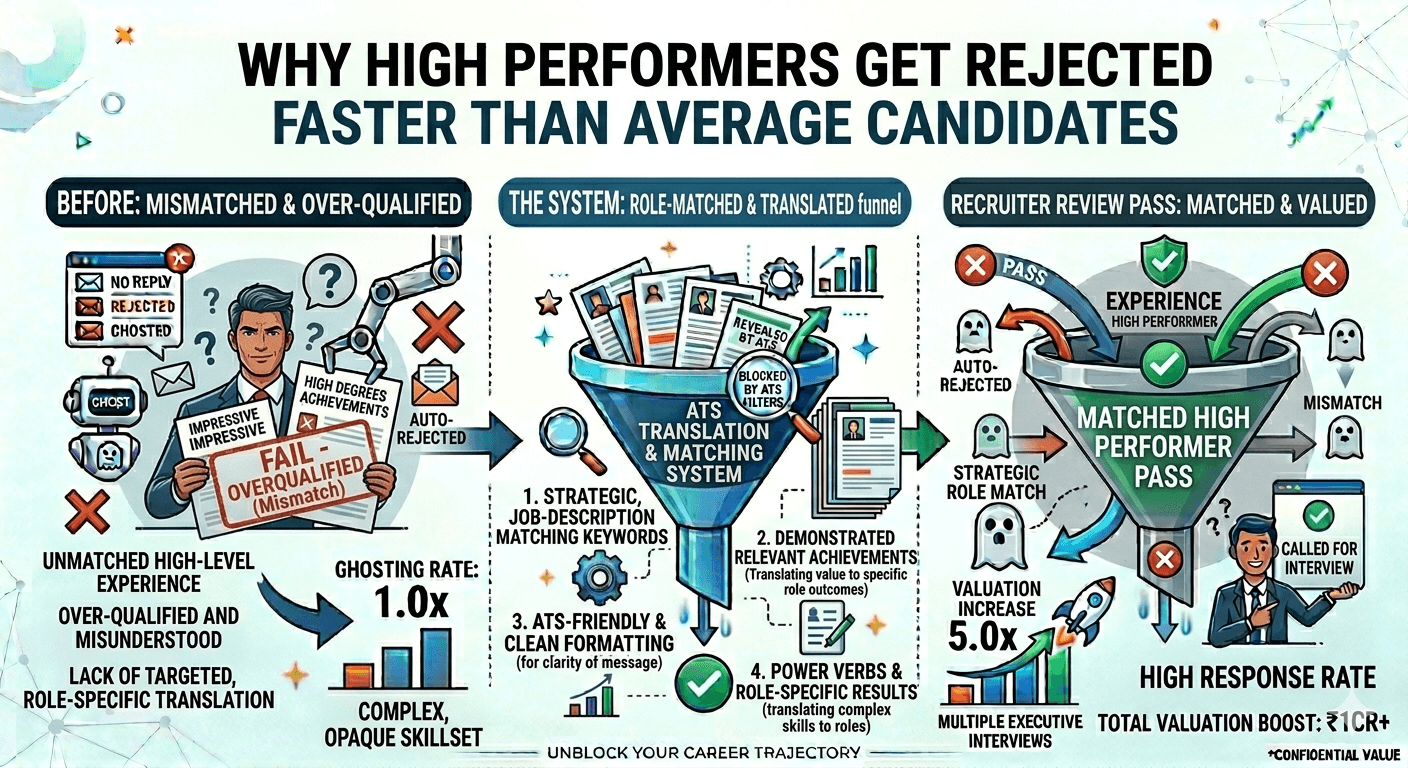
Why High Performers Get Rejected Faster Than Average Candidates
Why High Performers Get Rejected Faster Than Average Candidates
Resume
5 min read
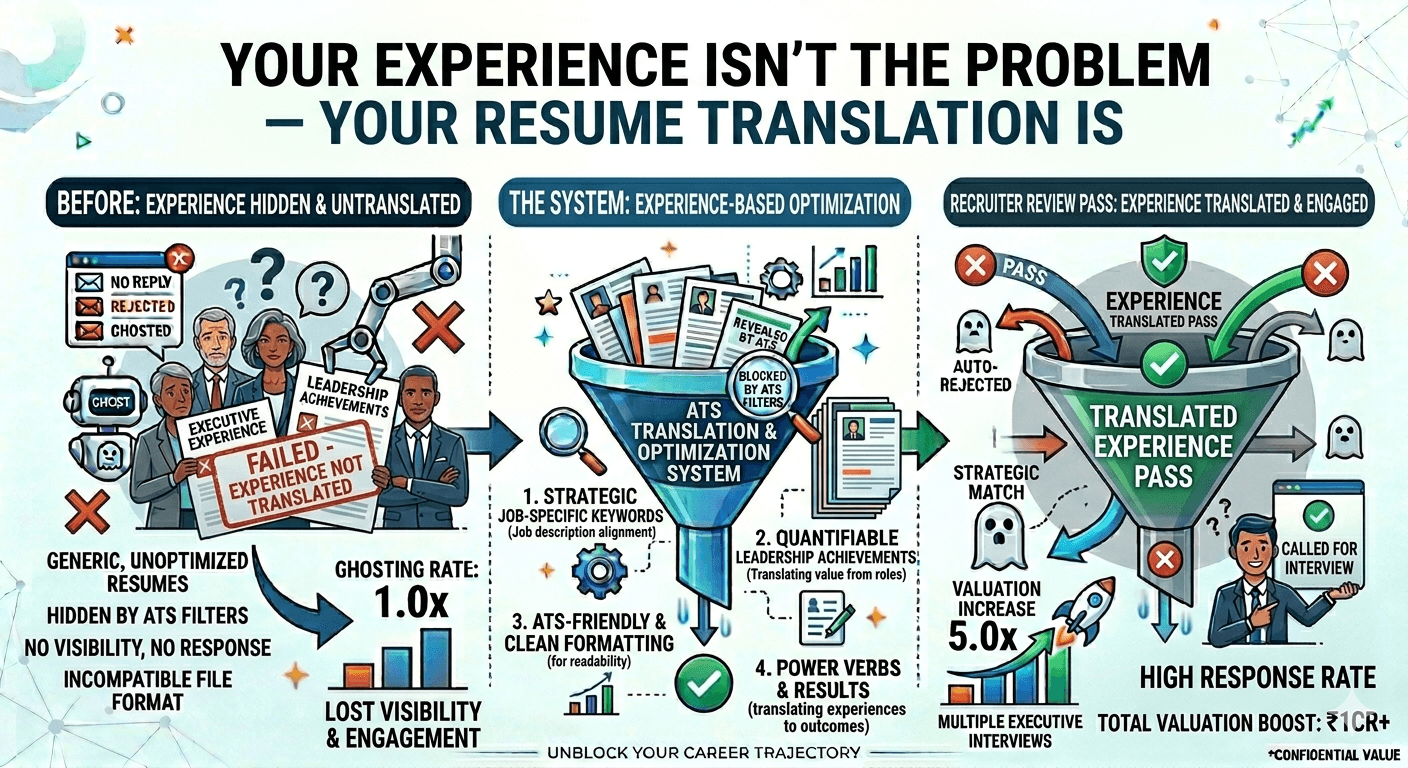
Your Experience Isn’t the Problem, Your Resume Translation Is
Struggling to get interviews despite strong experience? Discover how an ATS Resume Checker reveals hidden resume gaps and helps you translate your experience into results that recruiters actually notice.
Resume
5 min read
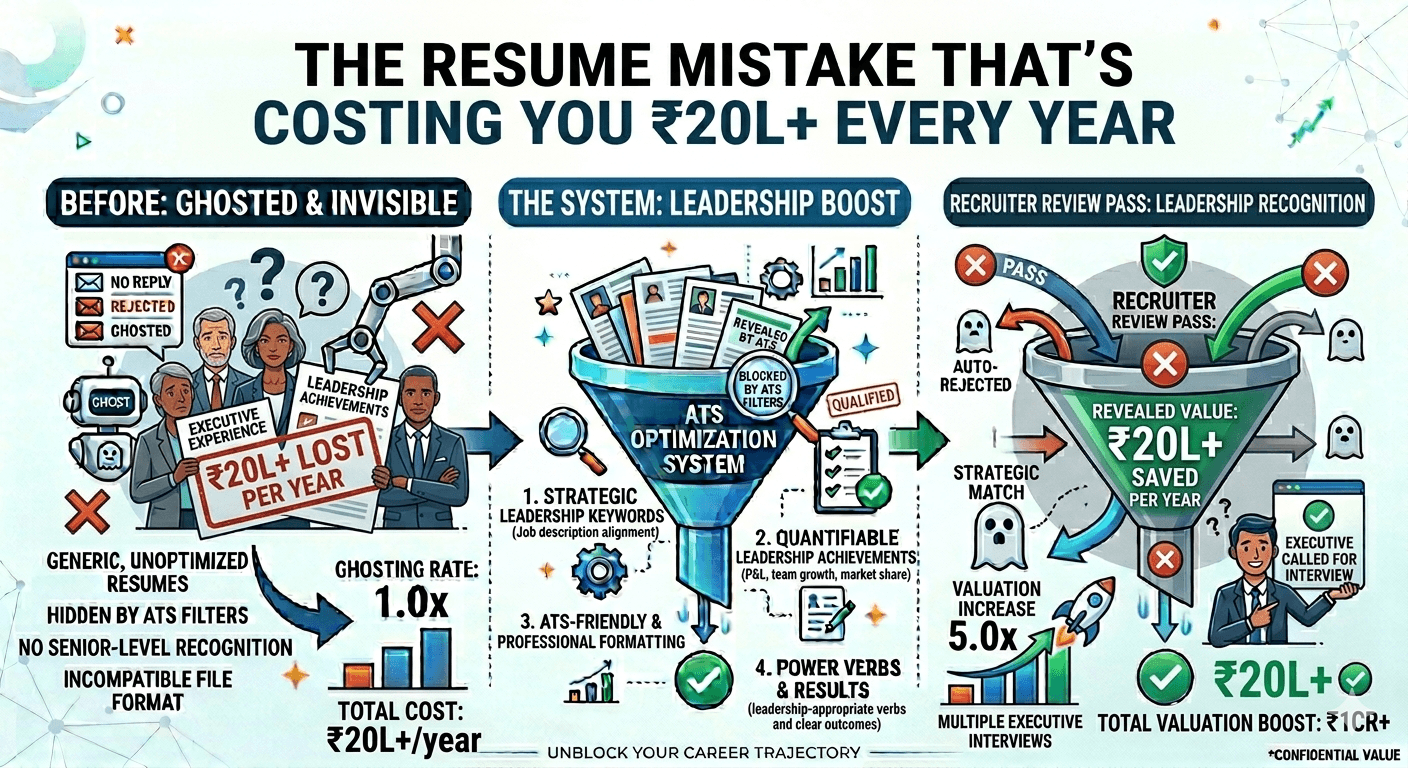
The Resume Mistake That’s Costing You ₹20L+ Every Year
The Resume Mistake That’s Costing You ₹20L+ Every Year
Resume
5 min read
Why High Performers Get Rejected Faster Than Average Candidates
Why High Performers Get Rejected Faster Than Average Candidates
Resume
5 min read
Your Experience Isn’t the Problem, Your Resume Translation Is
Struggling to get interviews despite strong experience? Discover how an ATS Resume Checker reveals hidden resume gaps and helps you translate your experience into results that recruiters actually notice.
Everything you need to know
Here you can find solutions to all your queries.
How do I know if I’m truly stuck in my job or just going through a slow phase?
Is it risky to switch jobs at a mid-senior level in India?
Should I focus on upskilling or immediately look for a new job?
Can I grow in the same company if promotions are limited?
What if I want more meaning, not just a promotion?
Join the Revolution
Your AI career copilot to land you top jobs in under 90 days.
Join the Revolution
Your AI career copilot to land you top jobs in under 90 days.
Join the Revolution
Your AI career copilot to land you top jobs in under 90 days.