
Resume
5 min read
Inside the ATS Algorithm: What Recruiters’ Software Looks for First
Published Date:
|
Last Modified:
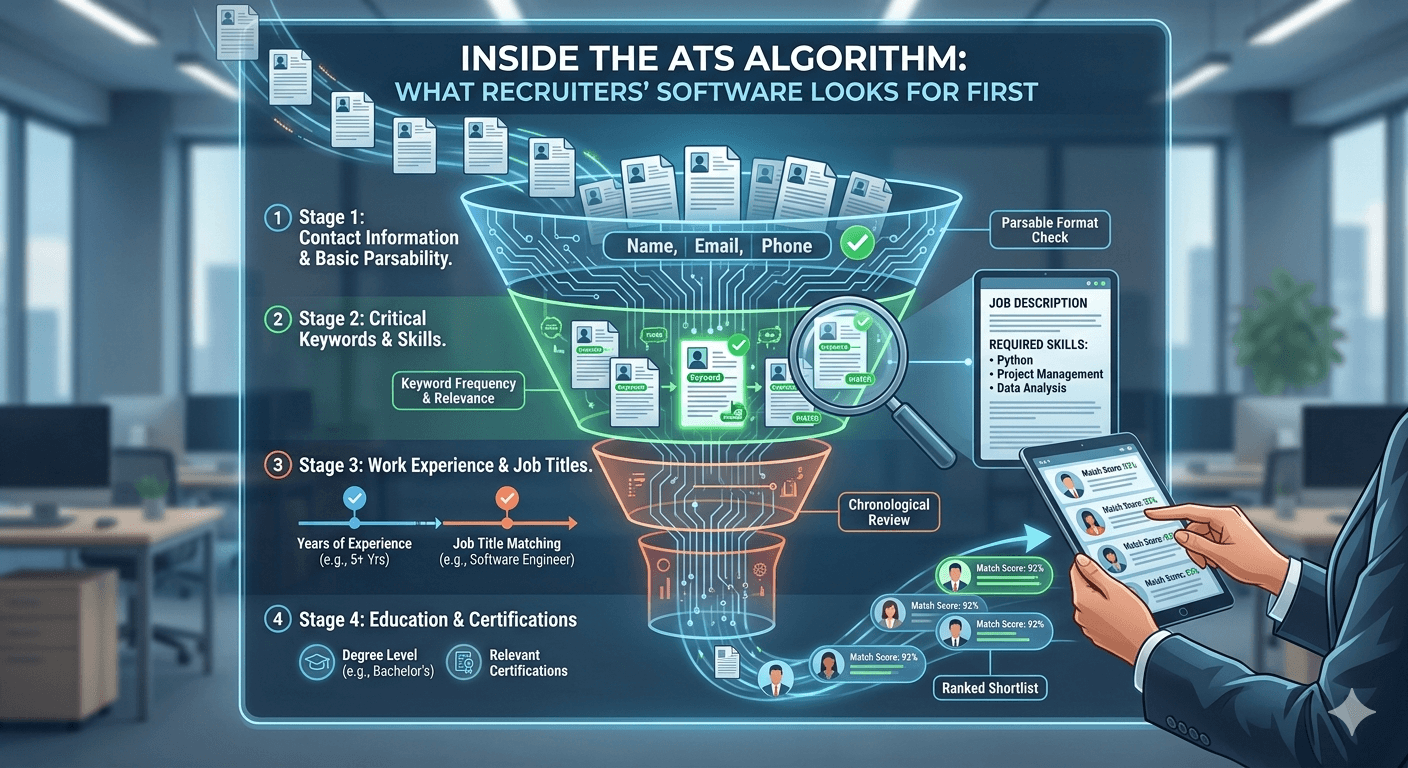
In today’s hyper-competitive job market, your resume doesn’t reach a human first, it meets an algorithm. Before a recruiter ever scans your profile, your application is filtered, ranked, and sometimes rejected by an Applicant Tracking System (ATS).
If you don’t understand how this system works, you’re not competing against other candidates, you’re being eliminated before the race even begins. This is exactly why tools like an ATS Resume Checker have become essential for modern professionals aiming to land high-paying roles.
This article breaks down what actually happens inside the ATS algorithm, what it prioritizes, and how you can strategically optimize your resume to pass the first, and most critical, screening layer.
What Is an ATS and Why It Matters
An Applicant Tracking System (ATS) is software used by companies to manage, filter, and rank job applications. Instead of manually reviewing hundreds (or thousands) of resumes, recruiters rely on ATS to shortlist candidates based on predefined criteria.
Here’s the brutal truth:
Over 75% of resumes never reach a human recruiter
ATS systems scan resumes in seconds
Your resume is scored before it's even seen
This means your resume isn’t just a document, it’s a data input. And like any system, it rewards structure, relevance, and precision.
Step 1: Keyword Matching – The First Gatekeeper
The first thing ATS looks for is keyword alignment.
Every job description contains specific keywords, skills, tools, qualifications, and job titles. The ATS scans your resume to check how closely it matches those keywords.
What the algorithm prioritizes:
Exact job title matches
Industry-specific skills (e.g., “P&L Management,” “Digital Transformation”)
Tools and platforms (e.g., SAP, Salesforce, SQL)
Certifications and qualifications
If your resume doesn’t reflect the language of the job description, it gets filtered out—even if you’re qualified.
Strategic Insight:
This is where an ATS Resume Checker becomes critical. It compares your resume against job descriptions and highlights missing keywords, ensuring your profile aligns with what the system is scanning for.
Step 2: Resume Structure & Formatting
ATS systems don’t “read” resumes the way humans do, they parse them. That means your formatting directly impacts how your information is interpreted.
According to resume scoring frameworks, an ideal resume should include clear sections like Summary, Skills, Work Experience, and Education to ensure proper parsing.
What ATS prefers:
Standard section headings (e.g., “Work Experience,” not “Career Journey”)
Reverse chronological order
Simple formatting (no tables, graphics, or images)
Clean bullet points
What breaks ATS:
Fancy designs
Columns and text boxes
Headers/footers with important information
If the ATS can’t parse your resume correctly, your experience may not even be “seen” by the system.
Step 3: Relevance Scoring (Context Matters)
Modern ATS systems go beyond keywords, they evaluate context and relevance.
For example:
Mentioning “Project Management” once is weak
Demonstrating it with quantified impact is strong
What the algorithm looks for:
Frequency of relevant keywords
Placement (top sections matter more)
Context (how skills are used)
A resume that says:
“Managed projects”
Will always lose to:
“Led 5 cross-functional projects delivering 20% cost reduction”
This aligns with resume optimization principles where quantified achievements significantly improve impact and ranking.
Step 4: Experience Depth & Career Progression
ATS systems also evaluate your career trajectory.
They analyze:
Years of experience
Role progression (growth vs stagnation)
Industry alignment
What increases your score:
Promotions within companies
Increasing responsibility
Consistent domain expertise
What decreases your score:
Irrelevant job history
Frequent role switching without growth
Lack of clarity in responsibilities
Your resume isn’t just being scanned—it’s being pattern analyzed.
Step 5: Skills Clustering & Matching
Advanced ATS systems group your skills into clusters and compare them with top-performing candidates.
For example, a Product Manager role may require:
Product Strategy
Stakeholder Management
Data Analysis
Agile Methodology
If your resume only covers 2 out of 4 clusters, your score drops significantly.
Pro Tip:
Instead of listing random skills, create strategic skill clusters aligned with your target role.
An ATS Resume Checker helps identify these gaps instantly, ensuring your profile covers all high-impact skill areas.
Step 6: Resume Length & Density Optimization
Contrary to popular belief, ATS systems do evaluate length and density.
A well-optimized resume should:
Be concise yet comprehensive
Avoid fluff and repetition
Focus on high-impact content
Guidelines suggest an ideal resume length between 450–850 words, balancing clarity and detail.
Too short → lacks depth
Too long → dilutes relevance
ATS rewards precision over volume.
Step 7: Soft Skills & Behavioral Indicators
While ATS is data-driven, it also scans for soft skill indicators through language patterns.
Examples:
Leadership → “Led,” “Directed,” “Mentored”
Problem-solving → “Resolved,” “Optimized,” “Improved”
Collaboration → “Partnered,” “Coordinated”
However, generic soft skills don’t work.
Weak:
“Strong leadership skills”
Strong:
“Led a team of 12 to deliver a $2M project ahead of schedule”
ATS systems prioritize evidence-based language, not claims.
Step 8: ATS Ranking vs Human Review
Once your resume passes the ATS filters, it gets ranked against other candidates.
Only the top-ranked resumes reach recruiters.
At this stage:
Keyword match score
Experience relevance
Achievement depth
All combine into a final ranking score.
This means your real competition isn’t just other candidates, it’s the algorithm’s scoring system.
Why Most Resumes Fail
Most professionals lose at the ATS level because they:
Use generic resumes for multiple roles
Ignore keyword alignment
Focus on design over structure
Don’t quantify achievements
Miss critical skill clusters
They optimize for humans… but get filtered by machines.
The Role of an ATS Resume Checker
An ATS Resume Checker acts as your diagnostic engine.
It helps you:
Identify missing keywords
Optimize formatting for parsing
Improve relevance scoring
Benchmark against job descriptions
Increase your ATS score before applying
Think of it as running a “pre-screening simulation” before the actual system evaluates you.
Final Takeaway: Control the Algorithm, Control the Outcome
The ATS isn’t your enemy, it’s a system with rules.
And once you understand those rules, you gain leverage.
Align your resume with job descriptions
Structure it for machine readability
Quantify your achievements
Optimize for both keywords and context
Because in today’s market, the difference between getting ignored and getting interviews isn’t your experience, it’s how well your resume communicates that experience to an algorithm.
And if you’re serious about landing high-paying roles, using an ATS Resume Checker isn’t optional, it’s your first competitive advantage.

As a co-founder and CEO of NxtJob.ai, I help mid and senior level professionals land 3-5 job offers within 3 months with a substantial salary hike. I am an Internationally Certified Career Coach, Resume Writing Expert, Job Interview and LinkedIn Strategist, and a Motivational Speaker.
Richik Sinha Roy
CEO, NxtJob
Recent articles

Resume
5 min read
ATS Resume Format: How to Create a Resume That Gets Past Applicant Tracking Systems
Learn how to create an ATS-friendly resume that passes through applicant tracking systems and increases your chances of landing an interview.
Resume
5 min read
ATS Resume Format: How to Create a Resume That Gets Past Applicant Tracking Systems
Learn how to create an ATS-friendly resume that passes through applicant tracking systems and increases your chances of landing an interview.
Resume
5 min read
ATS Resume Format: How to Create a Resume That Gets Past Applicant Tracking Systems
Learn how to create an ATS-friendly resume that passes through applicant tracking systems and increases your chances of landing an interview.
Resume
5 min read
ATS Resume Format: How to Create a Resume That Gets Past Applicant Tracking Systems
Learn how to create an ATS-friendly resume that passes through applicant tracking systems and increases your chances of landing an interview.
Resume
5 min read
ATS Resume Format: How to Create a Resume That Gets Past Applicant Tracking Systems
Learn how to create an ATS-friendly resume that passes through applicant tracking systems and increases your chances of landing an interview.
Resume
5 min read
ATS Resume Format: How to Create a Resume That Gets Past Applicant Tracking Systems
Learn how to create an ATS-friendly resume that passes through applicant tracking systems and increases your chances of landing an interview.
Everything you need to know
Here you can find solutions to all your queries.
Resume
5 min read
Inside the ATS Algorithm: What Recruiters’ Software Looks for First
Published Date:
|
Last Modified:
In today’s hyper-competitive job market, your resume doesn’t reach a human first, it meets an algorithm. Before a recruiter ever scans your profile, your application is filtered, ranked, and sometimes rejected by an Applicant Tracking System (ATS).
If you don’t understand how this system works, you’re not competing against other candidates, you’re being eliminated before the race even begins. This is exactly why tools like an ATS Resume Checker have become essential for modern professionals aiming to land high-paying roles.
This article breaks down what actually happens inside the ATS algorithm, what it prioritizes, and how you can strategically optimize your resume to pass the first, and most critical, screening layer.
What Is an ATS and Why It Matters
An Applicant Tracking System (ATS) is software used by companies to manage, filter, and rank job applications. Instead of manually reviewing hundreds (or thousands) of resumes, recruiters rely on ATS to shortlist candidates based on predefined criteria.
Here’s the brutal truth:
Over 75% of resumes never reach a human recruiter
ATS systems scan resumes in seconds
Your resume is scored before it's even seen
This means your resume isn’t just a document, it’s a data input. And like any system, it rewards structure, relevance, and precision.
Step 1: Keyword Matching – The First Gatekeeper
The first thing ATS looks for is keyword alignment.
Every job description contains specific keywords, skills, tools, qualifications, and job titles. The ATS scans your resume to check how closely it matches those keywords.
What the algorithm prioritizes:
Exact job title matches
Industry-specific skills (e.g., “P&L Management,” “Digital Transformation”)
Tools and platforms (e.g., SAP, Salesforce, SQL)
Certifications and qualifications
If your resume doesn’t reflect the language of the job description, it gets filtered out—even if you’re qualified.
Strategic Insight:
This is where an ATS Resume Checker becomes critical. It compares your resume against job descriptions and highlights missing keywords, ensuring your profile aligns with what the system is scanning for.
Step 2: Resume Structure & Formatting
ATS systems don’t “read” resumes the way humans do, they parse them. That means your formatting directly impacts how your information is interpreted.
According to resume scoring frameworks, an ideal resume should include clear sections like Summary, Skills, Work Experience, and Education to ensure proper parsing.
What ATS prefers:
Standard section headings (e.g., “Work Experience,” not “Career Journey”)
Reverse chronological order
Simple formatting (no tables, graphics, or images)
Clean bullet points
What breaks ATS:
Fancy designs
Columns and text boxes
Headers/footers with important information
If the ATS can’t parse your resume correctly, your experience may not even be “seen” by the system.
Step 3: Relevance Scoring (Context Matters)
Modern ATS systems go beyond keywords, they evaluate context and relevance.
For example:
Mentioning “Project Management” once is weak
Demonstrating it with quantified impact is strong
What the algorithm looks for:
Frequency of relevant keywords
Placement (top sections matter more)
Context (how skills are used)
A resume that says:
“Managed projects”
Will always lose to:
“Led 5 cross-functional projects delivering 20% cost reduction”
This aligns with resume optimization principles where quantified achievements significantly improve impact and ranking.
Step 4: Experience Depth & Career Progression
ATS systems also evaluate your career trajectory.
They analyze:
Years of experience
Role progression (growth vs stagnation)
Industry alignment
What increases your score:
Promotions within companies
Increasing responsibility
Consistent domain expertise
What decreases your score:
Irrelevant job history
Frequent role switching without growth
Lack of clarity in responsibilities
Your resume isn’t just being scanned—it’s being pattern analyzed.
Step 5: Skills Clustering & Matching
Advanced ATS systems group your skills into clusters and compare them with top-performing candidates.
For example, a Product Manager role may require:
Product Strategy
Stakeholder Management
Data Analysis
Agile Methodology
If your resume only covers 2 out of 4 clusters, your score drops significantly.
Pro Tip:
Instead of listing random skills, create strategic skill clusters aligned with your target role.
An ATS Resume Checker helps identify these gaps instantly, ensuring your profile covers all high-impact skill areas.
Step 6: Resume Length & Density Optimization
Contrary to popular belief, ATS systems do evaluate length and density.
A well-optimized resume should:
Be concise yet comprehensive
Avoid fluff and repetition
Focus on high-impact content
Guidelines suggest an ideal resume length between 450–850 words, balancing clarity and detail.
Too short → lacks depth
Too long → dilutes relevance
ATS rewards precision over volume.
Step 7: Soft Skills & Behavioral Indicators
While ATS is data-driven, it also scans for soft skill indicators through language patterns.
Examples:
Leadership → “Led,” “Directed,” “Mentored”
Problem-solving → “Resolved,” “Optimized,” “Improved”
Collaboration → “Partnered,” “Coordinated”
However, generic soft skills don’t work.
Weak:
“Strong leadership skills”
Strong:
“Led a team of 12 to deliver a $2M project ahead of schedule”
ATS systems prioritize evidence-based language, not claims.
Step 8: ATS Ranking vs Human Review
Once your resume passes the ATS filters, it gets ranked against other candidates.
Only the top-ranked resumes reach recruiters.
At this stage:
Keyword match score
Experience relevance
Achievement depth
All combine into a final ranking score.
This means your real competition isn’t just other candidates, it’s the algorithm’s scoring system.
Why Most Resumes Fail
Most professionals lose at the ATS level because they:
Use generic resumes for multiple roles
Ignore keyword alignment
Focus on design over structure
Don’t quantify achievements
Miss critical skill clusters
They optimize for humans… but get filtered by machines.
The Role of an ATS Resume Checker
An ATS Resume Checker acts as your diagnostic engine.
It helps you:
Identify missing keywords
Optimize formatting for parsing
Improve relevance scoring
Benchmark against job descriptions
Increase your ATS score before applying
Think of it as running a “pre-screening simulation” before the actual system evaluates you.
Final Takeaway: Control the Algorithm, Control the Outcome
The ATS isn’t your enemy, it’s a system with rules.
And once you understand those rules, you gain leverage.
Align your resume with job descriptions
Structure it for machine readability
Quantify your achievements
Optimize for both keywords and context
Because in today’s market, the difference between getting ignored and getting interviews isn’t your experience, it’s how well your resume communicates that experience to an algorithm.
And if you’re serious about landing high-paying roles, using an ATS Resume Checker isn’t optional, it’s your first competitive advantage.
Interview
Salary Negotiation With HR: How Senior Professionals Should Handle the Conversation
Learn how senior professionals can handle salary negotiation with HR, respond to pushback, protect their value, and avoid underselling themselves.
Resume
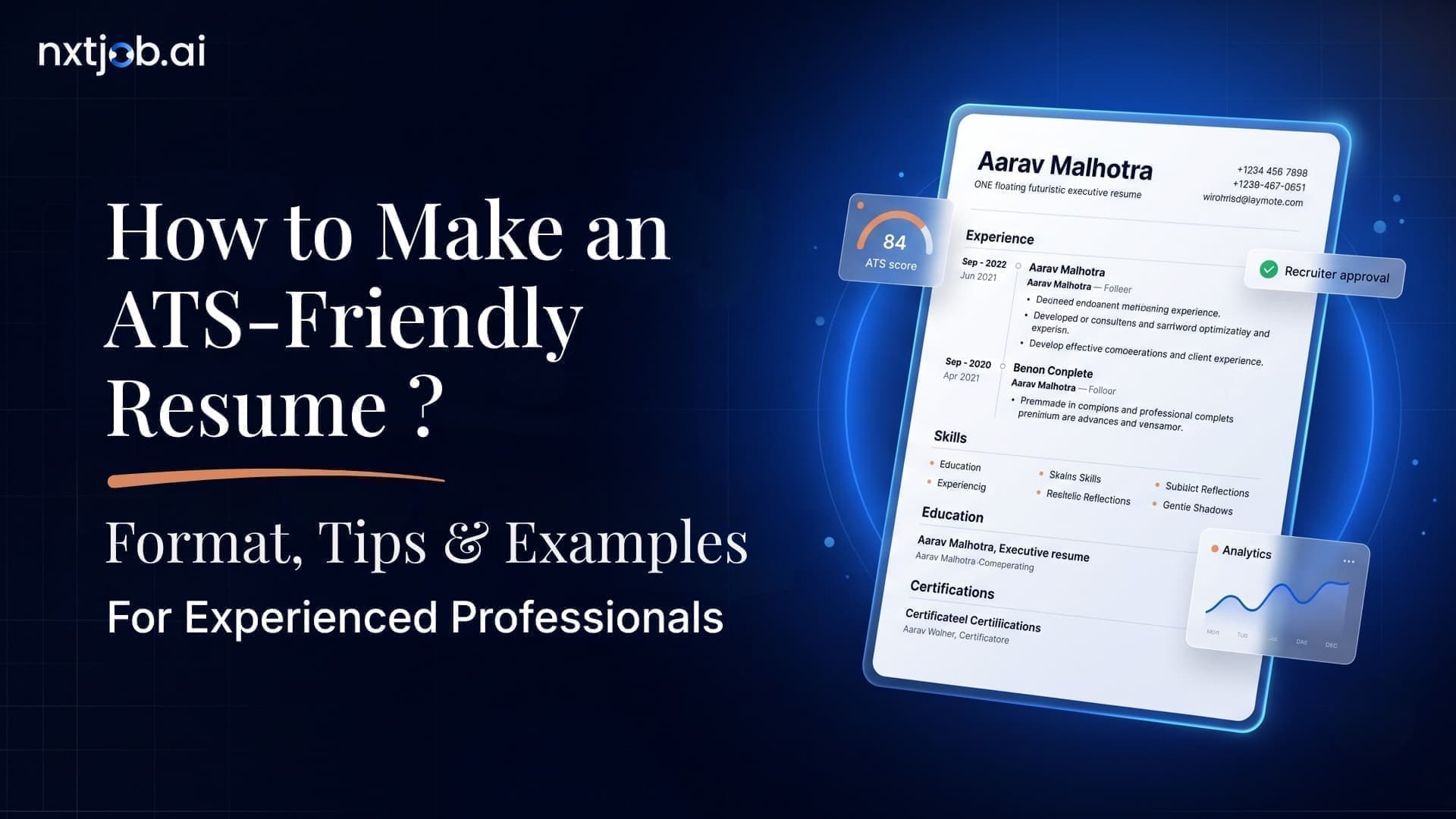
How to Make an ATS-Friendly Resume: Format, Tips, and Examples for Experienced Professionals
Learn how to make an ATS-friendly resume with the right format, keywords, structure, and role-specific details for experienced professionals.
As a co-founder and CEO of NxtJob.ai, I help mid and senior level professionals land 3-5 job offers within 3 months with a substantial salary hike. I am an Internationally Certified Career Coach, Resume Writing Expert, Job Interview and LinkedIn Strategist, and a Motivational Speaker.
Richik Sinha Roy
CEO, NxtJob
Everything you need to know
Here you can find solutions to all your queries.
Resume
5 min read
Inside the ATS Algorithm: What Recruiters’ Software Looks for First
Published Date:
|
Last Modified:
In today’s hyper-competitive job market, your resume doesn’t reach a human first, it meets an algorithm. Before a recruiter ever scans your profile, your application is filtered, ranked, and sometimes rejected by an Applicant Tracking System (ATS).
If you don’t understand how this system works, you’re not competing against other candidates, you’re being eliminated before the race even begins. This is exactly why tools like an ATS Resume Checker have become essential for modern professionals aiming to land high-paying roles.
This article breaks down what actually happens inside the ATS algorithm, what it prioritizes, and how you can strategically optimize your resume to pass the first, and most critical, screening layer.
What Is an ATS and Why It Matters
An Applicant Tracking System (ATS) is software used by companies to manage, filter, and rank job applications. Instead of manually reviewing hundreds (or thousands) of resumes, recruiters rely on ATS to shortlist candidates based on predefined criteria.
Here’s the brutal truth:
Over 75% of resumes never reach a human recruiter
ATS systems scan resumes in seconds
Your resume is scored before it's even seen
This means your resume isn’t just a document, it’s a data input. And like any system, it rewards structure, relevance, and precision.
Step 1: Keyword Matching – The First Gatekeeper
The first thing ATS looks for is keyword alignment.
Every job description contains specific keywords, skills, tools, qualifications, and job titles. The ATS scans your resume to check how closely it matches those keywords.
What the algorithm prioritizes:
Exact job title matches
Industry-specific skills (e.g., “P&L Management,” “Digital Transformation”)
Tools and platforms (e.g., SAP, Salesforce, SQL)
Certifications and qualifications
If your resume doesn’t reflect the language of the job description, it gets filtered out—even if you’re qualified.
Strategic Insight:
This is where an ATS Resume Checker becomes critical. It compares your resume against job descriptions and highlights missing keywords, ensuring your profile aligns with what the system is scanning for.
Step 2: Resume Structure & Formatting
ATS systems don’t “read” resumes the way humans do, they parse them. That means your formatting directly impacts how your information is interpreted.
According to resume scoring frameworks, an ideal resume should include clear sections like Summary, Skills, Work Experience, and Education to ensure proper parsing.
What ATS prefers:
Standard section headings (e.g., “Work Experience,” not “Career Journey”)
Reverse chronological order
Simple formatting (no tables, graphics, or images)
Clean bullet points
What breaks ATS:
Fancy designs
Columns and text boxes
Headers/footers with important information
If the ATS can’t parse your resume correctly, your experience may not even be “seen” by the system.
Step 3: Relevance Scoring (Context Matters)
Modern ATS systems go beyond keywords, they evaluate context and relevance.
For example:
Mentioning “Project Management” once is weak
Demonstrating it with quantified impact is strong
What the algorithm looks for:
Frequency of relevant keywords
Placement (top sections matter more)
Context (how skills are used)
A resume that says:
“Managed projects”
Will always lose to:
“Led 5 cross-functional projects delivering 20% cost reduction”
This aligns with resume optimization principles where quantified achievements significantly improve impact and ranking.
Step 4: Experience Depth & Career Progression
ATS systems also evaluate your career trajectory.
They analyze:
Years of experience
Role progression (growth vs stagnation)
Industry alignment
What increases your score:
Promotions within companies
Increasing responsibility
Consistent domain expertise
What decreases your score:
Irrelevant job history
Frequent role switching without growth
Lack of clarity in responsibilities
Your resume isn’t just being scanned—it’s being pattern analyzed.
Step 5: Skills Clustering & Matching
Advanced ATS systems group your skills into clusters and compare them with top-performing candidates.
For example, a Product Manager role may require:
Product Strategy
Stakeholder Management
Data Analysis
Agile Methodology
If your resume only covers 2 out of 4 clusters, your score drops significantly.
Pro Tip:
Instead of listing random skills, create strategic skill clusters aligned with your target role.
An ATS Resume Checker helps identify these gaps instantly, ensuring your profile covers all high-impact skill areas.
Step 6: Resume Length & Density Optimization
Contrary to popular belief, ATS systems do evaluate length and density.
A well-optimized resume should:
Be concise yet comprehensive
Avoid fluff and repetition
Focus on high-impact content
Guidelines suggest an ideal resume length between 450–850 words, balancing clarity and detail.
Too short → lacks depth
Too long → dilutes relevance
ATS rewards precision over volume.
Step 7: Soft Skills & Behavioral Indicators
While ATS is data-driven, it also scans for soft skill indicators through language patterns.
Examples:
Leadership → “Led,” “Directed,” “Mentored”
Problem-solving → “Resolved,” “Optimized,” “Improved”
Collaboration → “Partnered,” “Coordinated”
However, generic soft skills don’t work.
Weak:
“Strong leadership skills”
Strong:
“Led a team of 12 to deliver a $2M project ahead of schedule”
ATS systems prioritize evidence-based language, not claims.
Step 8: ATS Ranking vs Human Review
Once your resume passes the ATS filters, it gets ranked against other candidates.
Only the top-ranked resumes reach recruiters.
At this stage:
Keyword match score
Experience relevance
Achievement depth
All combine into a final ranking score.
This means your real competition isn’t just other candidates, it’s the algorithm’s scoring system.
Why Most Resumes Fail
Most professionals lose at the ATS level because they:
Use generic resumes for multiple roles
Ignore keyword alignment
Focus on design over structure
Don’t quantify achievements
Miss critical skill clusters
They optimize for humans… but get filtered by machines.
The Role of an ATS Resume Checker
An ATS Resume Checker acts as your diagnostic engine.
It helps you:
Identify missing keywords
Optimize formatting for parsing
Improve relevance scoring
Benchmark against job descriptions
Increase your ATS score before applying
Think of it as running a “pre-screening simulation” before the actual system evaluates you.
Final Takeaway: Control the Algorithm, Control the Outcome
The ATS isn’t your enemy, it’s a system with rules.
And once you understand those rules, you gain leverage.
Align your resume with job descriptions
Structure it for machine readability
Quantify your achievements
Optimize for both keywords and context
Because in today’s market, the difference between getting ignored and getting interviews isn’t your experience, it’s how well your resume communicates that experience to an algorithm.
And if you’re serious about landing high-paying roles, using an ATS Resume Checker isn’t optional, it’s your first competitive advantage.
Interview
Salary Negotiation With HR: How Senior Professionals Should Handle the Conversation
Learn how senior professionals can handle salary negotiation with HR, respond to pushback, protect their value, and avoid underselling themselves.
Resume
How to Make an ATS-Friendly Resume: Format, Tips, and Examples for Experienced Professionals
Learn how to make an ATS-friendly resume with the right format, keywords, structure, and role-specific details for experienced professionals.
As a co-founder and CEO of NxtJob.ai, I help mid and senior level professionals land 3-5 job offers within 3 months with a substantial salary hike. I am an Internationally Certified Career Coach, Resume Writing Expert, Job Interview and LinkedIn Strategist, and a Motivational Speaker.
Richik Sinha Roy
CEO, NxtJob
Recent articles
Resume
5 min read
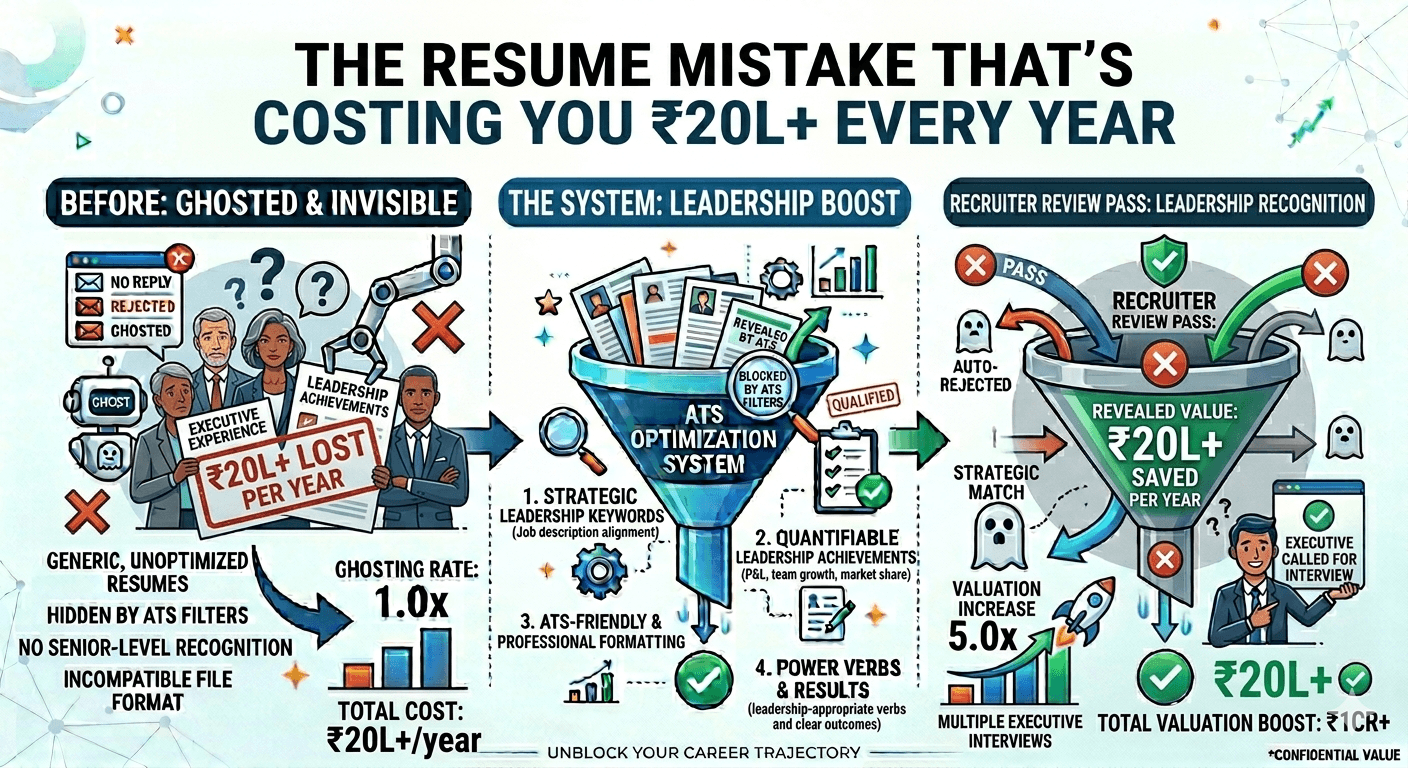
The Resume Mistake That’s Costing You ₹20L+ Every Year
The Resume Mistake That’s Costing You ₹20L+ Every Year
Resume
5 min read
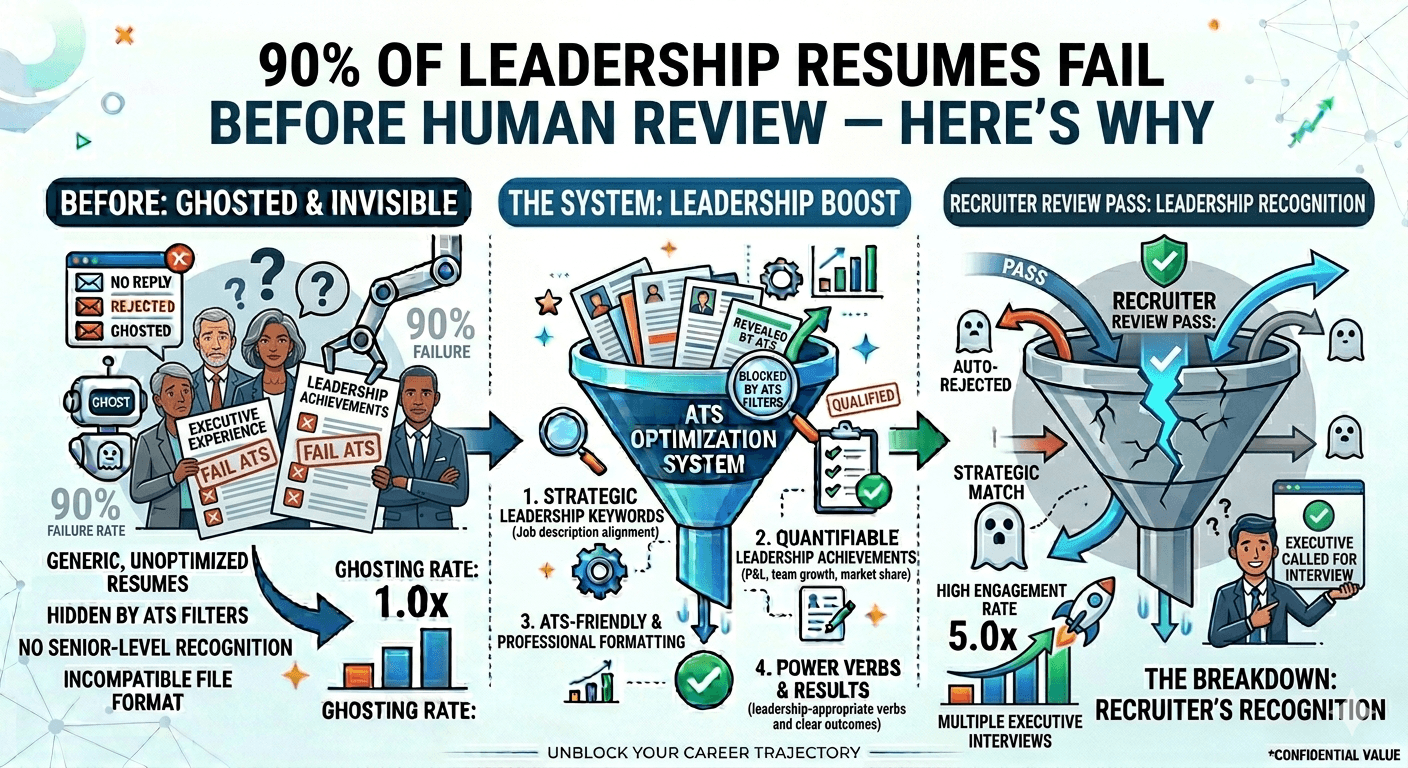
90% of Leadership Resumes Fail Before Human Review - Here’s Why
90% of Leadership Resumes Fail Before Human Review - Here’s Why
Resume
5 min read
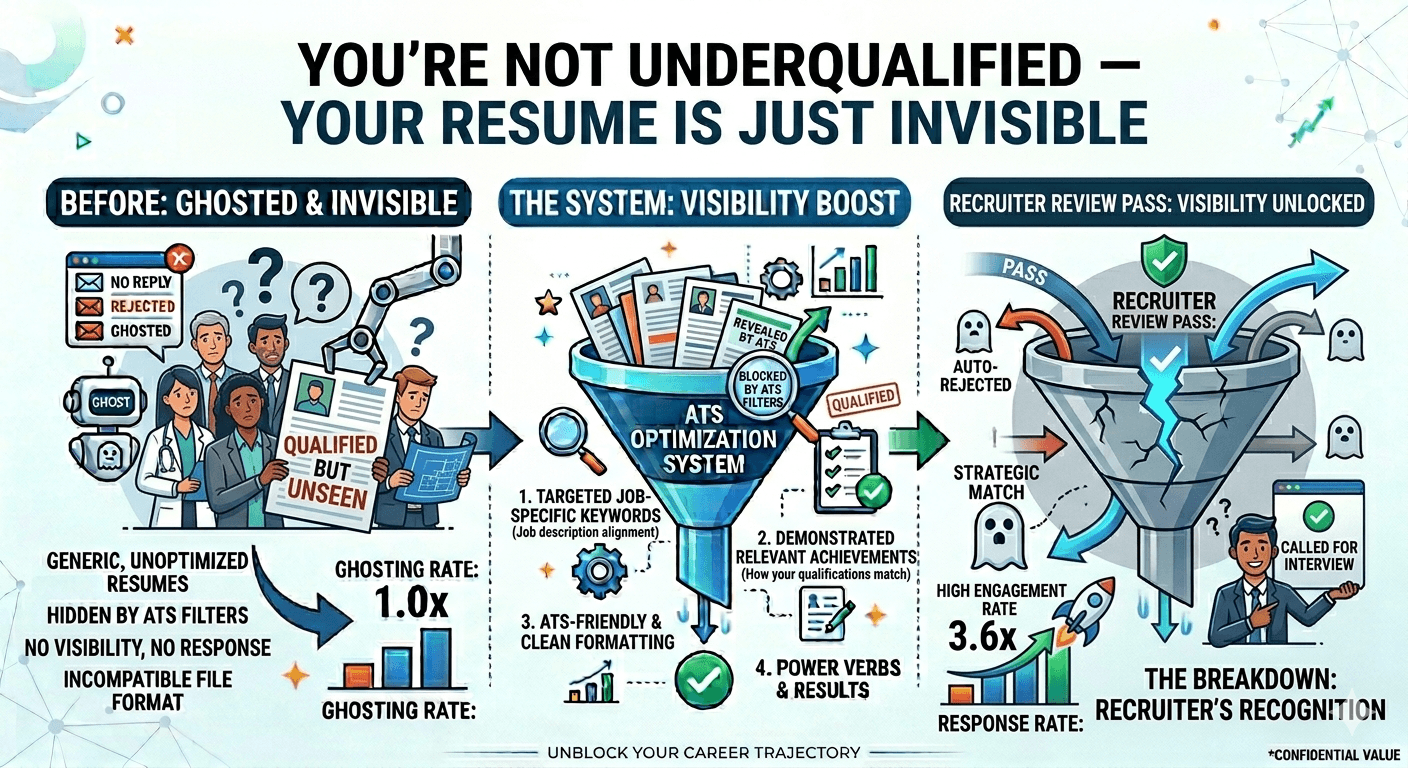
You’re Not Underqualified — Your Resume Is Just Invisible
You’re Not Underqualified — Your Resume Is Just Invisible
Everything you need to know
Here you can find solutions to all your queries.
Join the Revolution
Your AI career copilot to land you top jobs in under 90 days.
Join the Revolution
Your AI career copilot to land you top jobs in under 90 days.
Join the Revolution
Your AI career copilot to land you top jobs in under 90 days.