Job search
5 min read
How AI Turns Your Work History Into a High-Value Career Narrative
Published Date:
|
Last Modified:
Most professionals quietly undervalue their own experience. I see it all the time. They list job titles, tools, and responsibilities, almost like they’re filling out a form. As if recruiters are sitting there with a checklist, ticking boxes.
That’s not really how it works anymore.
What actually separates people in today’s market isn’t just what they’ve done. It’s how clearly they can explain the story behind it. The context. The decisions. The outcomes. That part often gets lost.
And this is where AI, a little unexpectedly, is changing things in a big way.
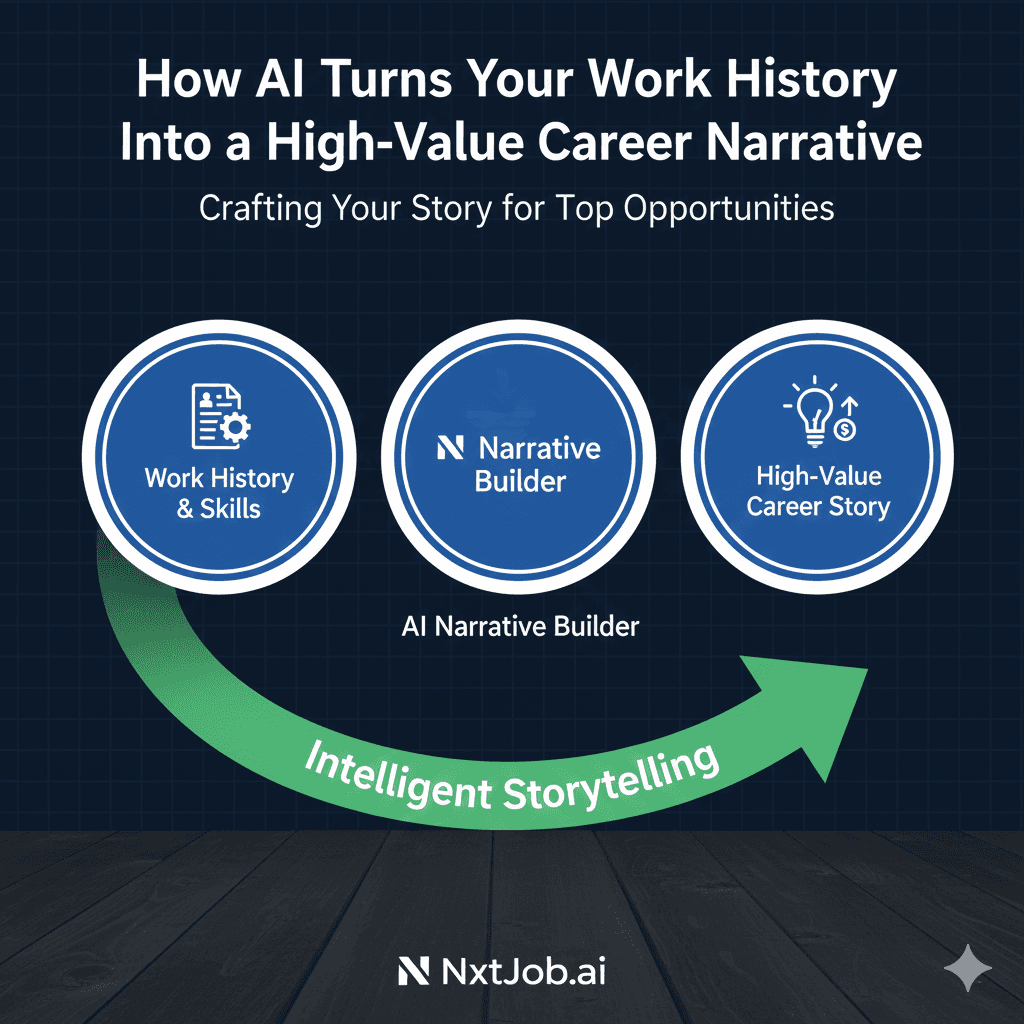
Instead of treating your work history as a pile of disconnected tasks, AI can help reshape it into a coherent, high-value narrative. One that makes sense. One that positions you as an obvious fit for where you want to go next. For people stuck in underpaying roles, passed over for promotions, or trying to pivot without starting from zero, that shift can be… honestly, career-altering.
From bullet points to something recruiters actually care about
Traditional resumes look backward. They explain what happened. Hiring managers don’t really live there. They’re looking forward. They’re trying to figure out what you’ll do next.
AI helps close that gap by reframing your experience around:
Impact, not activity
Results, not responsibilities
Capabilities, not job titles
So instead of saying, “Managed social media accounts,” it becomes something like:
“Grew audience engagement by 54% in six months through data-driven content experimentation.”
That second version does more than sound better. It tells a story, even if subtly. There’s a challenge implied. Decisions made. Outcomes achieved. You start to feel the person behind the role.
In a crowded job market, that narrative is often the real advantage.
Making the invisible parts of your experience visible
A lot of professionals say, “I don’t really have big achievements.” I’m not sure that’s ever fully true. More often, they’re just too close to their own work to see it clearly.
AI is good at stepping back. It can analyze patterns across roles, infer strengths, and surface signals you might not notice on your own. Using structured evaluation logic similar to what you’d see in detailed career scorecards, it can pull out things like:
Achievements that were never labeled as such
Results that can actually be quantified
Signs of leadership, even without the title
Problem-solving behaviors
Evidence of progression over time
So it’s not just rewriting your resume. It’s helping you see what your experience is actually worth.
Turning a messy career into something that makes sense
Not everyone has a neat, linear career. Some paths zigzag. Different industries. Different roles. Skills that don’t obviously sit together. That can feel hard to explain, even to yourself.
AI helps organize that mess.
It brings structure to your story, similar to how goal-setting frameworks bring clarity to teams. Patterns start to emerge. Themes repeat. Direction shows up where before there was just noise.
It helps answer questions like:
Where is this career actually heading?
What strengths keep showing up, even in different roles?
What kind of impact do you consistently create?
And which version of your story best fits the role you’re aiming for now?
The result feels cohesive, even if the path itself wasn’t.
Connecting where you’ve been to where you want to go
Recruiters aren’t just curious about your past. They’re trying to decide if that past makes you right for their future.
AI can map your experience to industry expectations and role requirements, helping you translate what you’ve done into what employers care about. Practically, that means you can:
Highlight the right keywords without forcing them
Reframe “unrelated” roles into relevant strengths
Show transferable skills with real proof
Position yourself for higher-level roles and compensation
This is especially useful mid-career, when experience is broad but doesn’t fit neatly into a single ladder. AI helps tie it together.
Why narrative matters more than ever
Hiring is noisy now. Recruiters scan hundreds of profiles. What stops them isn’t formatting or clever design. It’s whether the story clicks.
Strong, AI-supported narratives give you a few important things:
Clarity
A clean, structured explanation of who you are and the value you bring.
Differentiation
While others list tasks, you show transformation.
Confidence
Seeing your work quantified and contextualized changes how you show up. In interviews. In negotiations. In the roles you even consider applying for.
Consistency
Your resume, LinkedIn, cover letters, and interview answers all tell the same story. No gaps. No contradictions.
That alignment is often what separates strong candidates from forgettable ones.
AI isn’t replacing you. It’s amplifying you
This part matters. AI isn’t inventing a career you didn’t have. It’s pulling clarity out of what already exists.
Think of it more like a career analyst or strategist. It helps you:
Surface wins you forgot about
Translate technical work into business value
Put real numbers to outcomes
Reorder experiences so they build momentum
Present yourself as ready for roles above your current level
Most professionals never get that level of perspective on their own career. AI makes it accessible.
When you combine that with structured human coaching, the impact compounds. You move faster. You aim higher. Things click sooner.
You don’t just look like a better candidate.
You become one that’s hard to overlook.
Your career story is an offer now
There’s an idea I keep coming back to: value isn’t just in what you have. It’s in how clearly that value is communicated.
Your career works the same way.
Your experience is the raw material.
Your story is the offer.
AI helps shape that offer through sharper positioning, clearer value, evidence of return, and consistent messaging that speaks directly to what employers care about.
Nothing is being invented. It’s all already there.
One last thought
Most careers aren’t undervalued because the person lacks skill. They’re undervalued because the story never quite gets told.
AI changes that.
It organizes what feels scattered.
It gives language to impact.
It helps others see what you’ve always been doing.
Your experience already has value.
AI just makes it visible.

As a co-founder and CEO of NxtJob.ai, I help mid and senior level professionals land 3-5 job offers within 3 months with a substantial salary hike. I am an Internationally Certified Career Coach, Resume Writing Expert, Job Interview and LinkedIn Strategist, and a Motivational Speaker.
Richik Sinha Roy
CEO, NxtJob
Recent articles

Resume
5 min read
ATS Resume Format: How to Create a Resume That Gets Past Applicant Tracking Systems
Learn how to create an ATS-friendly resume that passes through applicant tracking systems and increases your chances of landing an interview.
Resume
5 min read
ATS Resume Format: How to Create a Resume That Gets Past Applicant Tracking Systems
Learn how to create an ATS-friendly resume that passes through applicant tracking systems and increases your chances of landing an interview.
Resume
5 min read
ATS Resume Format: How to Create a Resume That Gets Past Applicant Tracking Systems
Learn how to create an ATS-friendly resume that passes through applicant tracking systems and increases your chances of landing an interview.
Resume
5 min read
ATS Resume Format: How to Create a Resume That Gets Past Applicant Tracking Systems
Learn how to create an ATS-friendly resume that passes through applicant tracking systems and increases your chances of landing an interview.
Resume
5 min read
ATS Resume Format: How to Create a Resume That Gets Past Applicant Tracking Systems
Learn how to create an ATS-friendly resume that passes through applicant tracking systems and increases your chances of landing an interview.
Resume
5 min read
ATS Resume Format: How to Create a Resume That Gets Past Applicant Tracking Systems
Learn how to create an ATS-friendly resume that passes through applicant tracking systems and increases your chances of landing an interview.
Everything you need to know
Here you can find solutions to all your queries.
Job search
5 min read
How AI Turns Your Work History Into a High-Value Career Narrative
Published Date:
|
Last Modified:
Most professionals quietly undervalue their own experience. I see it all the time. They list job titles, tools, and responsibilities, almost like they’re filling out a form. As if recruiters are sitting there with a checklist, ticking boxes.
That’s not really how it works anymore.
What actually separates people in today’s market isn’t just what they’ve done. It’s how clearly they can explain the story behind it. The context. The decisions. The outcomes. That part often gets lost.
And this is where AI, a little unexpectedly, is changing things in a big way.
Instead of treating your work history as a pile of disconnected tasks, AI can help reshape it into a coherent, high-value narrative. One that makes sense. One that positions you as an obvious fit for where you want to go next. For people stuck in underpaying roles, passed over for promotions, or trying to pivot without starting from zero, that shift can be… honestly, career-altering.
From bullet points to something recruiters actually care about
Traditional resumes look backward. They explain what happened. Hiring managers don’t really live there. They’re looking forward. They’re trying to figure out what you’ll do next.
AI helps close that gap by reframing your experience around:
Impact, not activity
Results, not responsibilities
Capabilities, not job titles
So instead of saying, “Managed social media accounts,” it becomes something like:
“Grew audience engagement by 54% in six months through data-driven content experimentation.”
That second version does more than sound better. It tells a story, even if subtly. There’s a challenge implied. Decisions made. Outcomes achieved. You start to feel the person behind the role.
In a crowded job market, that narrative is often the real advantage.
Making the invisible parts of your experience visible
A lot of professionals say, “I don’t really have big achievements.” I’m not sure that’s ever fully true. More often, they’re just too close to their own work to see it clearly.
AI is good at stepping back. It can analyze patterns across roles, infer strengths, and surface signals you might not notice on your own. Using structured evaluation logic similar to what you’d see in detailed career scorecards, it can pull out things like:
Achievements that were never labeled as such
Results that can actually be quantified
Signs of leadership, even without the title
Problem-solving behaviors
Evidence of progression over time
So it’s not just rewriting your resume. It’s helping you see what your experience is actually worth.
Turning a messy career into something that makes sense
Not everyone has a neat, linear career. Some paths zigzag. Different industries. Different roles. Skills that don’t obviously sit together. That can feel hard to explain, even to yourself.
AI helps organize that mess.
It brings structure to your story, similar to how goal-setting frameworks bring clarity to teams. Patterns start to emerge. Themes repeat. Direction shows up where before there was just noise.
It helps answer questions like:
Where is this career actually heading?
What strengths keep showing up, even in different roles?
What kind of impact do you consistently create?
And which version of your story best fits the role you’re aiming for now?
The result feels cohesive, even if the path itself wasn’t.
Connecting where you’ve been to where you want to go
Recruiters aren’t just curious about your past. They’re trying to decide if that past makes you right for their future.
AI can map your experience to industry expectations and role requirements, helping you translate what you’ve done into what employers care about. Practically, that means you can:
Highlight the right keywords without forcing them
Reframe “unrelated” roles into relevant strengths
Show transferable skills with real proof
Position yourself for higher-level roles and compensation
This is especially useful mid-career, when experience is broad but doesn’t fit neatly into a single ladder. AI helps tie it together.
Why narrative matters more than ever
Hiring is noisy now. Recruiters scan hundreds of profiles. What stops them isn’t formatting or clever design. It’s whether the story clicks.
Strong, AI-supported narratives give you a few important things:
Clarity
A clean, structured explanation of who you are and the value you bring.
Differentiation
While others list tasks, you show transformation.
Confidence
Seeing your work quantified and contextualized changes how you show up. In interviews. In negotiations. In the roles you even consider applying for.
Consistency
Your resume, LinkedIn, cover letters, and interview answers all tell the same story. No gaps. No contradictions.
That alignment is often what separates strong candidates from forgettable ones.
AI isn’t replacing you. It’s amplifying you
This part matters. AI isn’t inventing a career you didn’t have. It’s pulling clarity out of what already exists.
Think of it more like a career analyst or strategist. It helps you:
Surface wins you forgot about
Translate technical work into business value
Put real numbers to outcomes
Reorder experiences so they build momentum
Present yourself as ready for roles above your current level
Most professionals never get that level of perspective on their own career. AI makes it accessible.
When you combine that with structured human coaching, the impact compounds. You move faster. You aim higher. Things click sooner.
You don’t just look like a better candidate.
You become one that’s hard to overlook.
Your career story is an offer now
There’s an idea I keep coming back to: value isn’t just in what you have. It’s in how clearly that value is communicated.
Your career works the same way.
Your experience is the raw material.
Your story is the offer.
AI helps shape that offer through sharper positioning, clearer value, evidence of return, and consistent messaging that speaks directly to what employers care about.
Nothing is being invented. It’s all already there.
One last thought
Most careers aren’t undervalued because the person lacks skill. They’re undervalued because the story never quite gets told.
AI changes that.
It organizes what feels scattered.
It gives language to impact.
It helps others see what you’ve always been doing.
Your experience already has value.
AI just makes it visible.
Interview
Salary Negotiation With HR: How Senior Professionals Should Handle the Conversation
Learn how senior professionals can handle salary negotiation with HR, respond to pushback, protect their value, and avoid underselling themselves.
Resume
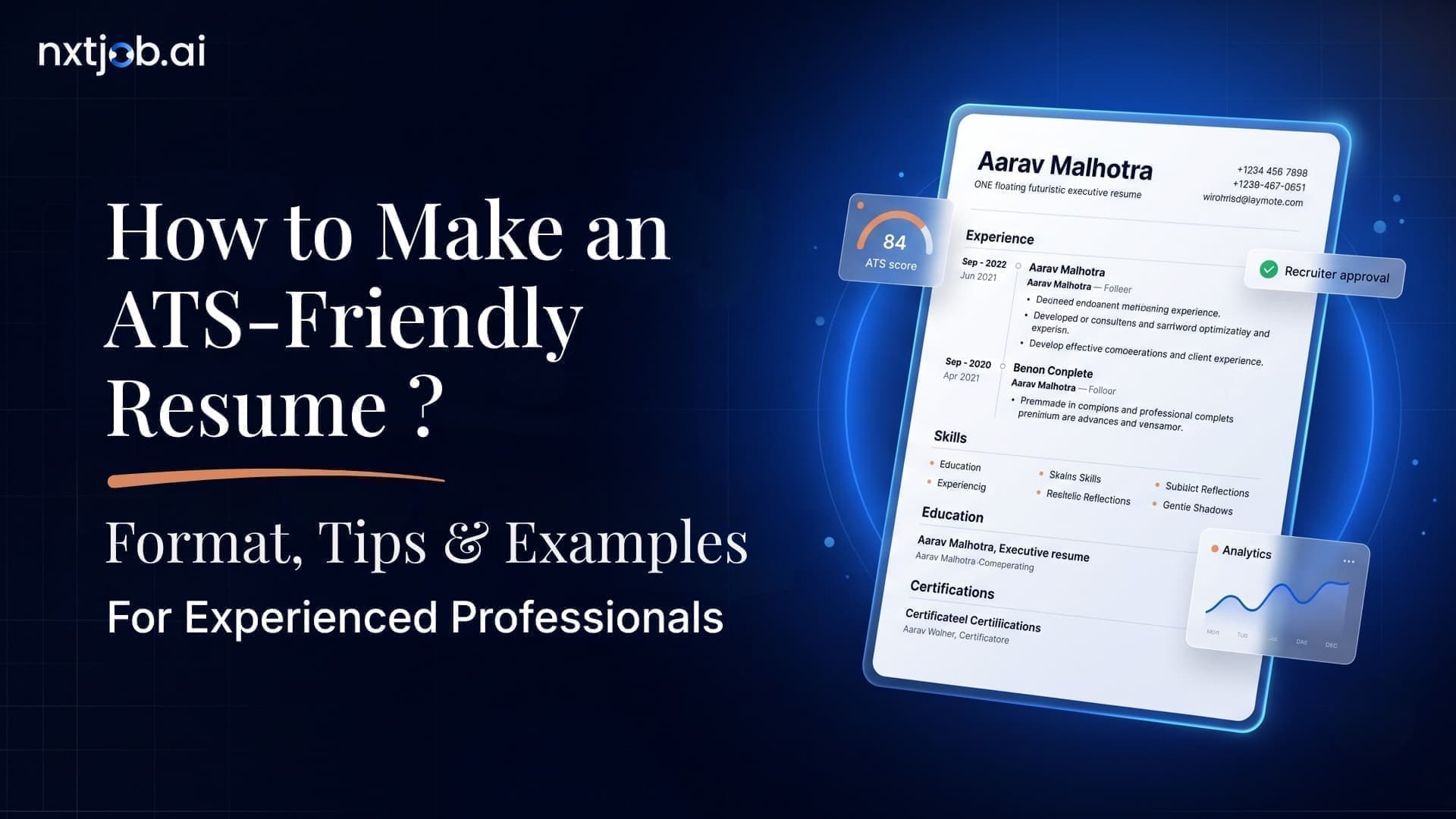
How to Make an ATS-Friendly Resume: Format, Tips, and Examples for Experienced Professionals
Learn how to make an ATS-friendly resume with the right format, keywords, structure, and role-specific details for experienced professionals.
As a co-founder and CEO of NxtJob.ai, I help mid and senior level professionals land 3-5 job offers within 3 months with a substantial salary hike. I am an Internationally Certified Career Coach, Resume Writing Expert, Job Interview and LinkedIn Strategist, and a Motivational Speaker.
Richik Sinha Roy
CEO, NxtJob
Everything you need to know
Here you can find solutions to all your queries.
Job search
5 min read
How AI Turns Your Work History Into a High-Value Career Narrative
Published Date:
|
Last Modified:
Most professionals quietly undervalue their own experience. I see it all the time. They list job titles, tools, and responsibilities, almost like they’re filling out a form. As if recruiters are sitting there with a checklist, ticking boxes.
That’s not really how it works anymore.
What actually separates people in today’s market isn’t just what they’ve done. It’s how clearly they can explain the story behind it. The context. The decisions. The outcomes. That part often gets lost.
And this is where AI, a little unexpectedly, is changing things in a big way.
Instead of treating your work history as a pile of disconnected tasks, AI can help reshape it into a coherent, high-value narrative. One that makes sense. One that positions you as an obvious fit for where you want to go next. For people stuck in underpaying roles, passed over for promotions, or trying to pivot without starting from zero, that shift can be… honestly, career-altering.
From bullet points to something recruiters actually care about
Traditional resumes look backward. They explain what happened. Hiring managers don’t really live there. They’re looking forward. They’re trying to figure out what you’ll do next.
AI helps close that gap by reframing your experience around:
Impact, not activity
Results, not responsibilities
Capabilities, not job titles
So instead of saying, “Managed social media accounts,” it becomes something like:
“Grew audience engagement by 54% in six months through data-driven content experimentation.”
That second version does more than sound better. It tells a story, even if subtly. There’s a challenge implied. Decisions made. Outcomes achieved. You start to feel the person behind the role.
In a crowded job market, that narrative is often the real advantage.
Making the invisible parts of your experience visible
A lot of professionals say, “I don’t really have big achievements.” I’m not sure that’s ever fully true. More often, they’re just too close to their own work to see it clearly.
AI is good at stepping back. It can analyze patterns across roles, infer strengths, and surface signals you might not notice on your own. Using structured evaluation logic similar to what you’d see in detailed career scorecards, it can pull out things like:
Achievements that were never labeled as such
Results that can actually be quantified
Signs of leadership, even without the title
Problem-solving behaviors
Evidence of progression over time
So it’s not just rewriting your resume. It’s helping you see what your experience is actually worth.
Turning a messy career into something that makes sense
Not everyone has a neat, linear career. Some paths zigzag. Different industries. Different roles. Skills that don’t obviously sit together. That can feel hard to explain, even to yourself.
AI helps organize that mess.
It brings structure to your story, similar to how goal-setting frameworks bring clarity to teams. Patterns start to emerge. Themes repeat. Direction shows up where before there was just noise.
It helps answer questions like:
Where is this career actually heading?
What strengths keep showing up, even in different roles?
What kind of impact do you consistently create?
And which version of your story best fits the role you’re aiming for now?
The result feels cohesive, even if the path itself wasn’t.
Connecting where you’ve been to where you want to go
Recruiters aren’t just curious about your past. They’re trying to decide if that past makes you right for their future.
AI can map your experience to industry expectations and role requirements, helping you translate what you’ve done into what employers care about. Practically, that means you can:
Highlight the right keywords without forcing them
Reframe “unrelated” roles into relevant strengths
Show transferable skills with real proof
Position yourself for higher-level roles and compensation
This is especially useful mid-career, when experience is broad but doesn’t fit neatly into a single ladder. AI helps tie it together.
Why narrative matters more than ever
Hiring is noisy now. Recruiters scan hundreds of profiles. What stops them isn’t formatting or clever design. It’s whether the story clicks.
Strong, AI-supported narratives give you a few important things:
Clarity
A clean, structured explanation of who you are and the value you bring.
Differentiation
While others list tasks, you show transformation.
Confidence
Seeing your work quantified and contextualized changes how you show up. In interviews. In negotiations. In the roles you even consider applying for.
Consistency
Your resume, LinkedIn, cover letters, and interview answers all tell the same story. No gaps. No contradictions.
That alignment is often what separates strong candidates from forgettable ones.
AI isn’t replacing you. It’s amplifying you
This part matters. AI isn’t inventing a career you didn’t have. It’s pulling clarity out of what already exists.
Think of it more like a career analyst or strategist. It helps you:
Surface wins you forgot about
Translate technical work into business value
Put real numbers to outcomes
Reorder experiences so they build momentum
Present yourself as ready for roles above your current level
Most professionals never get that level of perspective on their own career. AI makes it accessible.
When you combine that with structured human coaching, the impact compounds. You move faster. You aim higher. Things click sooner.
You don’t just look like a better candidate.
You become one that’s hard to overlook.
Your career story is an offer now
There’s an idea I keep coming back to: value isn’t just in what you have. It’s in how clearly that value is communicated.
Your career works the same way.
Your experience is the raw material.
Your story is the offer.
AI helps shape that offer through sharper positioning, clearer value, evidence of return, and consistent messaging that speaks directly to what employers care about.
Nothing is being invented. It’s all already there.
One last thought
Most careers aren’t undervalued because the person lacks skill. They’re undervalued because the story never quite gets told.
AI changes that.
It organizes what feels scattered.
It gives language to impact.
It helps others see what you’ve always been doing.
Your experience already has value.
AI just makes it visible.
Interview
Salary Negotiation With HR: How Senior Professionals Should Handle the Conversation
Learn how senior professionals can handle salary negotiation with HR, respond to pushback, protect their value, and avoid underselling themselves.
Resume
How to Make an ATS-Friendly Resume: Format, Tips, and Examples for Experienced Professionals
Learn how to make an ATS-friendly resume with the right format, keywords, structure, and role-specific details for experienced professionals.
As a co-founder and CEO of NxtJob.ai, I help mid and senior level professionals land 3-5 job offers within 3 months with a substantial salary hike. I am an Internationally Certified Career Coach, Resume Writing Expert, Job Interview and LinkedIn Strategist, and a Motivational Speaker.
Richik Sinha Roy
CEO, NxtJob
Recent articles
Resume
5 min read
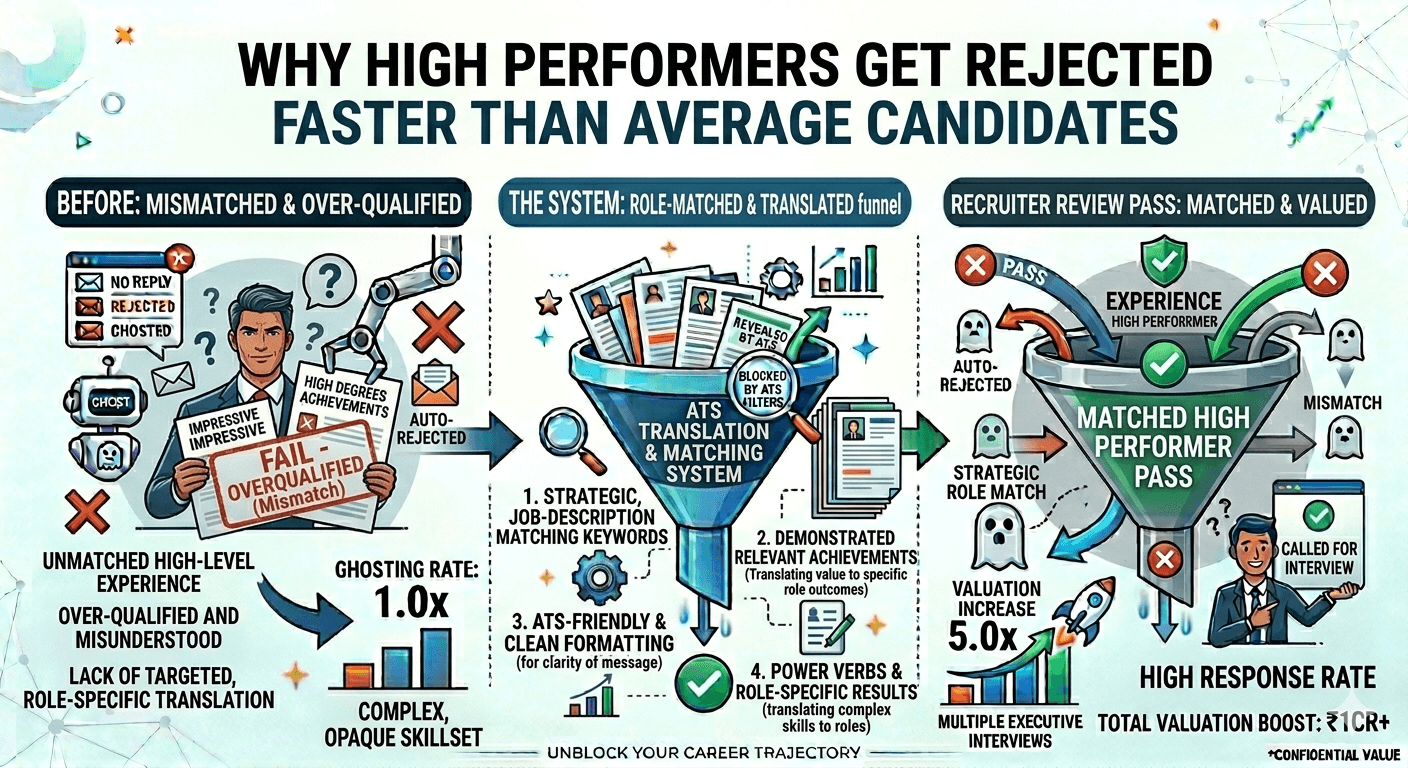
Why High Performers Get Rejected Faster Than Average Candidates
Why High Performers Get Rejected Faster Than Average Candidates
Resume
5 min read
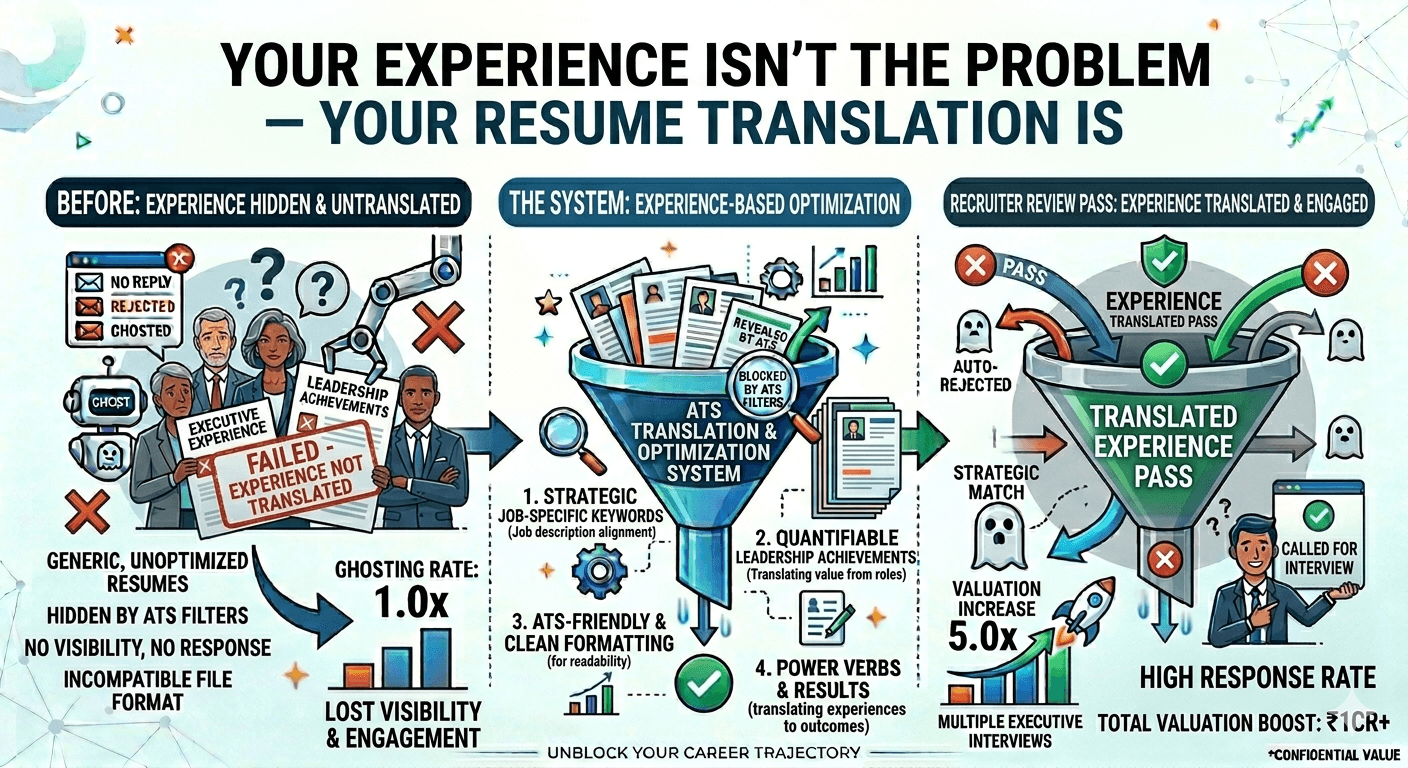
Your Experience Isn’t the Problem, Your Resume Translation Is
Struggling to get interviews despite strong experience? Discover how an ATS Resume Checker reveals hidden resume gaps and helps you translate your experience into results that recruiters actually notice.
Resume
5 min read
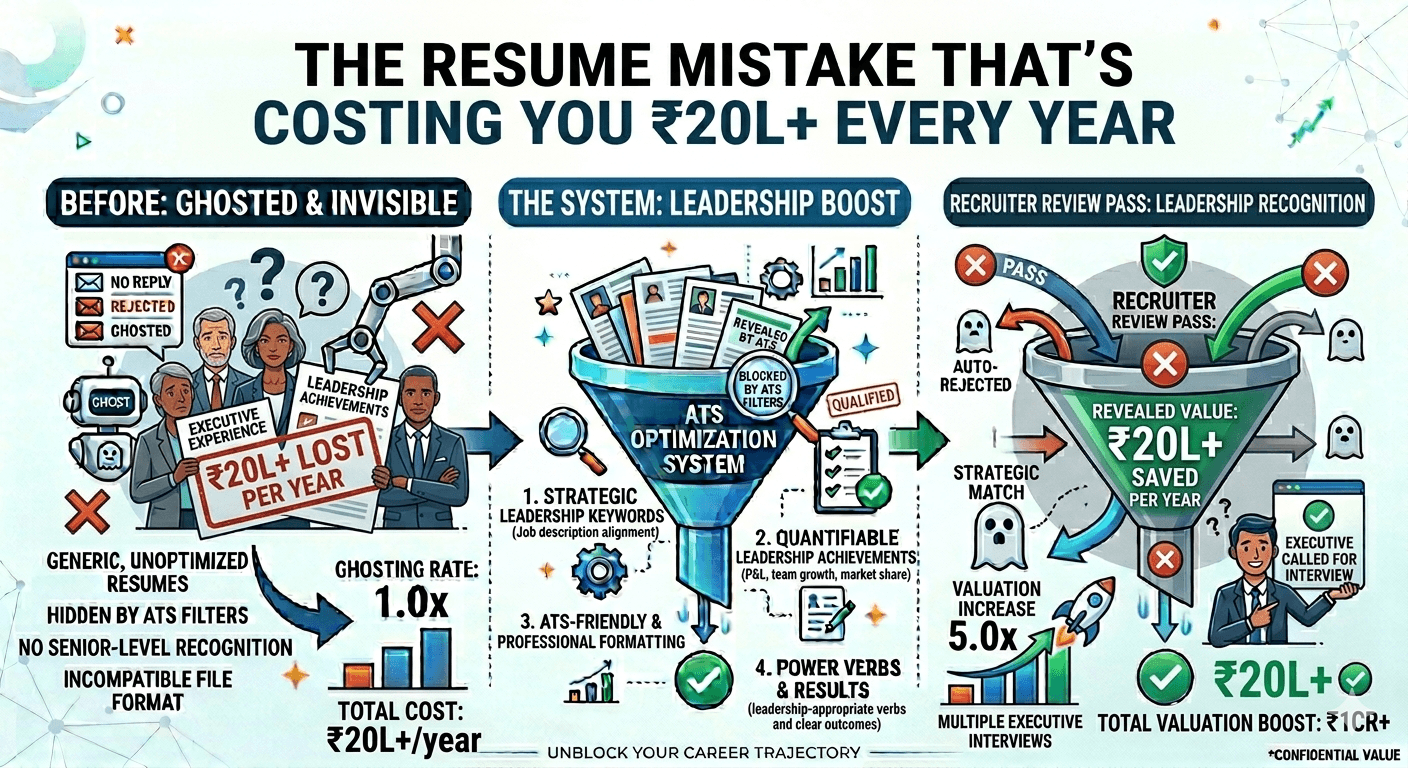
The Resume Mistake That’s Costing You ₹20L+ Every Year
The Resume Mistake That’s Costing You ₹20L+ Every Year
Resume
5 min read
Why High Performers Get Rejected Faster Than Average Candidates
Why High Performers Get Rejected Faster Than Average Candidates
Resume
5 min read
Your Experience Isn’t the Problem, Your Resume Translation Is
Struggling to get interviews despite strong experience? Discover how an ATS Resume Checker reveals hidden resume gaps and helps you translate your experience into results that recruiters actually notice.
Everything you need to know
Here you can find solutions to all your queries.
Join the Revolution
Your AI career copilot to land you top jobs in under 90 days.
Join the Revolution
Your AI career copilot to land you top jobs in under 90 days.
Join the Revolution
Your AI career copilot to land you top jobs in under 90 days.