
Job search
5 min read
From Applications to Alignment: How AI Finds Roles That Actually Fit
Published Date:
|
Last Modified:
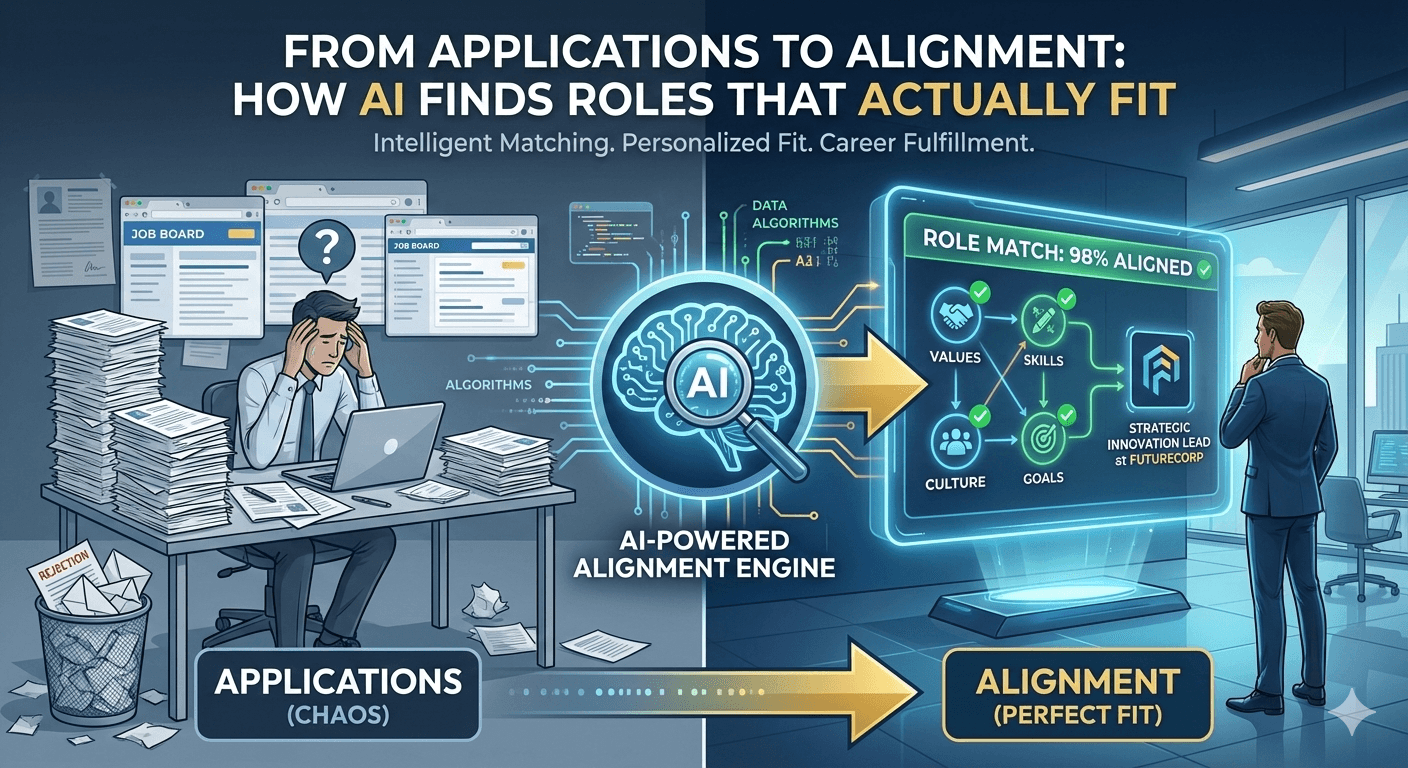
For decades, job search has been a volume game.
Apply to 100 roles.
Hear back from 5.
Interview with 2.
Maybe get 1 offer.
And if you're a mid-senior professional earning ₹30L+ with 10–25 years of experience, that system is not just inefficient — it’s misaligned.
You don’t need more applications.
You need better alignment.
The real problem isn’t effort. It’s signal.
The Broken Model: Application-Based Job Search
Traditional job search is built around manual effort:
Rewrite resume.
Edit keywords.
Apply on job boards.
Wait.
Follow up.
Repeat.
This system assumes:
You know which roles truly fit.
Recruiters interpret your experience correctly.
Volume increases probability.
But in reality:
ATS systems filter before humans ever see you.
Job descriptions are often vague or inflated.
You’re matching keywords, not value.
As Alex Hormozi emphasizes in , extraordinary outcomes come from aligning skill with demand — not from increasing activity alone.
The same principle applies to careers.
If the market doesn’t clearly understand your value, more effort just amplifies misalignment.
The Shift: From Applications to Alignment
Alignment means:
The role matches your strategic capability.
The company needs your exact problem-solving pattern.
The compensation reflects your impact.
The culture supports your operating style.
The trajectory accelerates your long-term positioning.
AI changes the game because it doesn’t just scan keywords.
It maps patterns.
1. AI Reverse-Engineers Your Career DNA
The first problem professionals face is under-articulation.
You’ve:
Led transformations.
Scaled teams.
Built systems.
Negotiated high-stakes decisions.
But your resume reads like a task list.
AI systems can now:
Extract quantifiable CAR (Challenge–Action–Result) statements.
Identify recurring leadership themes.
Detect domain leverage (P&L ownership, cross-functional execution, turnaround expertise).
Compare your impact trajectory to market benchmarks.
Instead of “15 years of experience,” AI reframes you as:
“Revenue optimizer for multi-unit operations with 18–25% EBITDA lift track record.”
That’s alignment language.
And when objectives are clear and measurable — as outlined in — performance accelerates. The same logic applies to positioning your career.
2. AI Maps Market Demand in Real-Time
Most professionals search where everyone else searches:
LinkedIn
Naukri
Company career pages
But these represent only a fraction of opportunity.
Advanced AI job agents:
Crawl millions of pages beyond traditional job boards.
Track hidden postings.
Detect newly funded companies hiring quietly.
Identify strategic expansion signals.
Instead of “open roles,” AI looks for:
Budget allocation changes.
Hiring velocity shifts.
Org chart growth patterns.
Executive movement.
This is traction logic applied to careers — test channels, double down where response exists — a principle echoed in .
The result?
You approach companies when they need someone like you — not when 500 applicants already clicked “Easy Apply.”
3. AI Matches Role Architecture — Not Just Titles
Here’s a common trap:
You search for titles you’ve already held.
But titles differ across industries:
VP in one firm = Director in another.
Head of Strategy may function like COO elsewhere.
AI analyzes:
Scope of responsibility.
Revenue range.
Team size.
Decision authority.
Reporting structure.
It maps you to:
Roles one level above your current title.
Adjacent industries where your skill is transferable.
Higher-paying versions of your current functional strength.
That’s how professionals move from ₹35L to ₹60L.
Not by applying more.
By targeting better.
4. AI Enhances Signaling in the Hiring Funnel
Once aligned roles are identified, positioning becomes surgical.
AI tailors resumes to:
Match ATS scoring patterns.
Emphasize strategic keywords.
Prioritize quantified impact.
It also:
Crafts recruiter replies inside LinkedIn.
Generates intelligent follow-ups.
Suggests networking sequences.
Prepares contextual interview answers.
This is no longer passive search.
It is controlled execution.
And control matters.
As emphasized in , having more qualified leads fundamentally changes leverage. In career terms, that means more aligned conversations — not more cold applications.
The Four Pillars of AI-Powered Alignment
1. Pattern Recognition
AI identifies what you consistently excel at — beyond surface-level skills.
2. Market Mapping
It detects where those skills are currently in demand.
3. Precision Positioning
It rewrites your narrative to match strategic needs.
4. Execution Automation
It scales networking, outreach, and follow-ups without draining your energy.
The outcome is measurable:
More interview requests.
Higher-quality recruiter conversations.
Less ghosting.
Stronger compensation bands.
Why Alignment Outperforms Volume
Let’s compare:
Volume Model | Alignment Model |
|---|---|
100 generic applications | 12 strategic submissions |
Keyword guessing | Market-backed positioning |
Hope-based outreach | Data-driven targeting |
Reactive interviews | Pre-qualified conversations |
High-performing professionals don’t need 20 interviews.
They need 3 aligned ones.
And when alignment is correct, outcomes compound:
3.2x more interviews
43% higher offers
85% less ghosting
100% job search control
Because now you’re not chasing roles.
You’re entering opportunities that were structurally meant for your capability.
The Psychological Advantage of Alignment
There’s another shift few discuss.
When AI confirms:
Your experience has market demand.
Companies are actively hiring for your pattern.
Compensation bands support your expectation.
You stop operating from scarcity.
You negotiate differently.
You interview differently.
You show up differently.
Alignment reduces emotional volatility.
It replaces “Am I good enough?” with “Is this the right strategic fit?”
That confidence is felt in every hiring interaction.
The Future: AI as a Career Operating System
We are moving from:
Manual job search → AI-orchestrated career strategy.
The professionals who win in the next decade will not be:
The busiest applicants.
The loudest on LinkedIn.
The most credentialed on paper.
They will be the most aligned.
AI doesn’t replace ambition.
It amplifies clarity.
And clarity is leverage.
Final Thought
Applications are a tactic.
Alignment is a strategy.
If your job search feels exhausting, it’s not because you lack effort.
It’s because you’re playing a probability game instead of a positioning game.
The future belongs to professionals who stop asking:
“How many roles should I apply to?”
And start asking:
“Where does my capability create disproportionate value?”
When AI helps answer that question, job search transforms from noise… into precision.
From effort… into leverage.
From applications… into alignment.

As a co-founder and CEO of NxtJob.ai, I help mid and senior level professionals land 3-5 job offers within 3 months with a substantial salary hike. I am an Internationally Certified Career Coach, Resume Writing Expert, Job Interview and LinkedIn Strategist, and a Motivational Speaker.
Richik Sinha Roy
CEO, NxtJob
Recent articles

Resume
5 min read
ATS Resume Format: How to Create a Resume That Gets Past Applicant Tracking Systems
Learn how to create an ATS-friendly resume that passes through applicant tracking systems and increases your chances of landing an interview.
Resume
5 min read
ATS Resume Format: How to Create a Resume That Gets Past Applicant Tracking Systems
Learn how to create an ATS-friendly resume that passes through applicant tracking systems and increases your chances of landing an interview.
Resume
5 min read
ATS Resume Format: How to Create a Resume That Gets Past Applicant Tracking Systems
Learn how to create an ATS-friendly resume that passes through applicant tracking systems and increases your chances of landing an interview.
Resume
5 min read
ATS Resume Format: How to Create a Resume That Gets Past Applicant Tracking Systems
Learn how to create an ATS-friendly resume that passes through applicant tracking systems and increases your chances of landing an interview.
Resume
5 min read
ATS Resume Format: How to Create a Resume That Gets Past Applicant Tracking Systems
Learn how to create an ATS-friendly resume that passes through applicant tracking systems and increases your chances of landing an interview.
Resume
5 min read
ATS Resume Format: How to Create a Resume That Gets Past Applicant Tracking Systems
Learn how to create an ATS-friendly resume that passes through applicant tracking systems and increases your chances of landing an interview.
Everything you need to know
Here you can find solutions to all your queries.
Job search
5 min read
From Applications to Alignment: How AI Finds Roles That Actually Fit
Published Date:
|
Last Modified:
For decades, job search has been a volume game.
Apply to 100 roles.
Hear back from 5.
Interview with 2.
Maybe get 1 offer.
And if you're a mid-senior professional earning ₹30L+ with 10–25 years of experience, that system is not just inefficient — it’s misaligned.
You don’t need more applications.
You need better alignment.
The real problem isn’t effort. It’s signal.
The Broken Model: Application-Based Job Search
Traditional job search is built around manual effort:
Rewrite resume.
Edit keywords.
Apply on job boards.
Wait.
Follow up.
Repeat.
This system assumes:
You know which roles truly fit.
Recruiters interpret your experience correctly.
Volume increases probability.
But in reality:
ATS systems filter before humans ever see you.
Job descriptions are often vague or inflated.
You’re matching keywords, not value.
As Alex Hormozi emphasizes in , extraordinary outcomes come from aligning skill with demand — not from increasing activity alone.
The same principle applies to careers.
If the market doesn’t clearly understand your value, more effort just amplifies misalignment.
The Shift: From Applications to Alignment
Alignment means:
The role matches your strategic capability.
The company needs your exact problem-solving pattern.
The compensation reflects your impact.
The culture supports your operating style.
The trajectory accelerates your long-term positioning.
AI changes the game because it doesn’t just scan keywords.
It maps patterns.
1. AI Reverse-Engineers Your Career DNA
The first problem professionals face is under-articulation.
You’ve:
Led transformations.
Scaled teams.
Built systems.
Negotiated high-stakes decisions.
But your resume reads like a task list.
AI systems can now:
Extract quantifiable CAR (Challenge–Action–Result) statements.
Identify recurring leadership themes.
Detect domain leverage (P&L ownership, cross-functional execution, turnaround expertise).
Compare your impact trajectory to market benchmarks.
Instead of “15 years of experience,” AI reframes you as:
“Revenue optimizer for multi-unit operations with 18–25% EBITDA lift track record.”
That’s alignment language.
And when objectives are clear and measurable — as outlined in — performance accelerates. The same logic applies to positioning your career.
2. AI Maps Market Demand in Real-Time
Most professionals search where everyone else searches:
LinkedIn
Naukri
Company career pages
But these represent only a fraction of opportunity.
Advanced AI job agents:
Crawl millions of pages beyond traditional job boards.
Track hidden postings.
Detect newly funded companies hiring quietly.
Identify strategic expansion signals.
Instead of “open roles,” AI looks for:
Budget allocation changes.
Hiring velocity shifts.
Org chart growth patterns.
Executive movement.
This is traction logic applied to careers — test channels, double down where response exists — a principle echoed in .
The result?
You approach companies when they need someone like you — not when 500 applicants already clicked “Easy Apply.”
3. AI Matches Role Architecture — Not Just Titles
Here’s a common trap:
You search for titles you’ve already held.
But titles differ across industries:
VP in one firm = Director in another.
Head of Strategy may function like COO elsewhere.
AI analyzes:
Scope of responsibility.
Revenue range.
Team size.
Decision authority.
Reporting structure.
It maps you to:
Roles one level above your current title.
Adjacent industries where your skill is transferable.
Higher-paying versions of your current functional strength.
That’s how professionals move from ₹35L to ₹60L.
Not by applying more.
By targeting better.
4. AI Enhances Signaling in the Hiring Funnel
Once aligned roles are identified, positioning becomes surgical.
AI tailors resumes to:
Match ATS scoring patterns.
Emphasize strategic keywords.
Prioritize quantified impact.
It also:
Crafts recruiter replies inside LinkedIn.
Generates intelligent follow-ups.
Suggests networking sequences.
Prepares contextual interview answers.
This is no longer passive search.
It is controlled execution.
And control matters.
As emphasized in , having more qualified leads fundamentally changes leverage. In career terms, that means more aligned conversations — not more cold applications.
The Four Pillars of AI-Powered Alignment
1. Pattern Recognition
AI identifies what you consistently excel at — beyond surface-level skills.
2. Market Mapping
It detects where those skills are currently in demand.
3. Precision Positioning
It rewrites your narrative to match strategic needs.
4. Execution Automation
It scales networking, outreach, and follow-ups without draining your energy.
The outcome is measurable:
More interview requests.
Higher-quality recruiter conversations.
Less ghosting.
Stronger compensation bands.
Why Alignment Outperforms Volume
Let’s compare:
Volume Model | Alignment Model |
|---|---|
100 generic applications | 12 strategic submissions |
Keyword guessing | Market-backed positioning |
Hope-based outreach | Data-driven targeting |
Reactive interviews | Pre-qualified conversations |
High-performing professionals don’t need 20 interviews.
They need 3 aligned ones.
And when alignment is correct, outcomes compound:
3.2x more interviews
43% higher offers
85% less ghosting
100% job search control
Because now you’re not chasing roles.
You’re entering opportunities that were structurally meant for your capability.
The Psychological Advantage of Alignment
There’s another shift few discuss.
When AI confirms:
Your experience has market demand.
Companies are actively hiring for your pattern.
Compensation bands support your expectation.
You stop operating from scarcity.
You negotiate differently.
You interview differently.
You show up differently.
Alignment reduces emotional volatility.
It replaces “Am I good enough?” with “Is this the right strategic fit?”
That confidence is felt in every hiring interaction.
The Future: AI as a Career Operating System
We are moving from:
Manual job search → AI-orchestrated career strategy.
The professionals who win in the next decade will not be:
The busiest applicants.
The loudest on LinkedIn.
The most credentialed on paper.
They will be the most aligned.
AI doesn’t replace ambition.
It amplifies clarity.
And clarity is leverage.
Final Thought
Applications are a tactic.
Alignment is a strategy.
If your job search feels exhausting, it’s not because you lack effort.
It’s because you’re playing a probability game instead of a positioning game.
The future belongs to professionals who stop asking:
“How many roles should I apply to?”
And start asking:
“Where does my capability create disproportionate value?”
When AI helps answer that question, job search transforms from noise… into precision.
From effort… into leverage.
From applications… into alignment.
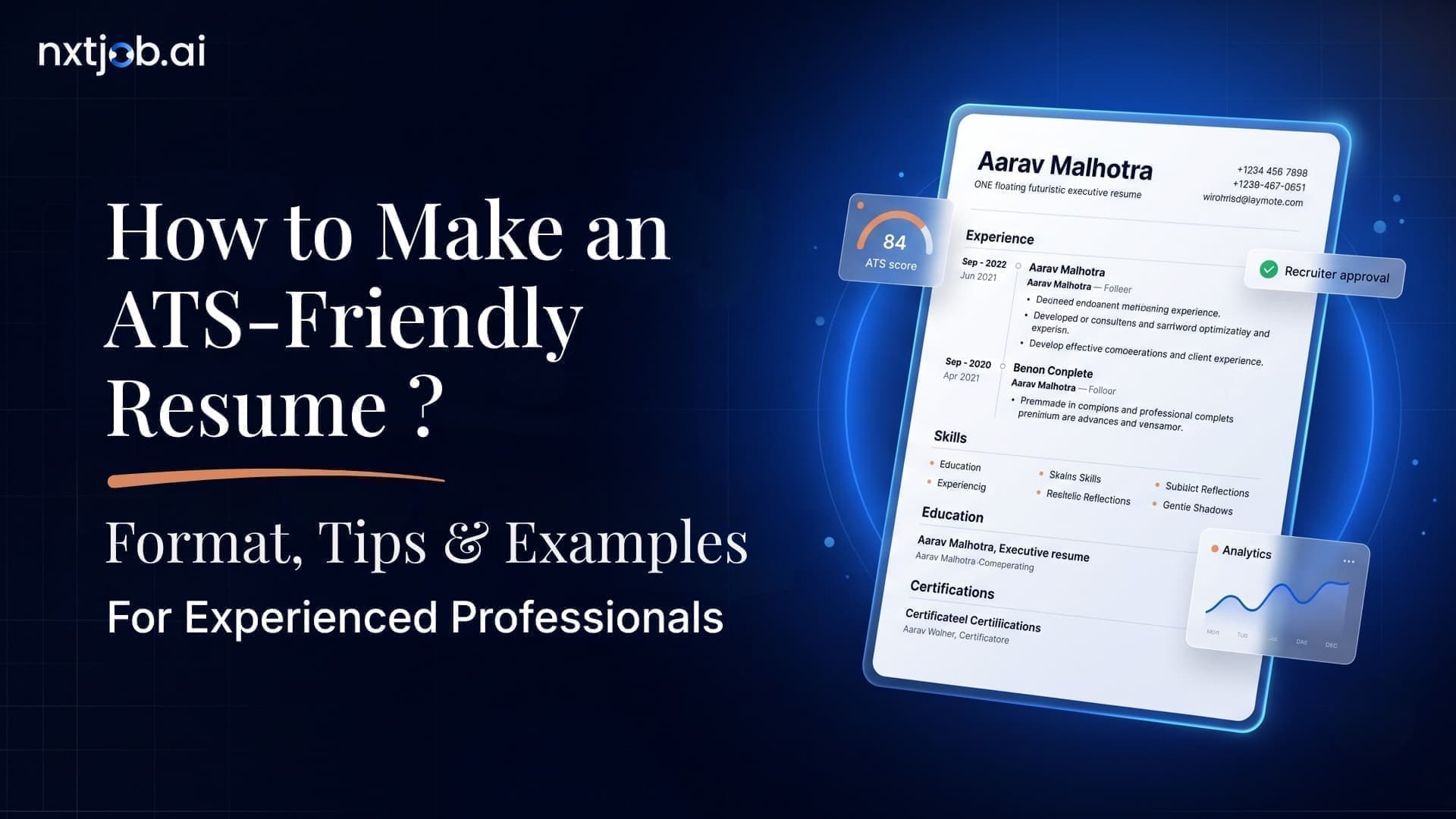
Resume
How to Make an ATS-Friendly Resume: Format, Tips, and Examples for Experienced Professionals
Learn how to make an ATS-friendly resume with the right format, keywords, structure, and role-specific details for experienced professionals.
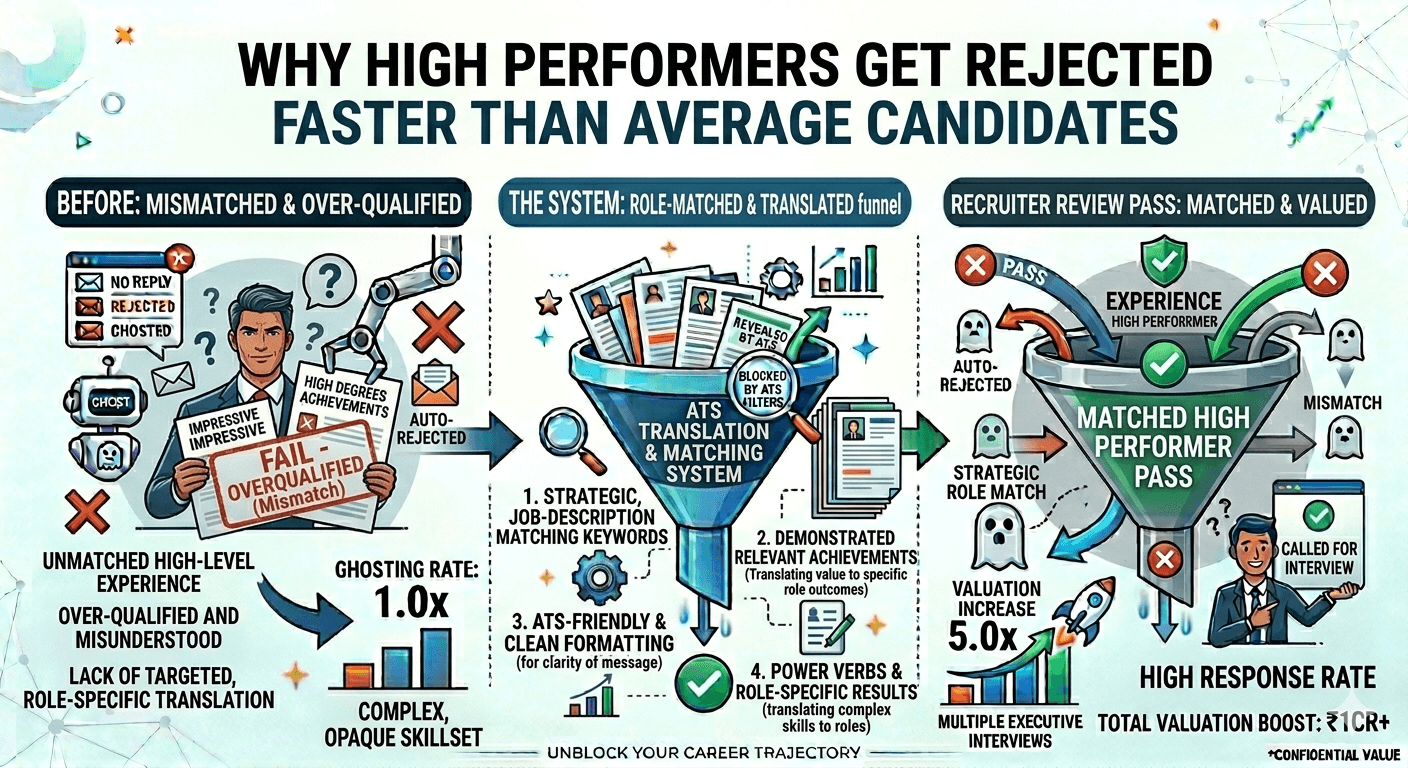
Resume
Why High Performers Get Rejected Faster Than Average Candidates
Why High Performers Get Rejected Faster Than Average Candidates
As a co-founder and CEO of NxtJob.ai, I help mid and senior level professionals land 3-5 job offers within 3 months with a substantial salary hike. I am an Internationally Certified Career Coach, Resume Writing Expert, Job Interview and LinkedIn Strategist, and a Motivational Speaker.
Richik Sinha Roy
CEO, NxtJob
Everything you need to know
Here you can find solutions to all your queries.
Job search
5 min read
From Applications to Alignment: How AI Finds Roles That Actually Fit
Published Date:
|
Last Modified:
For decades, job search has been a volume game.
Apply to 100 roles.
Hear back from 5.
Interview with 2.
Maybe get 1 offer.
And if you're a mid-senior professional earning ₹30L+ with 10–25 years of experience, that system is not just inefficient — it’s misaligned.
You don’t need more applications.
You need better alignment.
The real problem isn’t effort. It’s signal.
The Broken Model: Application-Based Job Search
Traditional job search is built around manual effort:
Rewrite resume.
Edit keywords.
Apply on job boards.
Wait.
Follow up.
Repeat.
This system assumes:
You know which roles truly fit.
Recruiters interpret your experience correctly.
Volume increases probability.
But in reality:
ATS systems filter before humans ever see you.
Job descriptions are often vague or inflated.
You’re matching keywords, not value.
As Alex Hormozi emphasizes in , extraordinary outcomes come from aligning skill with demand — not from increasing activity alone.
The same principle applies to careers.
If the market doesn’t clearly understand your value, more effort just amplifies misalignment.
The Shift: From Applications to Alignment
Alignment means:
The role matches your strategic capability.
The company needs your exact problem-solving pattern.
The compensation reflects your impact.
The culture supports your operating style.
The trajectory accelerates your long-term positioning.
AI changes the game because it doesn’t just scan keywords.
It maps patterns.
1. AI Reverse-Engineers Your Career DNA
The first problem professionals face is under-articulation.
You’ve:
Led transformations.
Scaled teams.
Built systems.
Negotiated high-stakes decisions.
But your resume reads like a task list.
AI systems can now:
Extract quantifiable CAR (Challenge–Action–Result) statements.
Identify recurring leadership themes.
Detect domain leverage (P&L ownership, cross-functional execution, turnaround expertise).
Compare your impact trajectory to market benchmarks.
Instead of “15 years of experience,” AI reframes you as:
“Revenue optimizer for multi-unit operations with 18–25% EBITDA lift track record.”
That’s alignment language.
And when objectives are clear and measurable — as outlined in — performance accelerates. The same logic applies to positioning your career.
2. AI Maps Market Demand in Real-Time
Most professionals search where everyone else searches:
LinkedIn
Naukri
Company career pages
But these represent only a fraction of opportunity.
Advanced AI job agents:
Crawl millions of pages beyond traditional job boards.
Track hidden postings.
Detect newly funded companies hiring quietly.
Identify strategic expansion signals.
Instead of “open roles,” AI looks for:
Budget allocation changes.
Hiring velocity shifts.
Org chart growth patterns.
Executive movement.
This is traction logic applied to careers — test channels, double down where response exists — a principle echoed in .
The result?
You approach companies when they need someone like you — not when 500 applicants already clicked “Easy Apply.”
3. AI Matches Role Architecture — Not Just Titles
Here’s a common trap:
You search for titles you’ve already held.
But titles differ across industries:
VP in one firm = Director in another.
Head of Strategy may function like COO elsewhere.
AI analyzes:
Scope of responsibility.
Revenue range.
Team size.
Decision authority.
Reporting structure.
It maps you to:
Roles one level above your current title.
Adjacent industries where your skill is transferable.
Higher-paying versions of your current functional strength.
That’s how professionals move from ₹35L to ₹60L.
Not by applying more.
By targeting better.
4. AI Enhances Signaling in the Hiring Funnel
Once aligned roles are identified, positioning becomes surgical.
AI tailors resumes to:
Match ATS scoring patterns.
Emphasize strategic keywords.
Prioritize quantified impact.
It also:
Crafts recruiter replies inside LinkedIn.
Generates intelligent follow-ups.
Suggests networking sequences.
Prepares contextual interview answers.
This is no longer passive search.
It is controlled execution.
And control matters.
As emphasized in , having more qualified leads fundamentally changes leverage. In career terms, that means more aligned conversations — not more cold applications.
The Four Pillars of AI-Powered Alignment
1. Pattern Recognition
AI identifies what you consistently excel at — beyond surface-level skills.
2. Market Mapping
It detects where those skills are currently in demand.
3. Precision Positioning
It rewrites your narrative to match strategic needs.
4. Execution Automation
It scales networking, outreach, and follow-ups without draining your energy.
The outcome is measurable:
More interview requests.
Higher-quality recruiter conversations.
Less ghosting.
Stronger compensation bands.
Why Alignment Outperforms Volume
Let’s compare:
Volume Model | Alignment Model |
|---|---|
100 generic applications | 12 strategic submissions |
Keyword guessing | Market-backed positioning |
Hope-based outreach | Data-driven targeting |
Reactive interviews | Pre-qualified conversations |
High-performing professionals don’t need 20 interviews.
They need 3 aligned ones.
And when alignment is correct, outcomes compound:
3.2x more interviews
43% higher offers
85% less ghosting
100% job search control
Because now you’re not chasing roles.
You’re entering opportunities that were structurally meant for your capability.
The Psychological Advantage of Alignment
There’s another shift few discuss.
When AI confirms:
Your experience has market demand.
Companies are actively hiring for your pattern.
Compensation bands support your expectation.
You stop operating from scarcity.
You negotiate differently.
You interview differently.
You show up differently.
Alignment reduces emotional volatility.
It replaces “Am I good enough?” with “Is this the right strategic fit?”
That confidence is felt in every hiring interaction.
The Future: AI as a Career Operating System
We are moving from:
Manual job search → AI-orchestrated career strategy.
The professionals who win in the next decade will not be:
The busiest applicants.
The loudest on LinkedIn.
The most credentialed on paper.
They will be the most aligned.
AI doesn’t replace ambition.
It amplifies clarity.
And clarity is leverage.
Final Thought
Applications are a tactic.
Alignment is a strategy.
If your job search feels exhausting, it’s not because you lack effort.
It’s because you’re playing a probability game instead of a positioning game.
The future belongs to professionals who stop asking:
“How many roles should I apply to?”
And start asking:
“Where does my capability create disproportionate value?”
When AI helps answer that question, job search transforms from noise… into precision.
From effort… into leverage.
From applications… into alignment.
Resume
How to Make an ATS-Friendly Resume: Format, Tips, and Examples for Experienced Professionals
Learn how to make an ATS-friendly resume with the right format, keywords, structure, and role-specific details for experienced professionals.
Resume
Why High Performers Get Rejected Faster Than Average Candidates
Why High Performers Get Rejected Faster Than Average Candidates
As a co-founder and CEO of NxtJob.ai, I help mid and senior level professionals land 3-5 job offers within 3 months with a substantial salary hike. I am an Internationally Certified Career Coach, Resume Writing Expert, Job Interview and LinkedIn Strategist, and a Motivational Speaker.
Richik Sinha Roy
CEO, NxtJob
Recent articles
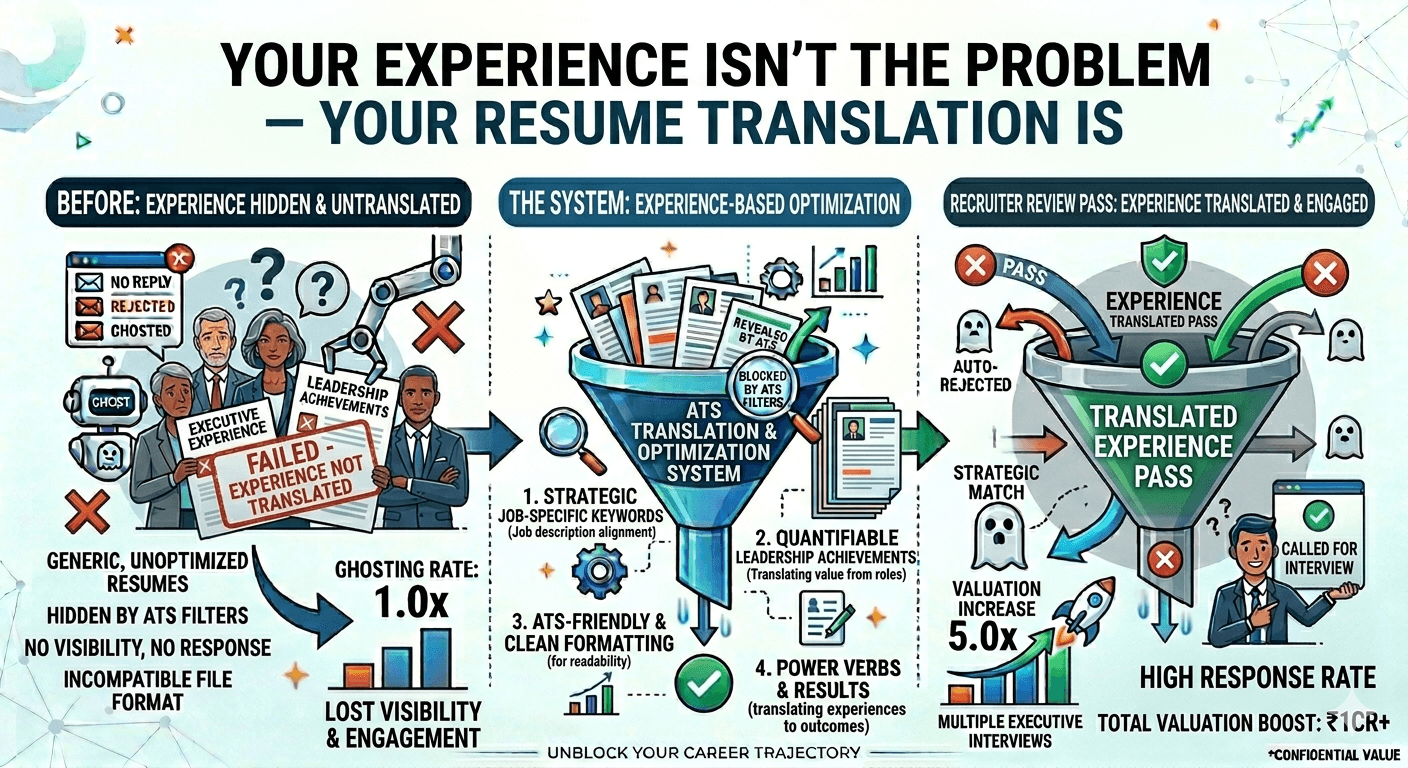
Resume
5 min read
Your Experience Isn’t the Problem, Your Resume Translation Is
Struggling to get interviews despite strong experience? Discover how an ATS Resume Checker reveals hidden resume gaps and helps you translate your experience into results that recruiters actually notice.
Resume
5 min read
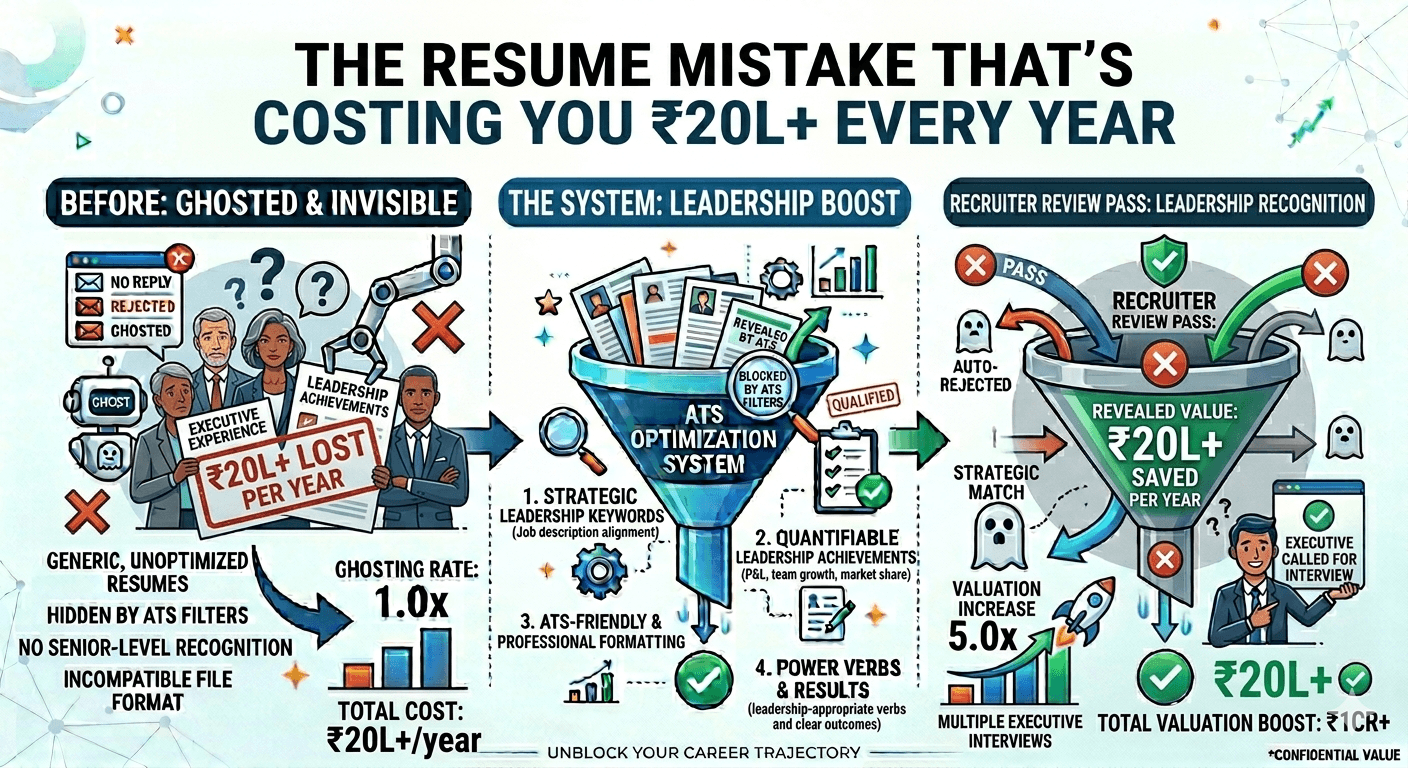
The Resume Mistake That’s Costing You ₹20L+ Every Year
The Resume Mistake That’s Costing You ₹20L+ Every Year
Resume
5 min read
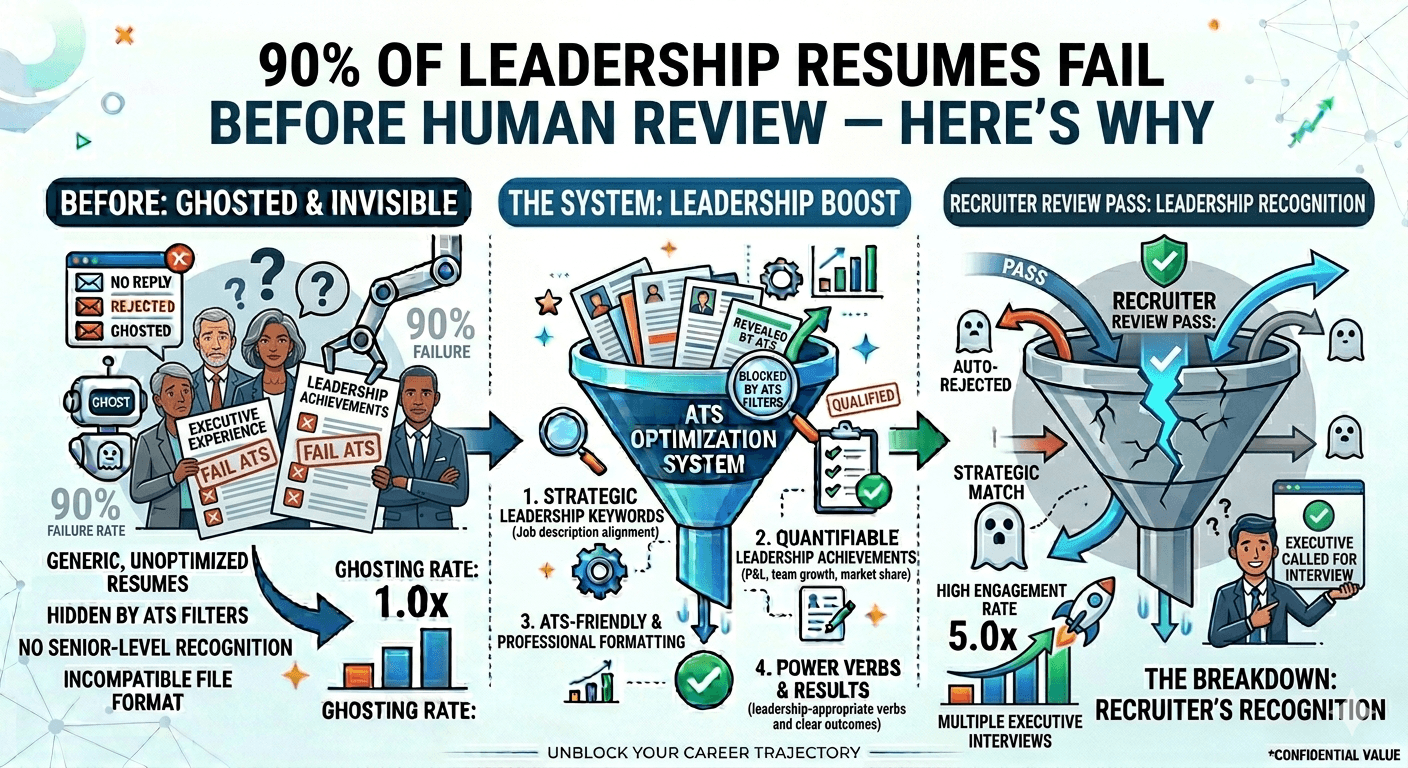
90% of Leadership Resumes Fail Before Human Review - Here’s Why
90% of Leadership Resumes Fail Before Human Review - Here’s Why
Resume
5 min read
Your Experience Isn’t the Problem, Your Resume Translation Is
Struggling to get interviews despite strong experience? Discover how an ATS Resume Checker reveals hidden resume gaps and helps you translate your experience into results that recruiters actually notice.
Resume
5 min read
The Resume Mistake That’s Costing You ₹20L+ Every Year
The Resume Mistake That’s Costing You ₹20L+ Every Year
Everything you need to know
Here you can find solutions to all your queries.
Join the Revolution
Your AI career copilot to land you top jobs in under 90 days.
Join the Revolution
Your AI career copilot to land you top jobs in under 90 days.
Join the Revolution
Your AI career copilot to land you top jobs in under 90 days.