
Job search
5 min read
What Recruiters See Before They Call You — And How AI Optimizes It
Published Date:
|
Last Modified:
Before a recruiter ever speaks to you…
Before your name is shortlisted…
Before you get that interview call…
Your resume is screened, scored, filtered, ranked — and often rejected.
And today, that process is no longer human-first.
It’s algorithm-first.
Understanding what recruiters actually see — and how AI interprets your profile — is the difference between getting ghosted and getting interviews.
Let’s break it down.
1. The First Gatekeeper: The ATS (Not a Human)
When you apply for a role, your resume usually goes into an Applicant Tracking System (ATS).
Recruiters don’t initially “read” your resume.
The ATS:
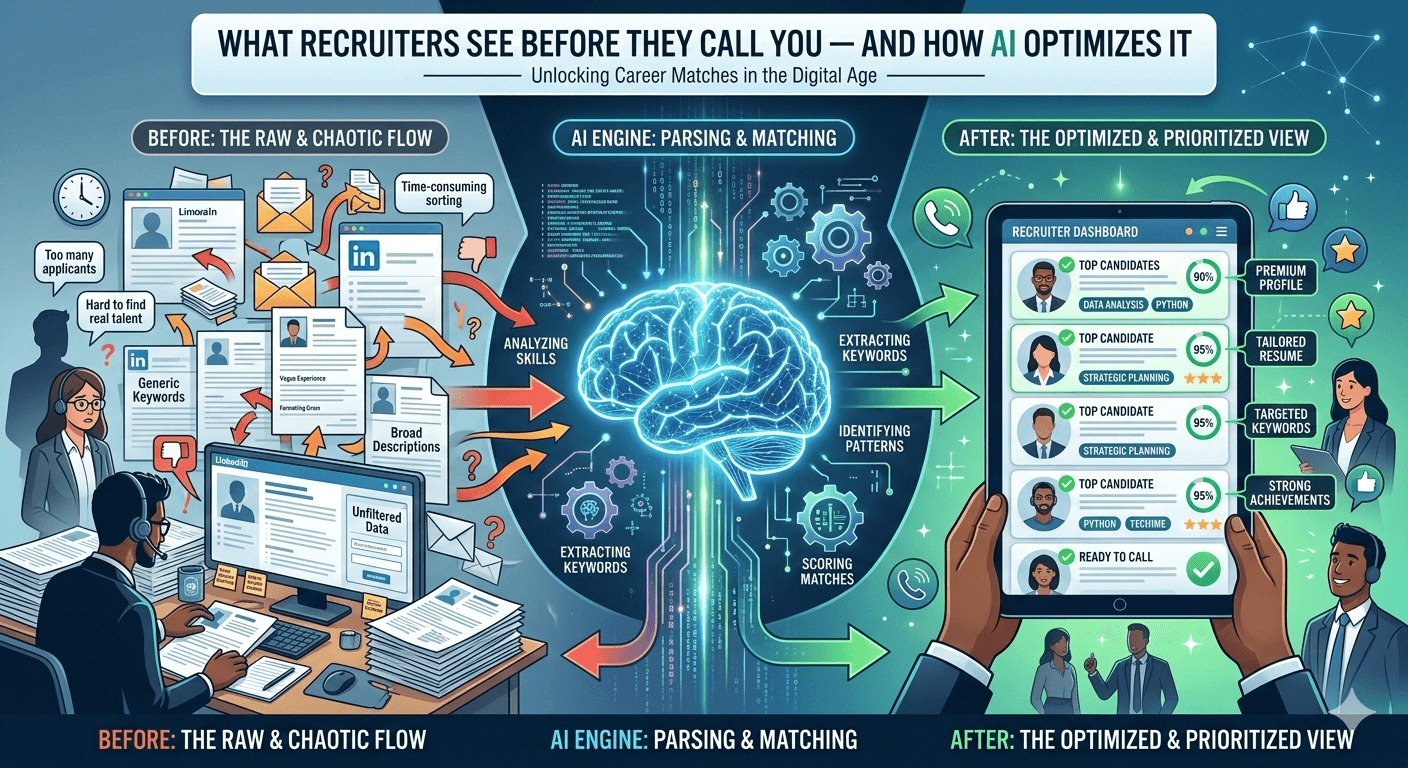
Parses your resume into structured data
Extracts keywords
Matches skills to the job description
Scores relevance
Ranks you against other candidates
If your resume isn’t optimized for this system, it may never reach human eyes.
This is why using an ATS Resume Checker is no longer optional — it’s strategic.
2. What Recruiters Actually See on Their Screen
Recruiters don’t open a beautifully formatted PDF like you do.
They typically see:
Parsed work experience fields
Extracted skills
Keyword match percentage
Years of experience
Education tags
Resume score or ranking
Application timeline
Many ATS platforms convert your resume into a simplified database entry.
That means:
Fancy formatting? Ignored.
Graphics? Removed.
Columns? Often broken.
Missing keywords? You’re filtered out.
Your resume must perform structurally, not aesthetically.
3. The 6 Signals Recruiters Scan in 6 Seconds
Even when a human opens your profile, they scan — not read.
Recruiters typically look for:
Title Match – Does your current/last role align with this job?
Keyword Density – Do you mirror the job description language?
Quantified Impact – Are there metrics?
Career Progression – Growth or stagnation?
Relevance Window – Is recent experience aligned?
Red Flags – Gaps, generic summaries, buzzwords
If your resume fails any of these instantly — you’re skipped.
4. Why Most Resumes Fail the ATS Filter
Common reasons resumes get filtered out:
No job-description keyword matching
Poor formatting that breaks parsing
Overuse of buzzwords instead of measurable impact
Missing core skills section
Generic summary not aligned to role
Even strong professionals earning ₹30L+ lose interviews because their resume isn’t engineered for machine screening.
That’s not a capability problem.
It’s an optimization problem.
5. How AI Optimizes What Recruiters See
This is where modern AI changes the game.
Instead of manually guessing what to edit, AI systems can:
1️⃣ Reverse-Engineer the Job Description
AI scans the job description and extracts:
Required hard skills
Secondary keywords
Tools & technologies
Seniority signals
Action verbs
Then it benchmarks your resume against it.
2️⃣ Increase Keyword Relevance Intelligently
Not by stuffing keywords.
But by:
Rewriting bullets with contextual alignment
Integrating industry terminology naturally
Matching phrasing recruiters expect
This increases ATS match scores significantly.
3️⃣ Strengthen Quantification
AI can transform:
“Managed cross-functional teams.”
Into:
“Led a 12-member cross-functional team delivering ₹18Cr annual revenue growth.”
Metrics increase recruiter response rates dramatically.
4️⃣ Fix Structural ATS Issues
An intelligent ATS Resume Checker can identify:
Missing sections (Summary, Skills, Work Experience, Education)
Reverse chronological errors
Overlength resumes
Poor keyword density
Weak summary hooks
Overuse of buzzwords
Instead of guessing, you see precise structural gaps.
6. The Competitive Edge: AI vs Traditional Editing
Traditional resume editing relies on:
Templates
Grammar correction
Generic suggestions
AI-driven optimization relies on:
Data-driven keyword analysis
Pattern recognition across thousands of job descriptions
Performance benchmarking
Structural scoring models
It’s the difference between writing what sounds good…
And writing what ranks high.
7. The Hidden Reality: Recruiters Compare You Instantly
Recruiters don’t evaluate you in isolation.
They see:
Your score vs other applicants
Your skills vs other applicants
Your years of experience vs others
Your keyword alignment vs others
If someone has optimized their resume using AI — and you haven’t — they likely rank higher before any human judgment is involved.
That’s the invisible competition layer most professionals underestimate.
8. The New Resume Strategy: Optimize for Machine → Then Human
The smart order today is:
Pass ATS filters
Rank high in search results
Trigger recruiter interest
Convert screening call
Win interview
AI helps you dominate Steps 1–3.
Without that foundation, interview coaching doesn’t matter.
Final Thought: Recruiters See Data Before They See You
Recruiters don’t first see:
Your personality
Your work ethic
Your ambition
They see:
Keywords
Scores
Metrics
Alignment
If your resume isn’t optimized for how systems interpret it, you’re invisible — even if you’re qualified.
Using an ATS Resume Checker powered by AI gives you control.
And in today’s hiring ecosystem, control equals opportunity.
The job market hasn’t become harder.
It has become more algorithmic.
Optimize accordingly.

As a co-founder and CEO of NxtJob.ai, I help mid and senior level professionals land 3-5 job offers within 3 months with a substantial salary hike. I am an Internationally Certified Career Coach, Resume Writing Expert, Job Interview and LinkedIn Strategist, and a Motivational Speaker.
Richik Sinha Roy
CEO, NxtJob
Recent articles

Resume
5 min read
ATS Resume Format: How to Create a Resume That Gets Past Applicant Tracking Systems
Learn how to create an ATS-friendly resume that passes through applicant tracking systems and increases your chances of landing an interview.
Resume
5 min read
ATS Resume Format: How to Create a Resume That Gets Past Applicant Tracking Systems
Learn how to create an ATS-friendly resume that passes through applicant tracking systems and increases your chances of landing an interview.
Resume
5 min read
ATS Resume Format: How to Create a Resume That Gets Past Applicant Tracking Systems
Learn how to create an ATS-friendly resume that passes through applicant tracking systems and increases your chances of landing an interview.
Resume
5 min read
ATS Resume Format: How to Create a Resume That Gets Past Applicant Tracking Systems
Learn how to create an ATS-friendly resume that passes through applicant tracking systems and increases your chances of landing an interview.
Resume
5 min read
ATS Resume Format: How to Create a Resume That Gets Past Applicant Tracking Systems
Learn how to create an ATS-friendly resume that passes through applicant tracking systems and increases your chances of landing an interview.
Resume
5 min read
ATS Resume Format: How to Create a Resume That Gets Past Applicant Tracking Systems
Learn how to create an ATS-friendly resume that passes through applicant tracking systems and increases your chances of landing an interview.
Everything you need to know
Here you can find solutions to all your queries.
Job search
5 min read
What Recruiters See Before They Call You — And How AI Optimizes It
Published Date:
|
Last Modified:
Before a recruiter ever speaks to you…
Before your name is shortlisted…
Before you get that interview call…
Your resume is screened, scored, filtered, ranked — and often rejected.
And today, that process is no longer human-first.
It’s algorithm-first.
Understanding what recruiters actually see — and how AI interprets your profile — is the difference between getting ghosted and getting interviews.
Let’s break it down.
1. The First Gatekeeper: The ATS (Not a Human)
When you apply for a role, your resume usually goes into an Applicant Tracking System (ATS).
Recruiters don’t initially “read” your resume.
The ATS:
Parses your resume into structured data
Extracts keywords
Matches skills to the job description
Scores relevance
Ranks you against other candidates
If your resume isn’t optimized for this system, it may never reach human eyes.
This is why using an ATS Resume Checker is no longer optional — it’s strategic.
2. What Recruiters Actually See on Their Screen
Recruiters don’t open a beautifully formatted PDF like you do.
They typically see:
Parsed work experience fields
Extracted skills
Keyword match percentage
Years of experience
Education tags
Resume score or ranking
Application timeline
Many ATS platforms convert your resume into a simplified database entry.
That means:
Fancy formatting? Ignored.
Graphics? Removed.
Columns? Often broken.
Missing keywords? You’re filtered out.
Your resume must perform structurally, not aesthetically.
3. The 6 Signals Recruiters Scan in 6 Seconds
Even when a human opens your profile, they scan — not read.
Recruiters typically look for:
Title Match – Does your current/last role align with this job?
Keyword Density – Do you mirror the job description language?
Quantified Impact – Are there metrics?
Career Progression – Growth or stagnation?
Relevance Window – Is recent experience aligned?
Red Flags – Gaps, generic summaries, buzzwords
If your resume fails any of these instantly — you’re skipped.
4. Why Most Resumes Fail the ATS Filter
Common reasons resumes get filtered out:
No job-description keyword matching
Poor formatting that breaks parsing
Overuse of buzzwords instead of measurable impact
Missing core skills section
Generic summary not aligned to role
Even strong professionals earning ₹30L+ lose interviews because their resume isn’t engineered for machine screening.
That’s not a capability problem.
It’s an optimization problem.
5. How AI Optimizes What Recruiters See
This is where modern AI changes the game.
Instead of manually guessing what to edit, AI systems can:
1️⃣ Reverse-Engineer the Job Description
AI scans the job description and extracts:
Required hard skills
Secondary keywords
Tools & technologies
Seniority signals
Action verbs
Then it benchmarks your resume against it.
2️⃣ Increase Keyword Relevance Intelligently
Not by stuffing keywords.
But by:
Rewriting bullets with contextual alignment
Integrating industry terminology naturally
Matching phrasing recruiters expect
This increases ATS match scores significantly.
3️⃣ Strengthen Quantification
AI can transform:
“Managed cross-functional teams.”
Into:
“Led a 12-member cross-functional team delivering ₹18Cr annual revenue growth.”
Metrics increase recruiter response rates dramatically.
4️⃣ Fix Structural ATS Issues
An intelligent ATS Resume Checker can identify:
Missing sections (Summary, Skills, Work Experience, Education)
Reverse chronological errors
Overlength resumes
Poor keyword density
Weak summary hooks
Overuse of buzzwords
Instead of guessing, you see precise structural gaps.
6. The Competitive Edge: AI vs Traditional Editing
Traditional resume editing relies on:
Templates
Grammar correction
Generic suggestions
AI-driven optimization relies on:
Data-driven keyword analysis
Pattern recognition across thousands of job descriptions
Performance benchmarking
Structural scoring models
It’s the difference between writing what sounds good…
And writing what ranks high.
7. The Hidden Reality: Recruiters Compare You Instantly
Recruiters don’t evaluate you in isolation.
They see:
Your score vs other applicants
Your skills vs other applicants
Your years of experience vs others
Your keyword alignment vs others
If someone has optimized their resume using AI — and you haven’t — they likely rank higher before any human judgment is involved.
That’s the invisible competition layer most professionals underestimate.
8. The New Resume Strategy: Optimize for Machine → Then Human
The smart order today is:
Pass ATS filters
Rank high in search results
Trigger recruiter interest
Convert screening call
Win interview
AI helps you dominate Steps 1–3.
Without that foundation, interview coaching doesn’t matter.
Final Thought: Recruiters See Data Before They See You
Recruiters don’t first see:
Your personality
Your work ethic
Your ambition
They see:
Keywords
Scores
Metrics
Alignment
If your resume isn’t optimized for how systems interpret it, you’re invisible — even if you’re qualified.
Using an ATS Resume Checker powered by AI gives you control.
And in today’s hiring ecosystem, control equals opportunity.
The job market hasn’t become harder.
It has become more algorithmic.
Optimize accordingly.
Interview
Salary Negotiation With HR: How Senior Professionals Should Handle the Conversation
Learn how senior professionals can handle salary negotiation with HR, respond to pushback, protect their value, and avoid underselling themselves.
Resume
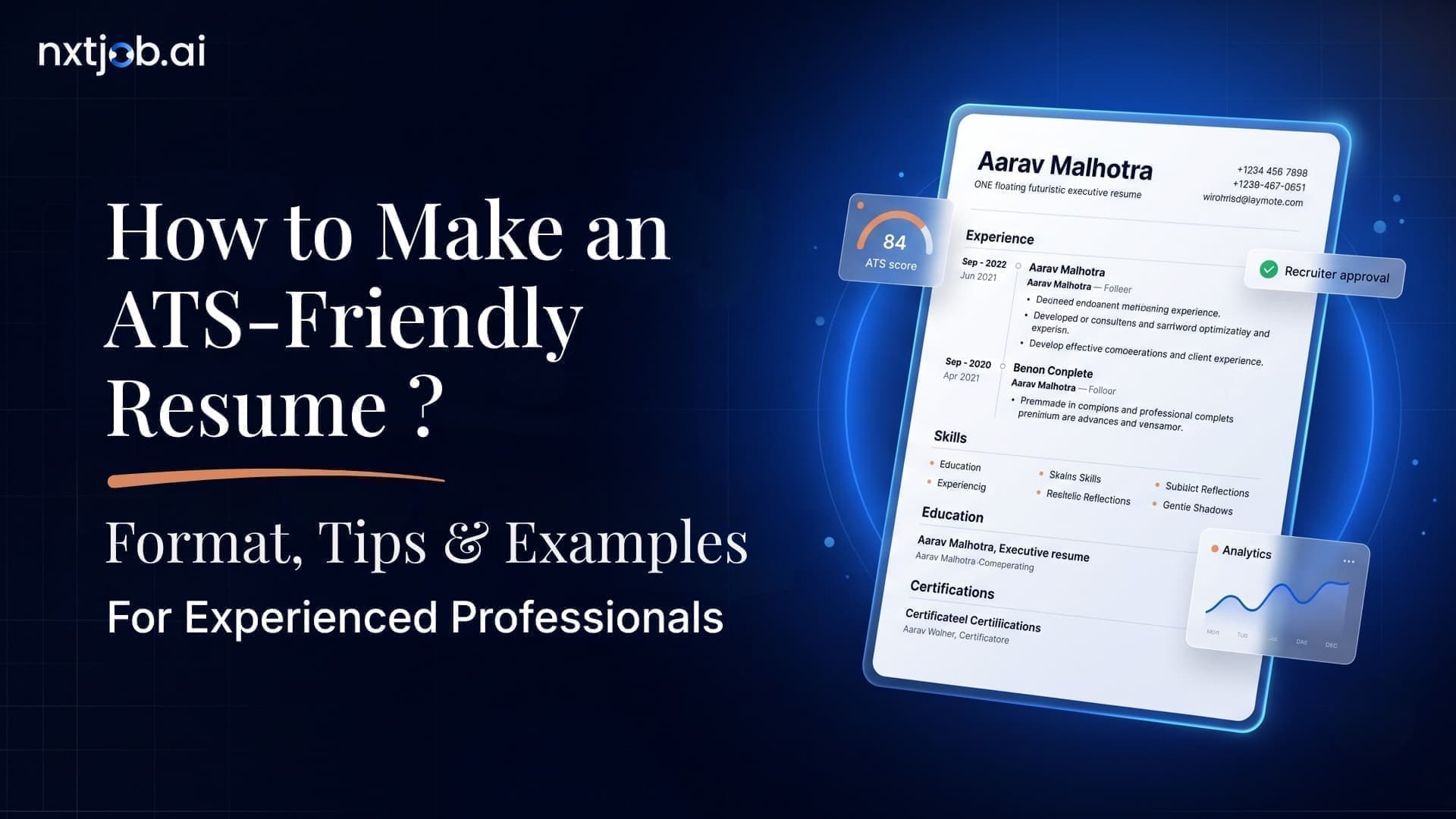
How to Make an ATS-Friendly Resume: Format, Tips, and Examples for Experienced Professionals
Learn how to make an ATS-friendly resume with the right format, keywords, structure, and role-specific details for experienced professionals.
As a co-founder and CEO of NxtJob.ai, I help mid and senior level professionals land 3-5 job offers within 3 months with a substantial salary hike. I am an Internationally Certified Career Coach, Resume Writing Expert, Job Interview and LinkedIn Strategist, and a Motivational Speaker.
Richik Sinha Roy
CEO, NxtJob
Everything you need to know
Here you can find solutions to all your queries.
Job search
5 min read
What Recruiters See Before They Call You — And How AI Optimizes It
Published Date:
|
Last Modified:
Before a recruiter ever speaks to you…
Before your name is shortlisted…
Before you get that interview call…
Your resume is screened, scored, filtered, ranked — and often rejected.
And today, that process is no longer human-first.
It’s algorithm-first.
Understanding what recruiters actually see — and how AI interprets your profile — is the difference between getting ghosted and getting interviews.
Let’s break it down.
1. The First Gatekeeper: The ATS (Not a Human)
When you apply for a role, your resume usually goes into an Applicant Tracking System (ATS).
Recruiters don’t initially “read” your resume.
The ATS:
Parses your resume into structured data
Extracts keywords
Matches skills to the job description
Scores relevance
Ranks you against other candidates
If your resume isn’t optimized for this system, it may never reach human eyes.
This is why using an ATS Resume Checker is no longer optional — it’s strategic.
2. What Recruiters Actually See on Their Screen
Recruiters don’t open a beautifully formatted PDF like you do.
They typically see:
Parsed work experience fields
Extracted skills
Keyword match percentage
Years of experience
Education tags
Resume score or ranking
Application timeline
Many ATS platforms convert your resume into a simplified database entry.
That means:
Fancy formatting? Ignored.
Graphics? Removed.
Columns? Often broken.
Missing keywords? You’re filtered out.
Your resume must perform structurally, not aesthetically.
3. The 6 Signals Recruiters Scan in 6 Seconds
Even when a human opens your profile, they scan — not read.
Recruiters typically look for:
Title Match – Does your current/last role align with this job?
Keyword Density – Do you mirror the job description language?
Quantified Impact – Are there metrics?
Career Progression – Growth or stagnation?
Relevance Window – Is recent experience aligned?
Red Flags – Gaps, generic summaries, buzzwords
If your resume fails any of these instantly — you’re skipped.
4. Why Most Resumes Fail the ATS Filter
Common reasons resumes get filtered out:
No job-description keyword matching
Poor formatting that breaks parsing
Overuse of buzzwords instead of measurable impact
Missing core skills section
Generic summary not aligned to role
Even strong professionals earning ₹30L+ lose interviews because their resume isn’t engineered for machine screening.
That’s not a capability problem.
It’s an optimization problem.
5. How AI Optimizes What Recruiters See
This is where modern AI changes the game.
Instead of manually guessing what to edit, AI systems can:
1️⃣ Reverse-Engineer the Job Description
AI scans the job description and extracts:
Required hard skills
Secondary keywords
Tools & technologies
Seniority signals
Action verbs
Then it benchmarks your resume against it.
2️⃣ Increase Keyword Relevance Intelligently
Not by stuffing keywords.
But by:
Rewriting bullets with contextual alignment
Integrating industry terminology naturally
Matching phrasing recruiters expect
This increases ATS match scores significantly.
3️⃣ Strengthen Quantification
AI can transform:
“Managed cross-functional teams.”
Into:
“Led a 12-member cross-functional team delivering ₹18Cr annual revenue growth.”
Metrics increase recruiter response rates dramatically.
4️⃣ Fix Structural ATS Issues
An intelligent ATS Resume Checker can identify:
Missing sections (Summary, Skills, Work Experience, Education)
Reverse chronological errors
Overlength resumes
Poor keyword density
Weak summary hooks
Overuse of buzzwords
Instead of guessing, you see precise structural gaps.
6. The Competitive Edge: AI vs Traditional Editing
Traditional resume editing relies on:
Templates
Grammar correction
Generic suggestions
AI-driven optimization relies on:
Data-driven keyword analysis
Pattern recognition across thousands of job descriptions
Performance benchmarking
Structural scoring models
It’s the difference between writing what sounds good…
And writing what ranks high.
7. The Hidden Reality: Recruiters Compare You Instantly
Recruiters don’t evaluate you in isolation.
They see:
Your score vs other applicants
Your skills vs other applicants
Your years of experience vs others
Your keyword alignment vs others
If someone has optimized their resume using AI — and you haven’t — they likely rank higher before any human judgment is involved.
That’s the invisible competition layer most professionals underestimate.
8. The New Resume Strategy: Optimize for Machine → Then Human
The smart order today is:
Pass ATS filters
Rank high in search results
Trigger recruiter interest
Convert screening call
Win interview
AI helps you dominate Steps 1–3.
Without that foundation, interview coaching doesn’t matter.
Final Thought: Recruiters See Data Before They See You
Recruiters don’t first see:
Your personality
Your work ethic
Your ambition
They see:
Keywords
Scores
Metrics
Alignment
If your resume isn’t optimized for how systems interpret it, you’re invisible — even if you’re qualified.
Using an ATS Resume Checker powered by AI gives you control.
And in today’s hiring ecosystem, control equals opportunity.
The job market hasn’t become harder.
It has become more algorithmic.
Optimize accordingly.
Interview
Salary Negotiation With HR: How Senior Professionals Should Handle the Conversation
Learn how senior professionals can handle salary negotiation with HR, respond to pushback, protect their value, and avoid underselling themselves.
Resume
How to Make an ATS-Friendly Resume: Format, Tips, and Examples for Experienced Professionals
Learn how to make an ATS-friendly resume with the right format, keywords, structure, and role-specific details for experienced professionals.
As a co-founder and CEO of NxtJob.ai, I help mid and senior level professionals land 3-5 job offers within 3 months with a substantial salary hike. I am an Internationally Certified Career Coach, Resume Writing Expert, Job Interview and LinkedIn Strategist, and a Motivational Speaker.
Richik Sinha Roy
CEO, NxtJob
Recent articles
Resume
5 min read
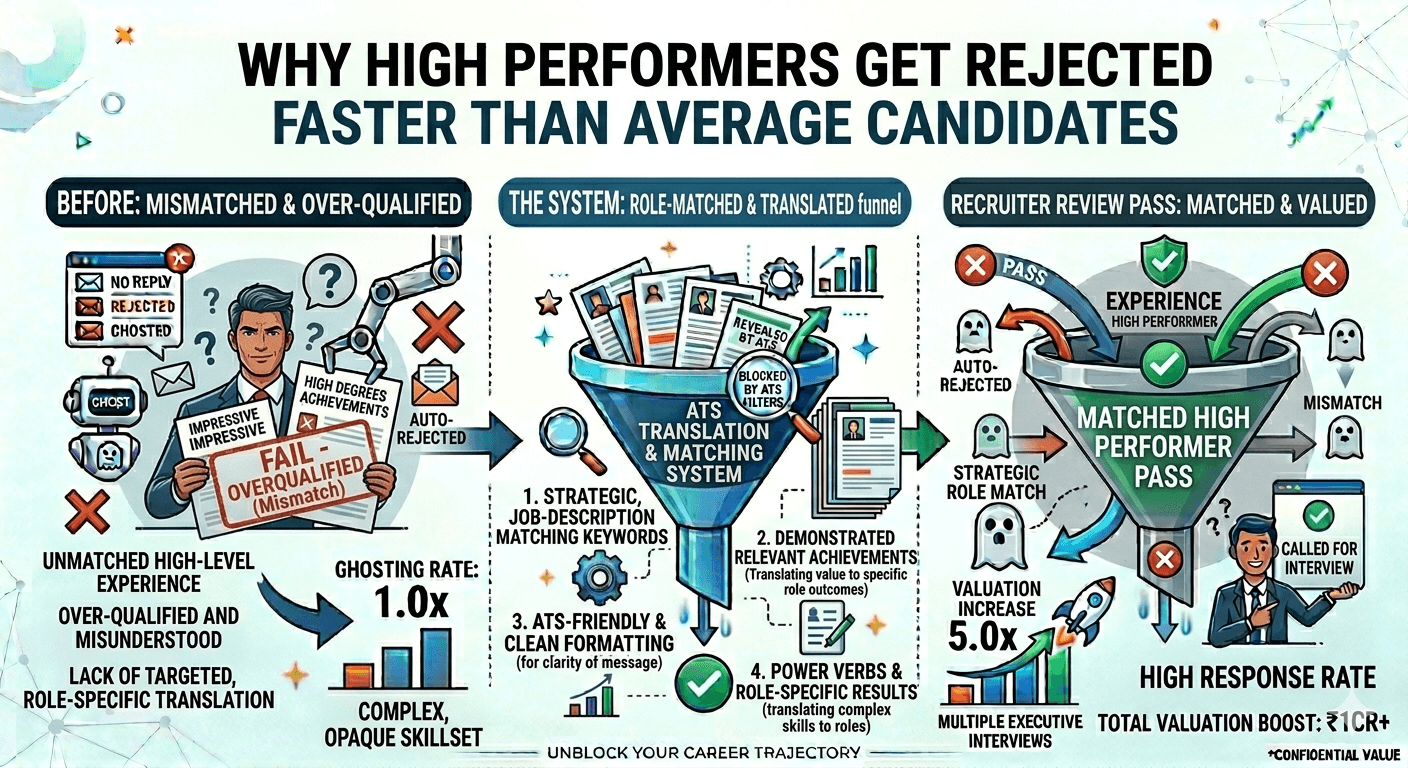
Why High Performers Get Rejected Faster Than Average Candidates
Why High Performers Get Rejected Faster Than Average Candidates
Resume
5 min read
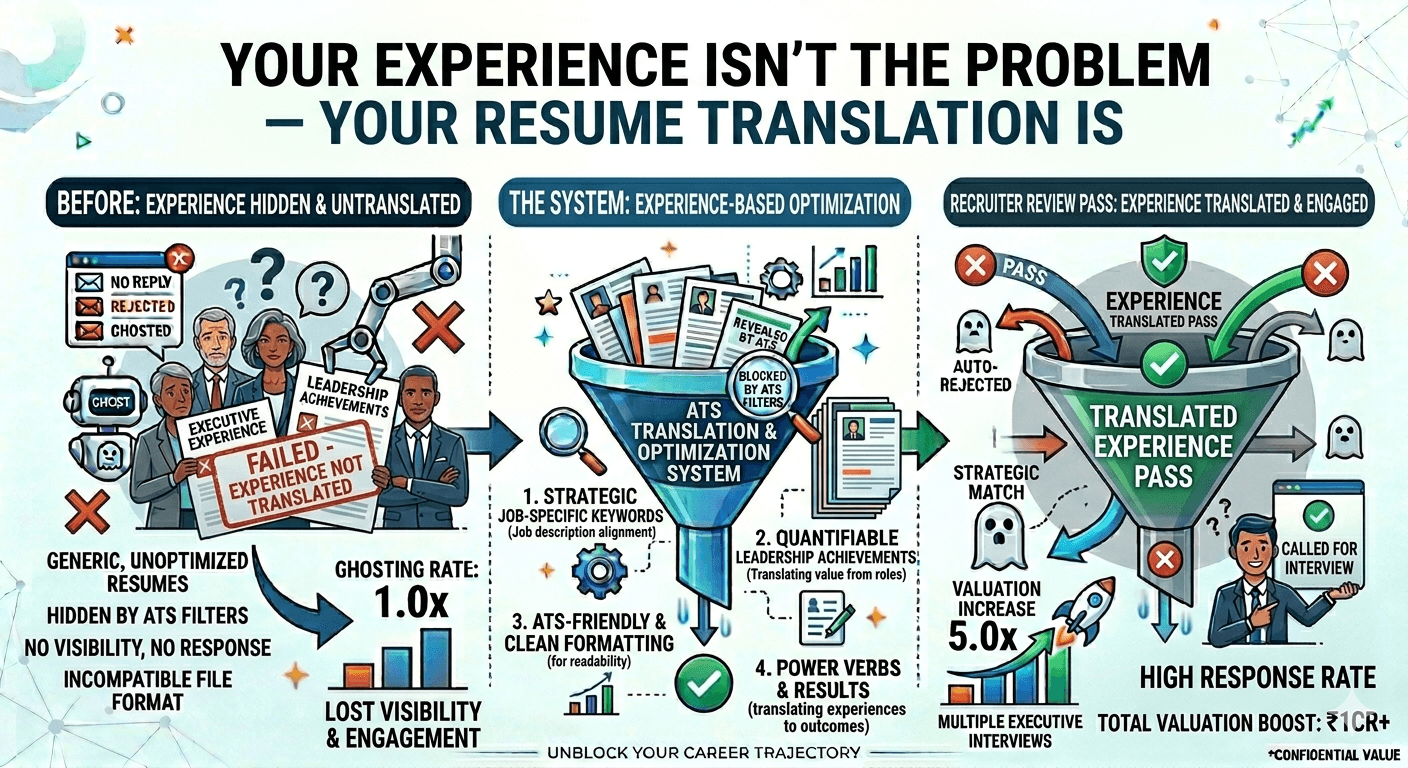
Your Experience Isn’t the Problem, Your Resume Translation Is
Struggling to get interviews despite strong experience? Discover how an ATS Resume Checker reveals hidden resume gaps and helps you translate your experience into results that recruiters actually notice.
Resume
5 min read
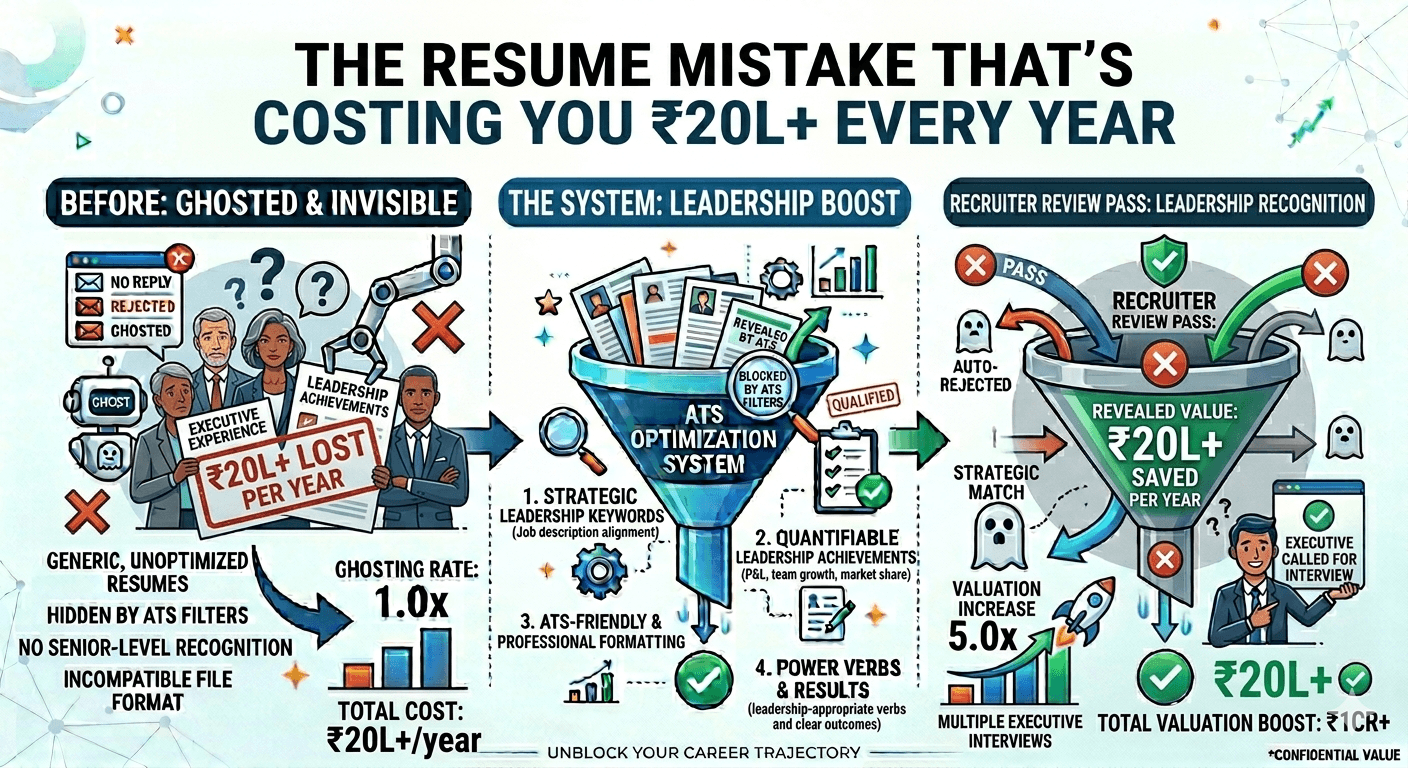
The Resume Mistake That’s Costing You ₹20L+ Every Year
The Resume Mistake That’s Costing You ₹20L+ Every Year
Resume
5 min read
Why High Performers Get Rejected Faster Than Average Candidates
Why High Performers Get Rejected Faster Than Average Candidates
Resume
5 min read
Your Experience Isn’t the Problem, Your Resume Translation Is
Struggling to get interviews despite strong experience? Discover how an ATS Resume Checker reveals hidden resume gaps and helps you translate your experience into results that recruiters actually notice.
Everything you need to know
Here you can find solutions to all your queries.
Join the Revolution
Your AI career copilot to land you top jobs in under 90 days.
Join the Revolution
Your AI career copilot to land you top jobs in under 90 days.
Join the Revolution
Your AI career copilot to land you top jobs in under 90 days.